Learn how to read alcohol supplement labels, spot proprietary blends, check DHM dosing, and verify quality signals before choosing an alcohol support product.
Most people buying alcohol support supplements spend more time reading the front of the bottle than the back. That's exactly backwards. The front is marketing. The back is the truth. If you want to make a genuinely informed decision about which supplement supports alcohol metabolism and next-morning recovery, you need to know how to read alcohol supplement labels the right way. This guide breaks down every section of a dietary supplement label — the industry term for what most people call a "supplement label" — so you can spot quality ingredients, recognize red flags, and stop guessing.
Table of contents
Key takeaways
How to read alcohol supplement labels: the essential structure
Evaluating ingredient lists and proprietary blends
Decoding structure/function claims and FDA disclaimers
Third-party certifications and quality indicators
What I've learned from years of reading alcohol supplement labels
Why Joyrise takes label transparency seriously
FAQ
Key takeaways
How to read alcohol supplement labels: the essential structure
Every dietary supplement sold in the United States must follow a standardized label format under federal law. Knowing what each section is supposed to contain makes it much easier to evaluate what a brand is actually telling you.
Statement of identity and product classification
The front panel must include a statement of identity. For alcohol support products, you will typically see "Dietary Supplement" printed clearly near the product name. This classification matters because dietary supplements are regulated under DSHEA (the Dietary Supplement Health and Education Act of 1994), not as drugs. That distinction affects what claims a brand can legally make and how much FDA oversight exists before the product hits shelves.
The Supplement Facts panel
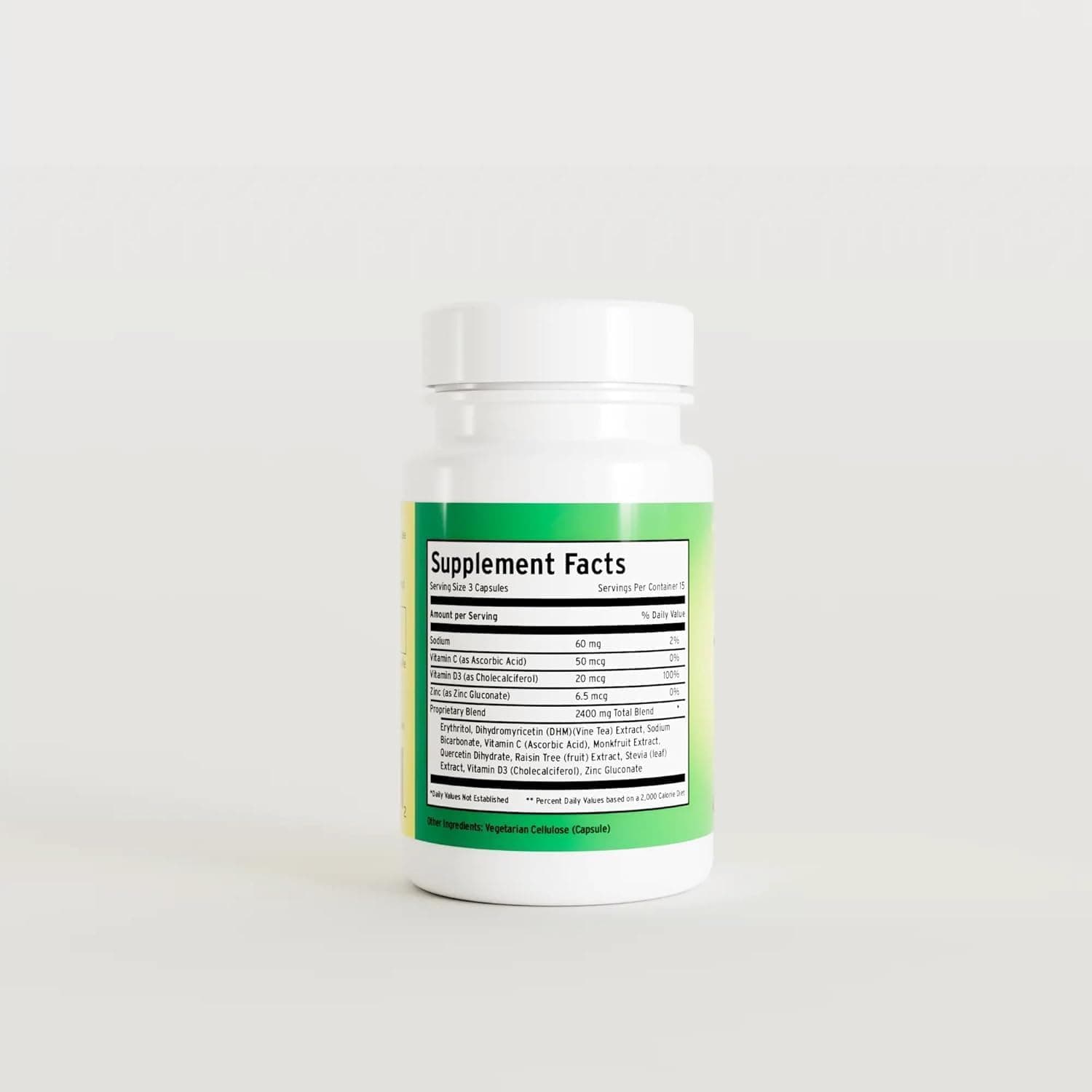
This is the most information-dense section on any label. Per 21 CFR 101.36 requirements, a properly formatted Supplement Facts panel must include:
Serving size: The amount per dose (e.g., 2 capsules). This is the unit all ingredient amounts are calculated against.
Servings per container: How many doses are in the full bottle. A 60-capsule bottle with a 2-capsule serving size delivers 30 servings total, not 60. Many shoppers miss this.
Dietary ingredients: Each active ingredient listed with its quantitative amount per serving.
% Daily Value: Shown when an established daily value exists. Many botanical ingredients, including DHM (dihydromyricetin), do not have an established Daily Value, so this column will show an asterisk.
Other ingredients
Below the Supplement Facts panel, you will find the "Other Ingredients" list. This section covers fillers, binders, capsule materials, and colorants, all listed in descending order by weight. If you have food sensitivities or allergies, this is where you check for potential triggers. Gelatin capsules, soy-derived fillers, or artificial colorants all show up here. Even ingredients considered "inactive" can affect sensitive consumers, so do not skip this section.
Manufacturer information and FDA disclaimers
The label must include the manufacturer's name and address. This is your starting point for accountability. If a brand is hard to trace, that is worth noting. The label must also carry any required FDA disclaimers, which we cover in detail below.
Evaluating ingredient lists and proprietary blends
Understanding the Supplement Facts panel is one thing. Knowing how to critically evaluate what is listed there is another skill entirely.
The proprietary blend problem
A proprietary blend groups multiple ingredients under a single total weight without disclosing individual amounts. FDA rules require that ingredients within a blend be listed in descending order by weight, but the individual weights can be legally omitted. This creates a practice known as "fairy dusting," where a brand includes a trace amount of a well-known ingredient just to list it on the label, even though the dose is far below any clinically studied threshold.
For alcohol metabolism supplements specifically, this is a serious concern. DHM, for example, has been studied at specific doses. If a label shows a 500 mg proprietary blend containing DHM alongside five other ingredients, you have no way of knowing whether you are getting a meaningful amount of DHM or a token dusting.
Here is a practical process for evaluating any ingredient list on an alcohol supplement:
Identify whether a proprietary blend is present. If you see a single total weight covering multiple ingredients, flag it immediately.
Look for individually disclosed amounts. A transparent label lists each ingredient with its exact milligram amount per serving.
Compare disclosed amounts to clinical doses. Cross-reference the listed amount against published research for that ingredient. If the dose is significantly below what studies used, the product may not deliver the expected effect.
Check ingredient form and specification. For botanical ingredients, look for standardized extract information (e.g., "DHM 98% standardized extract"). Vague listings like "Hovenia dulcis extract" without standardization data make potency impossible to verify.
Cross-check front-of-pack claims against the panel. Marketing claims can conflict with what the Supplement Facts panel actually shows. If the front promises "powerful liver support" but the active ingredient is listed at a fraction of a studied dose, the claim is not supported by the label.
Decoding structure/function claims and FDA disclaimers
Alcohol support supplements are particularly interesting from a regulatory standpoint because the claims brands want to make sit right at the edge of what is legally permitted.
What brands can and cannot say
The FDA draws a clear line between structure/function claims and disease claims. A structure/function claim describes how an ingredient affects the body's normal structure or function. A disease claim implies the product diagnoses, treats, cures, or prevents a specific disease. For alcohol supplements, this means:
Allowed: "Supports alcohol metabolism," "supports liver function," "promotes next-morning clarity"
Not allowed: "Treats alcohol poisoning," "support after-drinking recovery," "prevents liver disease"
The word "hangover" itself sits in a gray area. Many brands use it colloquially, but technically it describes a condition, so careful brands use phrases like "next-morning recovery support" instead.
The required FDA disclaimer
Any supplement bearing a structure/function claim must carry a specific disclaimer. Per 21 CFR 101.93, the exact required language is:
"This statement has not been evaluated by the Food and Drug Administration. This product is not intended to diagnose, treat, cure, or prevent any disease."
This disclaimer must be prominent, placed on the same panel as the claim, and formatted so it is clearly legible. Minor formatting errors in placement or type size can render a structure/function claim non-compliant, which affects both the brand's legal standing and your ability to trust the label.
Additionally, under DSHEA, brands must notify the FDA within 30 days of first marketing a supplement with a structure/function claim. This notification does not mean the FDA has reviewed or approved the claim. It simply creates a record. The FDA can challenge claims after the fact, but there is no pre-market approval process for supplements the way there is for drugs.
When you see a label with missing or improperly formatted disclaimers, treat it as a red flag. It suggests the brand either does not understand the regulations or has chosen to ignore them.
Third-party certifications and quality indicators
Because dietary supplements do not go through the same pre-market approval process as drugs, independent third-party certifications are the most practical tool consumers have for assessing label accuracy and product purity.
What the major certifications actually mean
The key distinction is purity versus efficacy. A certification confirms that what is on the label is in the bottle, at the stated amount, without harmful contaminants. It does not confirm that the formula will produce the results the marketing suggests. That is a separate question answered by clinical research on the specific ingredients.
Certificates of analysis and manufacturer transparency
Beyond third-party seals, look for brands that publish Certificates of Analysis (COAs). A COA is a lab report from an independent testing facility that verifies the identity, potency, and purity of a specific production batch. Brands that make COAs available on request, or better yet post them publicly, are demonstrating a level of transparency that goes beyond the minimum legal requirement.
If a brand cannot or will not provide a COA, that absence speaks volumes. For alcohol metabolism supplements, where you are relying on specific ingredient doses to support your body's cleanup process after drinking, this level of verification is not optional.
What I've learned from years of reading alcohol supplement labels
I've spent a lot of time reading supplement labels, and the pattern I keep seeing is this: the brands with the most elaborate front-of-pack marketing tend to have the least transparent Supplement Facts panels on the back. That is not a coincidence.
The serving size math issue is one that most people never catch. A product that looks like a great deal at $25 for 60 capsules may require 4 capsules per dose, leaving you with 15 actual servings. The per-serving cost just tripled. Always do that math before you buy.
What I find genuinely frustrating is how common proprietary blends still are in the alcohol supplement category. There is no scientific reason to hide individual ingredient doses from consumers. The only practical reason is to obscure under-dosing. When a brand discloses every ingredient amount individually, that transparency signals confidence in the formula. When they hide behind a blend total, ask yourself why.
My honest advice: treat the front of any supplement bottle as an advertisement. Treat the Supplement Facts panel as the contract. Read the contract. Check for third-party verification. Look for peer-reviewed research supporting the key ingredients at the doses listed. If a brand passes all three tests, it has earned your consideration.
— Joyrise
Why Joyrise takes label transparency seriously
At Joyrise, we built our labeling practices around one principle: you should be able to verify everything we claim. Our DHM-based recovery capsules list every active ingredient with its exact milligram amount per serving. No proprietary blends. No guessing about whether you are getting a clinically relevant dose of dihydromyricetin.
Our labels carry the FDA-required structure/function disclaimer on every panel, and our structure/function claims, including alcohol metabolism support and liver function support, stay firmly within compliant language. The Joyrise formula uses a patented DHM delivery system, and we back our ingredient choices with peer-reviewed research. Third-party testing confirms potency and purity for every production batch. If you want to see exactly what is in each capsule and why, the label tells you the full story. Explore the Joyrise supplement facts and decide for yourself.
FAQ
What must every alcohol supplement label include?
Every dietary supplement label must include a Supplement Facts panel with serving size, servings per container, and ingredient amounts, plus an "Other Ingredients" list and the manufacturer's name and address. Any structure/function claim requires the FDA-mandated disclaimer per 21 CFR 101.93.
What is a proprietary blend on a supplement label?
A proprietary blend groups multiple ingredients under one total weight without disclosing individual amounts, making it impossible to verify whether each ingredient is present at a clinically effective dose.
How do I spot a misleading claim on an alcohol supplement?
Compare the front-of-pack marketing language against the Supplement Facts panel. If the claimed benefit relies on an ingredient listed at a fraction of its studied dose, or if the label lacks the required FDA disclaimer, the claim is not well-supported.
Are third-party certifications required on supplement labels?
No, third-party certifications from organizations like USP, NSF, or ConsumerLab are voluntary. However, their presence confirms that an independent lab has verified the label's accuracy, ingredient potency, and purity, which carries significant weight given that supplements are not pre-approved by the FDA.
What does the FDA disclaimer on alcohol supplements mean?
The disclaimer states that the FDA has not evaluated the structure/function claim and that the product is not intended to diagnose, treat, cure, or prevent any disease. Its presence is legally required, not a sign of weakness. Its absence is a compliance problem.
Designed for alcohol metabolism support. Made by Joyrise®.
Related: the science/ what is DHM/ DHM hangover relief/ hangover relief capsules.
Important: These statements have not been evaluated by the FDA. Joyrise is not intended to diagnose, treat, cure, or prevent any disease. Follow the exact product label. Joyrise does not reduce impairment or BAC.
Suggested citation
Joyrise Science Team. “How to Read Alcohol Supplement Labels Correctly.” The Joyrise Journal, May 27, 2026. https://www.joyrise.com/blog/how-to-read-alcohol-supplement-labels-correctly