
Botanical source
Dihydromyricetin occurs in Ampelopsis grossedentata, commonly called vine tea, and in Hovenia dulcis, the Japanese raisin tree. Source identity and standardization matter when comparing ingredients.

Dihydromyricetin
DHM (dihydromyricetin) is a plant flavonoid found in vine tea and Japanese raisin tree. This page explains its identity, botanical sources, and research limitations.
DHM is a plant flavonoid found in vine tea. Researchers have studied it in alcohol-related, antioxidant, metabolic, and neural-signaling models. Much of the evidence is preclinical, so a mechanism in a cell or animal is not the same as a proven finished-product result in people. After this definition, use the best DHM supplement scorecard to compare formulated capsules with raw DHM.
The molecule
Dihydromyricetin occurs in Ampelopsis grossedentata, commonly called vine tea, and in Hovenia dulcis, the Japanese raisin tree. Source identity and standardization matter when comparing ingredients.
DHM is a flavonoid. The name on a label does not tell you its source, purity, formulation, or how much reaches circulation.
Cell, rodent, and limited human evidence should be labeled separately. They do not carry the same certainty.
Pathways are not promises. Each finding needs its model, dose, route, and endpoint attached.
Preclinical studies examine enzymes involved in the conversion of ethanol to acetaldehyde and then acetate. Findings are not a shortcut around time.
The widely cited 2012 UCLA paper used rodent and cell models. It did not test a finished Joyrise product in a human clinical trial.
Researchers have examined antioxidant-response and autophagy pathways, mostly in preclinical settings. Human outcome evidence remains limited.
Why formulation matters
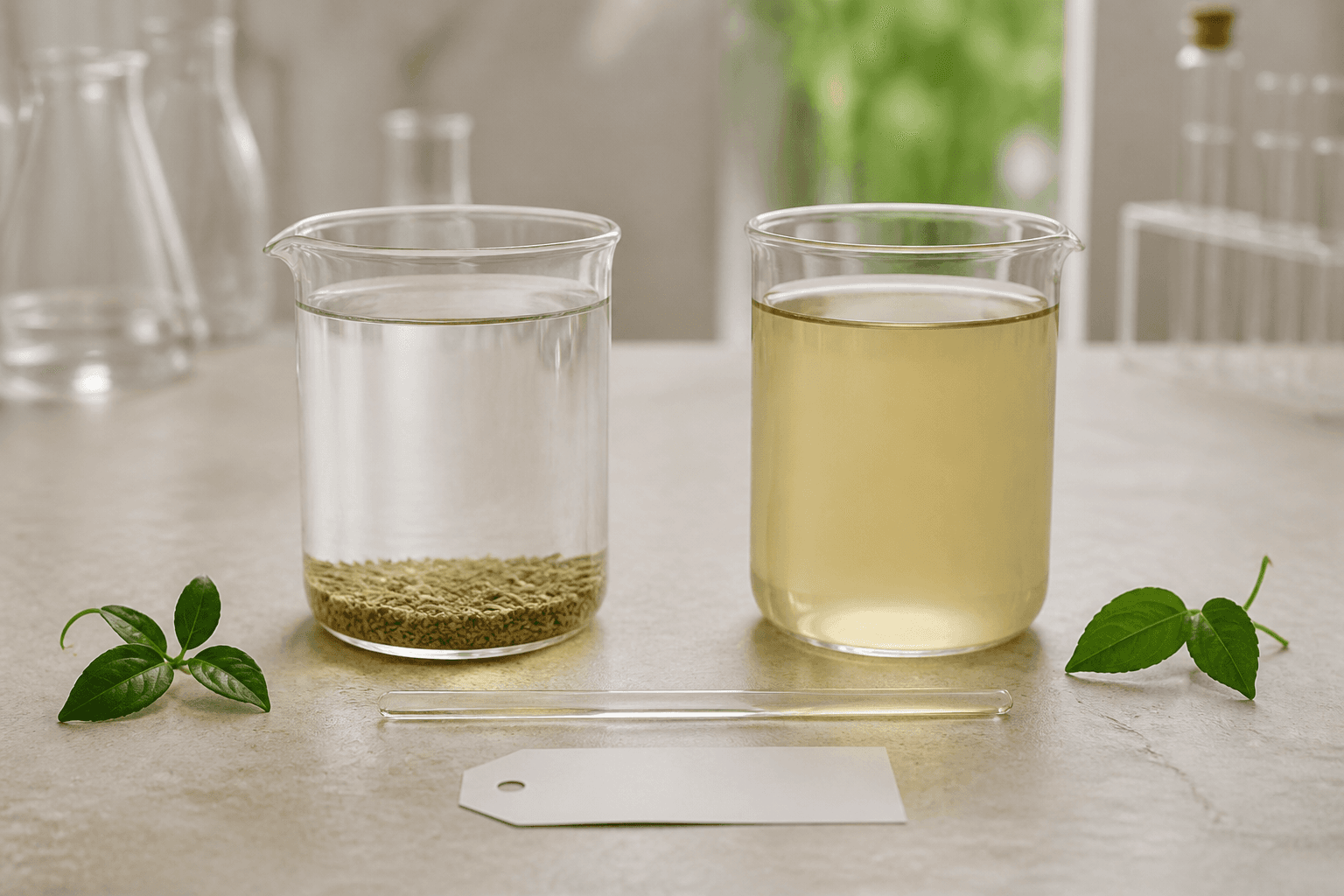
Raw DHM has known solubility and absorption challenges in preclinical research. Joyrise uses a patented delivery approach designed around bioavailability. The patent protects an invention. It does not guarantee that every person will experience the same result.
Updated September 9, 2026. Keep the experiment attached to the conclusion.
Vine tea extract contains more than one substance. A number beside the extract name is not automatically the amount of DHM. Standardization describes the measured proportion of a constituent; identity and purity testing answer different questions from absorption testing. Use the full Supplement Facts panel to see what the stated serving actually supplies. NIH LiverTox describes DHM and its botanical sources.
The influential 2012 Shen study used rat and cell models, including injected DHM in its animal experiments. It examined alcohol-related behavior and GABA-A signaling. Injection bypasses parts of the digestive process. Neither the species nor the administration route matches a person taking a capsule, so its experimental dose is not a consumer serving instruction.
A 2021 mouse study compared oral and injected DHM and measured the compound and its metabolites in serum and brain. Different exposure after different routes helps explain why formulation deserves research. It does not show that every liquid, capsule, or patented formula produces a particular human result. Ask for the same formulation, dose, comparator, and measurement when reading an absorption claim.
A 2015 randomized trial studied 60 adults with nonalcoholic fatty liver disease over three months, using oral DHM and measuring metabolic and liver-related markers. This is human research, but it does not test a hangover outcome or the Joyrise formula. Before transferring a finding, check the participants, treatment duration, other ingredients, and endpoint. A change in a blood marker is not interchangeable with symptom relief, disease prevention, or better daily performance.
Primary sources
DHM, or dihydromyricetin, is a naturally occurring flavonoid found in plants including vine tea and Japanese raisin tree.
Researchers have studied DHM in alcohol-related pathways, GABA-A signaling, oxidative-stress responses, and metabolic models. Much of the alcohol-related evidence is from cells and animals.
No. DHM does not lower BAC or impairment, does not make drinking safer, and must never be used as a reason to drive after drinking.
No. Source, dose, delivery system, other ingredients, format, testing, and directions can differ. Compare the current labels, not only the front-of-pack milligram number.
Not necessarily. Extract weight describes the whole extract; a declared DHM amount describes the compound. Check the plant identity, amount per serving, and any stated standardization before treating two labels as equivalent.
No. Trials in people with specific metabolic liver conditions study different populations and endpoints. They do not establish a next-morning benefit from a finished Joyrise product in otherwise healthy social drinkers.
Ready to compare formats?
Joyrise does not reduce impairment or BAC and does not make drinking safer. Never drink and drive.