
When you wake
Check safety before comfort.
Can you stay awake, breathe normally, and respond clearly? If not, treat it as an emergency—not a hangover routine.
See urgent signsJoyrise
Loading the current catalog.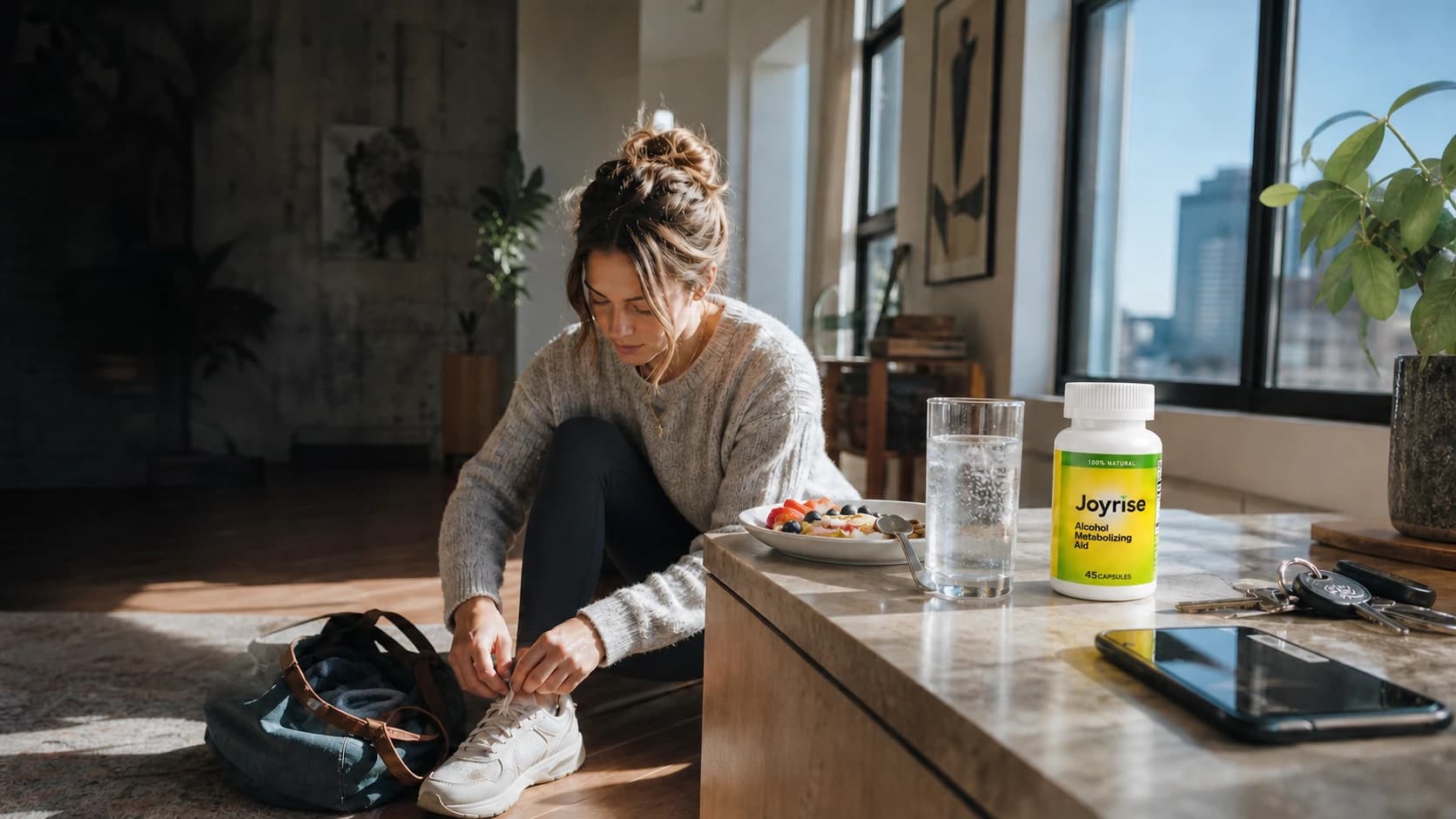
The night-to-next-day plan
There is no instant cure. Recovery means giving the body time while making the next safe, useful choice.
First principle
Hangover symptoms may peak around the time blood alcohol concentration returns to about zero, then continue for a day or longer.
A recovery sequence, not a promise
Move at your own pace. Each stage answers a different question; none is a shortcut around time.
Can you stay awake, breathe normally, and respond clearly? If not, treat it as an emergency—not a hangover routine.
See urgent signsSip water. If your stomach tolerates it, choose simple food. Hydration may help thirst, not every hangover pathway.
Slow and steadyRest, reduce stimulation, and move nonessential decisions. Coffee may change alertness; it does not lower BAC.
Less demand, more timeReassess attention, coordination, and judgment before driving, training, working, or caring for anyone else.
Capability before calendarNIAAA · Hangovers can affect attention, decision-making, and coordination.
Read the fact sheetRead the signals
Symptoms can overlap and change. Use the trend—not one good hour—to decide what your day can hold.
Not a recovery checklist
Do not wait for every symptom. Do not leave the person alone or assume they can sleep it off.
Call 911Where Joyrise fits
Joyrise is designed to support alcohol metabolism. Take one labeled serving before, during, or after alcohol. For the capsule bottle, one labeled serving is 3 capsules.
Medication is not guesswork
Alcohol can interact with common medicines. Some pain relievers may affect the liver or irritate the stomach. Ask a pharmacist or clinician about your situation instead of stacking remedies.
Six direct answers
It varies. NIAAA notes that symptoms can last 24 hours or longer. The amount consumed, sleep disruption, hydration, stomach irritation, and individual sensitivity can all shape the experience.
Start with a safety check. If you are alert and stable, sip water, eat simple food if tolerated, rest, and lower the demands on your schedule. If someone cannot wake, has a seizure, or is breathing slowly or irregularly, call 911.
No. Coffee, showers, exercise, food, and supplements do not lower blood alcohol concentration. Only time clears alcohol from the body.
Not automatically. Hangover symptoms can still affect attention, judgment, and coordination. Do not drive or operate machinery unless you are fully capable and no longer impaired.
Do not guess. Alcohol can interact with common medicines, and some pain relievers may affect the liver or irritate the stomach. Check the exact label or ask a pharmacist or clinician about your situation.
Joyrise can be taken before, during, or after alcohol. Follow the exact product label and choose one timing window. One labeled serving of the capsule bottle is 3 capsules.
Keep tomorrow in the plan
45 capsules · 15 labeled servings · 3 capsules per serving
Shop Joyrise capsules 30-day money-back guarantee · terms apply