
Ethanol
The alcohol in alcoholic beverages enters the bloodstream and is distributed through body water.
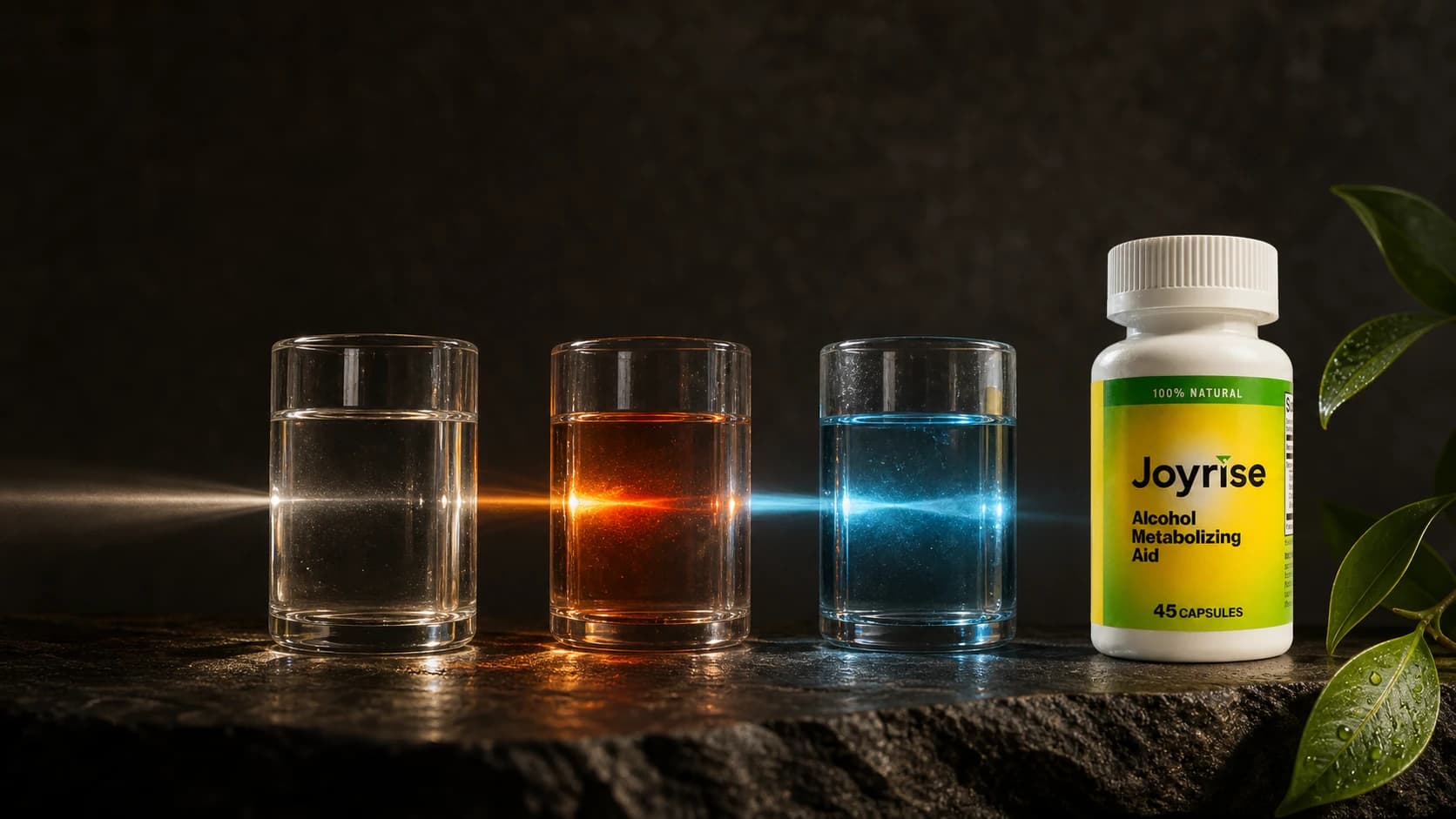
The metabolic relay
Your body primarily moves ethanol through two enzyme-controlled steps: first to reactive acetaldehyde, then to acetate. There is no shortcut around that process.
The primary pathway
Most alcohol metabolism occurs in the liver, but alcohol and its metabolites affect far more than one organ.
One molecule. Two conversions.
The two enzyme names matter because they describe different jobs. A mechanism is not the same thing as a guaranteed outcome.
The alcohol in alcoholic beverages enters the bloodstream and is distributed through body water.
Alcohol dehydrogenase
A toxic, reactive, short-lived metabolite. It is not the only factor behind next-morning symptoms.
Aldehyde dehydrogenase
Further broken down into carbon dioxide and water or used in normal metabolism.
Pathway and terminology checked against the National Institute on Alcohol Abuse and Alcoholism.
Open NIAAA sourceWhy the experience varies
Differences in metabolism can affect alcohol exposure and risk. None create a reliable way to predict safety from how someone feels.
How much alcohol enters the system and how quickly changes the burden.
Enzyme variants can change the speed of each conversion.
Food can affect absorption, but it does not cancel alcohol or lower BAC.
Distribution through body water differs from person to person.
The liver is the primary site of ethanol metabolism.
CYP2E1, catalase, and other routes also contribute in specific contexts.
More than one molecule
Alcohol’s effects can involve sleep, hydration, gastrointestinal irritation, inflammation, congeners, and individual sensitivity.
Alcohol increases urination; mild dehydration can contribute to thirst, fatigue, and headache.
Sleep may begin sooner but become fragmented, with earlier waking and reduced restoration.
Alcohol can irritate the stomach lining and increase acid release.
Immune signaling may contribute to the malaise associated with a hangover.
What lowers BAC?
Feeling more alert is not the same thing as being less impaired.
Joyrise does not reduce impairment or make driving safe. Never drink and drive.
Where DHM research fits
DHM appears in preclinical research involving alcohol-metabolism enzymes and neural signaling. Study model, route, dose, formulation, and endpoint all matter before translating a finding into a consumer claim.
See the Joyrise evidence roomOften cell or animal work. Useful for mechanism questions.
A patent can describe an invention. It is not proof of a consumer outcome.
Joyrise-specific human outcome evidence remains the most important gap.
Five straight answers
The primary pathway converts ethanol to acetaldehyde through alcohol dehydrogenase (ADH). Aldehyde dehydrogenase (ALDH) then converts acetaldehyde to acetate, which is further broken down and used or eliminated by the body.
Acetaldehyde is a toxic, reactive, short-lived metabolite created early in alcohol breakdown. The body normally converts it to the less active compound acetate.
No. Only time lowers blood alcohol concentration. Coffee, showers, food, exercise, and supplements do not reverse impairment or make driving safe.
Genes that affect ADH and ALDH, the amount and pace of alcohol use, nutrition, body composition, liver health, and other individual factors can influence alcohol metabolism and risk.
DHM appears in preclinical alcohol-related research, including studies involving metabolism enzymes and neural signaling. Those mechanisms do not establish a guaranteed finished-product result in people.
The formula, in context
$29.99 · 45 capsules · 15 labeled servings
Shop Joyrise capsules 30-day money-back guarantee · terms apply