Capsules and powders can both support liver function when the formula is strong. Compare bioavailability, convenience, DHM formulation quality, and when each format makes sense.
Liver support supplements are dietary formulations designed to support normal liver function, antioxidant response, and metabolic efficiency. The choice between a liver support supplement capsule vs powder is not about one format being universally better. It comes down to the active ingredient, the delivery system, dose transparency, and how easily the format fits into real life.
Dihydromyricetin (DHM), the vine tea flavonoid at the center of Joyrise, is a useful example. DHM is water-soluble, so capsules and powders can both be viable when the ingredient is standardized, dosed clearly, and manufactured carefully. The format matters, but the formula matters more.
For most adults, capsules win on convenience, precise dosing, portability, and shelf stability. Powders win when dose flexibility, drink mixing, or lower cost per gram matter more. The best choice is the one with transparent Supplement Facts, standardized active ingredients, and third-party quality checks.
Capsule vs powder at a glance
Before getting deep into absorption and formulation science, here is the practical comparison most people need first.
How absorption and bioavailability differ
Bioavailability is the amount of an active compound that becomes available for the body to use. Format can influence that process, but it rarely tells the whole story.
Powders dissolve faster than capsules because they do not need a capsule shell to break down first. That can be useful for some ingredients, especially when the powder is mixed fully into liquid. Capsules add a short disintegration step, but they also protect ingredients from air, moisture, and light until the moment they are taken.
The bigger difference is ingredient chemistry. Fat-soluble compounds may need lipid carriers or specialized delivery systems to absorb well. Water-soluble actives such as DHM can work in either capsule or powder formats when the dose, purity, and extract standardization are right.
When comparing liver support products, look beyond the front label. Ask whether the active ingredient is standardized, whether the dose is disclosed, and whether the brand explains why the delivery format fits the ingredient.
Why formulation quality matters more than format
A capsule with a weak formula does not become strong because it is convenient. A powder with vague dosing does not become scientific because it dissolves quickly. In both formats, the quality signals are the same: clear Supplement Facts, meaningful active-ingredient amounts, standardized extracts, and quality testing.
For DHM products, the key questions are simple. How much DHM is in the serving? What botanical source is used? Is the extract standardized? Does the brand explain the supporting ingredients? Does the product make reasonable structure/function claims instead of overpromising?
That is why Joyrise avoids proprietary-blend guessing games. Transparent dosing is not just a label preference; it is what allows a customer to compare one product to another in a serious way.
Supplement Facts transparency is the real comparison tool
The most useful part of any liver support supplement is usually the back label. A good Supplement Facts panel should make the serving size, servings per container, and active ingredients easy to understand.
Serving size: shows how many capsules, packets, or scoops count as one serving.
Amount per serving: shows whether the active ingredient is meaningfully disclosed.
Other ingredients: shows capsules, binders, flavors, sweeteners, and excipients.
Disclaimers: show that structure/function claims are being handled responsibly.
Proprietary blends make comparisons harder because they can hide the individual dose of each ingredient. For alcohol metabolism support and liver function support, dose transparency is especially important because shoppers are comparing products based on ingredient science, not just category language.
When capsules make the most sense
Capsules are usually the better fit when consistency and convenience matter most. They are easy to travel with, easy to take at an event, and easy to dose the same way each time.
Choose capsules when you want a fixed serving without measuring.
Choose capsules when you need something portable for travel, weddings, dinners, festivals, or nights out.
Choose capsules when you care about keeping ingredients protected from humidity until use.
Choose capsules when you prefer a quick routine with water instead of mixing a drink.
When powders make the most sense
Powders make sense when mixing is part of the experience. They can be useful for people who prefer drinkable supplements, want dose flexibility, or already use powders as part of a wellness routine.
Choose powders when you dislike swallowing capsules.
Choose powders when you want a drink-mix format before, during, or after alcohol use.
Choose powders when the product comes in pre-measured stick packs that reduce serving-size guesswork.
Choose powders when lower cost per gram matters and the label is still transparent.
What to avoid in either format
Capsule vs powder should never distract from product quality. A liver support product can look polished and still be weak if it hides behind vague language.
Avoid proprietary blends that do not disclose individual active-ingredient amounts.
Avoid dramatic "detox" or "cleanse" claims that sound like disease-treatment promises.
Avoid products that do not explain ingredient source, dose, or standardization.
Avoid products that make hangover "cure" promises instead of responsible support language.
Avoid products that rely only on marketplace popularity instead of ingredient evidence.
Key takeaways
Joyrise's take on capsules vs powder
At Joyrise, the format decision starts with the ingredient science. DHM from vine tea is water-soluble, which gives us flexibility to offer formats that match different routines without making the format itself the hero. The real priority is standardized DHM, transparent dosing, and a formula built around alcohol metabolism support, liver function support, and next-morning clarity support.
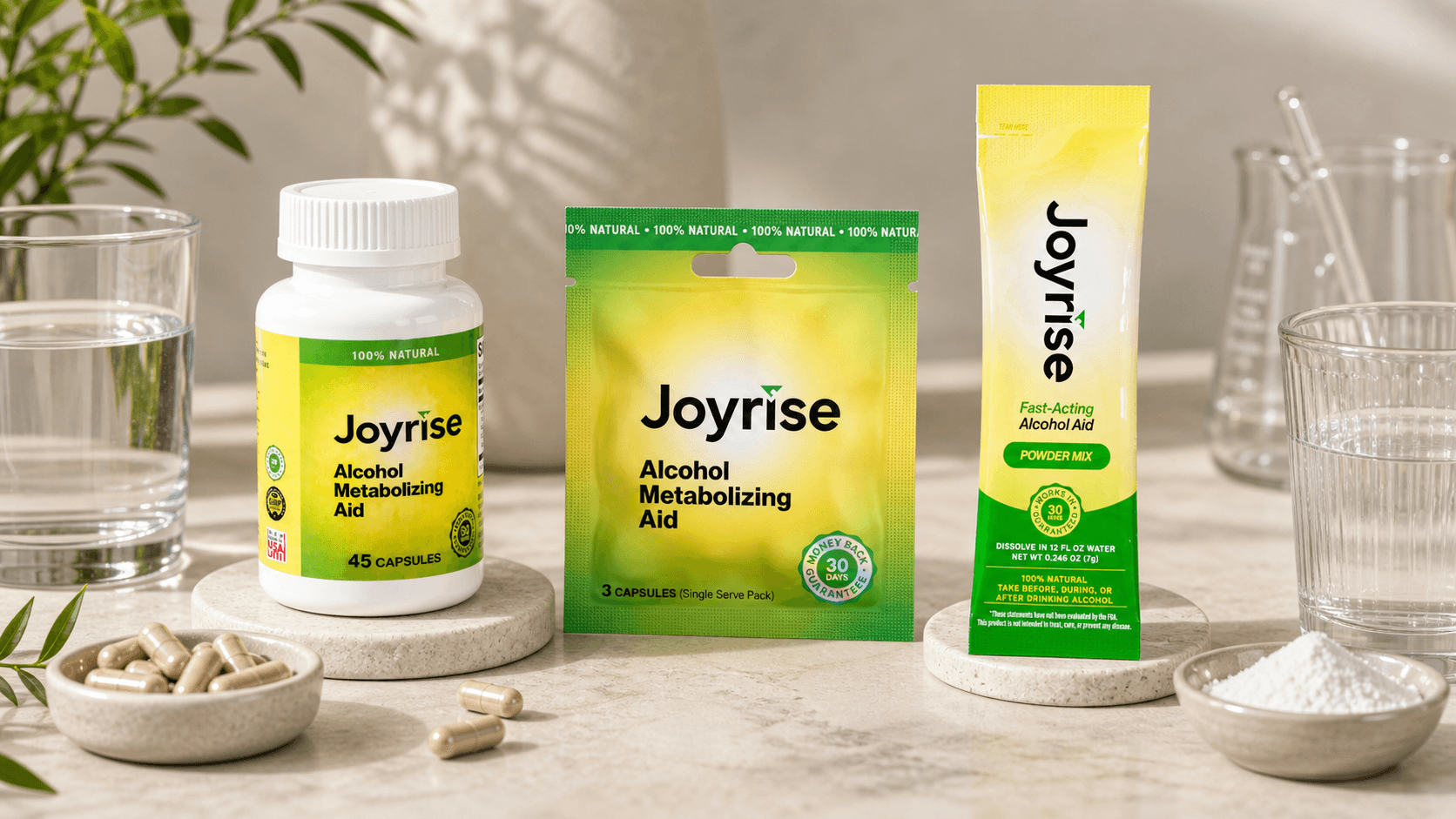
For most customers, capsules are the simplest choice because they are portable, precise, and easy to use before or after drinking. For customers who prefer a drink mix, powder can be a strong option when the serving is clearly measured and the formula is transparent.
The larger point is this: choose evidence over noise. A good liver support supplement should make its active ingredients easy to verify and its claims easy to understand.
Explore Joyrise DHM support
Joyrise is built around DHM-based alcohol metabolism support for people who choose to drink. To compare formats and learn more about the ingredient science, explore the Joyrise science page, read what DHM is, or shop Joyrise hangover relief capsules.
FAQ
Is a capsule or powder better for liver support?
Neither format is universally better. Capsules are usually better for precise dosing and portability. Powders can be better for people who prefer a drink mix or want serving flexibility. Ingredient quality and dose transparency matter more than format alone.
Do powders absorb faster than capsules?
Powders can dissolve faster because they do not require capsule-shell breakdown, but faster dissolution does not always mean better absorption. The active ingredient's chemistry and formulation quality are more important.
Is DHM better as a capsule or powder?
DHM is water-soluble, so it can be used in either capsules or powders when the extract is standardized and the serving size is clear. The better question is whether the brand discloses a meaningful DHM dose and supports its claims responsibly.
What should I look for in a quality liver support supplement?
Look for standardized active ingredients, clear Supplement Facts, disclosed amounts per serving, responsible structure/function language, and quality testing. Avoid proprietary blends that hide individual ingredient amounts.
Can liver support supplements replace healthy habits?
No. Supplements are not a replacement for responsible drinking, hydration, nutrition, sleep, exercise, or medical care. Joyrise products are designed to support normal alcohol metabolism and liver function pathways in people who choose to drink.
Designed for alcohol metabolism support. Made by Joyrise®.
Related: the science/ what is DHM/ DHM hangover relief/ hangover relief capsules.
Important: These statements have not been evaluated by the FDA. Joyrise is not intended to diagnose, treat, cure, or prevent any disease. Follow the exact product label. Joyrise does not reduce impairment or BAC.
Suggested citation
Joyrise Science Team. “Liver Support Supplement: Capsule vs Powder Compared.” The Joyrise Journal, May 28, 2026. https://www.joyrise.com/blog/liver-support-supplement-capsule-vs-powder-compared