Herbal supplements can support normal liver function and antioxidant response when they are transparently labeled, carefully sourced, and used responsibly. Here is where DHM and vine tea fit into the science.
Herbal supplements for liver health are plant-derived compounds used to support liver enzyme function, antioxidant response, and metabolic processing. The role of herbal supplements in liver health spans centuries of traditional medicine, but modern clinical science is now applying measurable endpoints like ALT, AST, ALP, and GGT to evaluate whether herbs like milk thistle, turmeric, dandelion, and ginger actually move the needle. The evidence is more nuanced than most supplement labels suggest. Some herbs show real promise in peer-reviewed trials. Others carry serious hepatotoxicity risks that most consumers never hear about. Understanding both sides is the only way to make an informed decision.
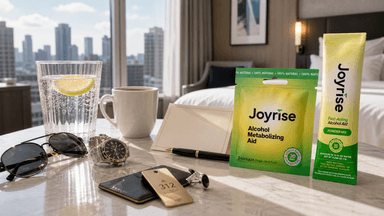
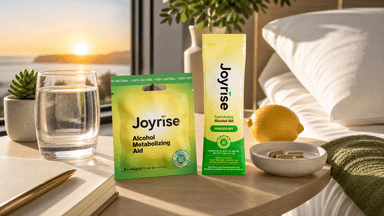
Designed for alcohol metabolism support
Joyrise capsules deliver our patented bioavailable DHM for alcohol metabolism support and next-morning clarity support. Follow the serving size, timing, and daily limit on your purchased Joyrise label.
What evidence supports herbal supplements for liver function?
The strongest clinical data for natural liver support comes from combination formulas rather than single herbs. A 2026 clinical trialpublished in Frontiers in Nutrition tested a purified plant-based nutraceutical combining turmeric, dandelion, milk thistle, and ginger over 180 days in healthy participants. The test group showed statistically significant improvements in all four liver enzyme markers compared to placebo. That result matters because ALT and AST are the standard clinical benchmarks for liver cell stress, meaning the improvement reflects real biological change, not marketing language.
A separate phase 2 exploratory trialfrom 2026 focused on participants with MASLD (metabolic dysfunction-associated steatotic liver disease, the clinical term for fatty liver disease). Sixty percent of participants improved their fatty liver grade after 60 days on an Ayurvedic nutraceutical containing turmeric extract, dandelion powder, milk thistle extract, and ginger powder. The product was well tolerated, with only mild adverse events reported. The study’s authors noted the small sample size and short duration as limitations, which is a fair caveat. Still, a 60% improvement rate in fatty liver grading is a clinically meaningful signal.
Beyond herbal combinations, vitamin Ehas shown the most consistent evidence for reducing liver inflammation and scarring in MASLD. Omega-3 fatty acids and curcumin (the active compound in turmeric) show mixed results across trials. The Mayo Clinic is clear that these supplements are not cures. They may support liver health as part of a broader medical care plan, but they do not replace it.
Dihydromyricetin (DHM), a natural flavonoid extracted from vine tea (Ampelopsis grossedentata) and the hero ingredient in Joyrise products, adds another dimension to this picture. Preclinical and early human research shows DHM supports alcohol and acetaldehyde metabolism, activates the Nrf2 antioxidant pathway, and reduces oxidative stress in liver cells. You can review the peer-reviewed researchbehind DHM’s liver function support on Joyrise’s science page.
When evaluating any liver supplement study, check whether the trial used measurable endpoints like ALT/AST levels or fatty liver imaging grades. Studies that rely only on self-reported symptoms or vague “wellness” scores carry far less clinical weight.
What are the risks of herbal supplements for liver health?
The same organ these supplements aim to support is the one most at risk when they go wrong. Over 18% of acute liver failure caseswere linked to herbal and dietary supplements in a 2015 study. Around half of those patients either died or required a liver transplant. That statistic should recalibrate how casually anyone approaches the supplement aisle.
Herb-induced liver injury (HILI) is the formal clinical term for liver damage caused by herbal products. EASL (the European Association for the Study of the Liver) flagged HILI as a rising global concern at its 2026 congress, with turmeric supplements at high doses receiving specific attention. The core problem is that “natural” does not mean safe. High doses of certain herbs cause inflammation in liver cells, and multi-ingredient products make it nearly impossible to identify which compound caused the injury.
Contamination compounds the risk further. A 2026 analysisof 386 complementary and alternative medicine (CAM) products linked to liver injury found near-universal heavy metal contamination and frequent undisclosed adulterants. This is a supply-chain failure, not just a dosing problem. The same herb from two different manufacturers can carry entirely different risk profiles depending on sourcing, processing, and quality controls.
“Natural wellness supplements linked to liver injury are an increasing global concern. Regulation and safety surveillance lag significantly behind market growth.” — EASL 2026 Congress
Key safety risks to know before starting any liver health herbal treatment:
Turmeric at high doses has been linked to liver injury, particularly in concentrated supplement form rather than culinary use.
Multi-ingredient formulas complicate causality. If injury occurs, isolating the responsible compound is difficult.
Heavy metal contamination was found in the vast majority of CAM products analyzed in the 2026 Frontiers in Gastroenterology study.
Undisclosed adulterants appear frequently in products that lack third-party testing or certification.
Batch variability means the same product can differ significantly between production runs.
Keep the label of every supplement you take and bring it to any medical appointment. Clinicians need the full ingredient list to assess hepatotoxicity risk, especially if liver enzyme tests come back elevated.
How do herbal supplements compare to conventional liver health approaches?
Herbal supplements are adjuncts, not substitutes. That distinction is not a disclaimer. It reflects how liver biology actually works. The liver responds most powerfully to diet, body weight, alcohol reduction, and physical activity. No supplement overrides the metabolic impact of a high-calorie diet or chronic alcohol use. Johns Hopkins Medicineis direct on this point: liver cleanses and detox products are not FDA-regulated and lack sufficient clinical trial evidence to support routine use for detoxification.
The term “liver cleanse” is a marketing construct, not a medical one. Hepatologists do not recommend liver cleanses because the liver already filters blood continuously without needing a product to trigger that process. What supplements can do is support the liver’s existing enzymatic and antioxidant machinery, particularly under conditions of metabolic stress or elevated alcohol intake.
Realistic expectations matter here. Supplements studied in early MASLD trials show encouraging enzyme and imaging improvements, but these are not proof of long-term disease prevention. Larger, longer studies are needed before any herbal supplement earns a definitive clinical recommendation for liver disease management. What the current evidence does support is using well-studied supplements as part of a broader lifestyle and medical strategy, not as a standalone fix.
How to safely incorporate herbal supplements for liver health
Choosing the right supplement requires more than reading a product description. Follow these steps to reduce risk and maximize the likelihood of genuine benefit.
Consult a healthcare provider first. Anyone with existing liver conditions, elevated liver enzymes, or who takes prescription medications should get medical clearance before adding any herbal supplement. Drug-herb interactions are real and underreported.
Check for third-party testing. Look for products certified by NSF International, USP (United States Pharmacopeia), or Informed Sport. These certifications verify that what is on the label is actually in the product, and that contaminants like heavy metals are below safe thresholds.
Avoid proprietary blends with undisclosed doses. If a product lists “liver support blend 500mg” without specifying how much of each ingredient is included, you cannot assess safety or efficacy. Transparency in dosing is a baseline quality signal.
Match the supplement to clinical evidence. Milk thistle, turmeric in combination formulas, and DHM each have specific research contexts. Using a supplement that matches your situation (alcohol metabolism support, fatty liver management, antioxidant support) is more rational than choosing based on marketing claims.
Monitor your liver function. If you take any supplement regularly, ask your doctor to include a liver enzyme panel in your next blood work. Elevated ALT or AST can be an early warning sign of HILI, and catching it early prevents serious injury.
Joyrise DHM stands out in this space because it is built around a single, well-characterized compound with a documented mechanism. The science behind DHMcovers its role in supporting Nrf2 antioxidant activation, acetaldehyde metabolism, and liver cell protection. That specificity makes it easier to evaluate and easier to use responsibly.
Start with one supplement at a time. Adding multiple new products simultaneously makes it impossible to identify which one is helping or causing side effects. Give each supplement at least 30 days before evaluating its effect.
Key takeaways
Herbal supplements can support liver enzyme function and antioxidant response when chosen based on clinical evidence, but they carry real hepatotoxicity risks and must never replace lifestyle interventions or medical care.
What Joyrise has learned about herbal supplements and liver health
The supplement market has a credibility problem, and it is largely self-inflicted. Products make sweeping detox claims, stack ten or more ingredients with no disclosed doses, and rely on consumer trust rather than clinical transparency. The result is a category where genuinely effective compounds get lumped in with products that have caused real liver harm.
What Joyrise has found, both through the science and through building a product around DHM, is that specificity is the differentiator. When you know exactly which compound you are taking, at what dose, with what mechanism, you can make an informed decision. That is not how most of the supplement industry operates, but it is the only approach that holds up under scrutiny.
The herbs with the most clinical support, including milk thistle’s silymarin and curcumin from turmeric, work best in purified, standardized forms at studied doses. The 2026 Frontiers in Nutrition trial showing liver enzyme improvements over 180 days used a highly purified formula, not a generic “liver support” blend. That distinction is the difference between a supplement worth taking and one worth avoiding.
The uncomfortable truth is that most people exploring herbal remedies for liver health are doing so without guidance from a clinician who knows their full health picture. That gap creates risk. The solution is not to avoid supplements entirely. It is to demand the same transparency from supplement brands that you would expect from any other health product: disclosed ingredients, verified doses, third-party testing, and honest communication about what the science does and does not show.
— Joyrise
Support your liver with science-backed DHM from Joyrise
Joyrise builds its liver support products around dihydromyricetin (DHM), a natural flavonoid from vine tea with peer-reviewed research behind its mechanism. Unlike generic liver blends, Joyrise products use a patented, high-bioavailability form of DHM with documented effects on alcohol metabolism, acetaldehyde clearance, and Nrf2 antioxidant activation. If you are looking for a supplement that supports liver function with real scientific backing rather than detox marketing, explore Joyrise’s DHM formulasand review the full clinical research behind the ingredient. People who drink socially or want daily liver function support will find Joyrise a transparent, evidence-grounded option.
FAQ
What does herbal supplements do for the liver?
Herbal supplements like milk thistle, turmeric, dandelion, and ginger have shown the ability to reduce liver enzyme levels (ALT, AST, ALP, GGT) in clinical trials, indicating support for liver cell function and antioxidant response. They are adjuncts to lifestyle care, not treatments for liver disease.
Are liver supplements safe to take daily?
Some liver supplements are safe for daily use when taken at studied doses and sourced from third-party tested manufacturers. A 2026 analysis found near-universal heavy metal contamination in CAM products linked to liver injury, so product quality and certification matter significantly.
Does DHM help with liver function?
DHM (dihydromyricetin) supports liver function by activating the Nrf2 antioxidant pathway, reducing oxidative stress, and supporting alcohol and acetaldehyde metabolism. Research is primarily preclinical and early human data, with Joyrise’s science page providing a full breakdown of the available studies.
What is herb-induced liver injury (HILI)?
Herb-induced liver injury (HILI) is liver damage caused directly by herbal products, often from high doses, contamination, or undisclosed adulterants. Over 18% of acute liver failure cases in a 2015 study were linked to herbal and dietary supplements, with roughly half of those patients dying or requiring a liver transplant.
Do liver cleanses actually work?
Liver cleanses lack clinical trial evidence and are not FDA-regulated. Johns Hopkins Medicine advises against using them for routine liver detoxification, noting that the liver filters blood continuously without requiring a commercial product to function.
Recommended
The Silent Protector: DHM Beyond Alcohol
What Is DHM? The Science of Dihydromyricetin | Joyrise®
Daily DHM for Liver Health & Mental Clarity | Joyrise®
Why Most DHM Supplements Don’t Work
Designed for alcohol metabolism support. Made by Joyrise®.
Related: the science/ what is DHM/ DHM hangover relief/ hangover relief capsules.
Important: These statements have not been evaluated by the FDA. Joyrise is not intended to diagnose, treat, cure, or prevent any disease. Follow the exact product label. Joyrise does not reduce impairment or BAC.
Source trail
References and further reading.
Links are preserved from the article so readers can inspect the underlying material. A link does not mean every finding applies to Joyrise or predicts a finished-product outcome.
- 2026 clinical trialfrontiersin.org · Research publication
- phase 2 exploratory trialpubmed.ncbi.nlm.nih.gov · Research publication
- vitamin Emayoclinic.org · Clinical or educational source
- Over 18% of acute liver failure casesemjreviews.com · Secondary or commercial source
- 2026 analysisfrontiersin.org · Research publication
- Johns Hopkins Medicinehopkinsmedicine.org · Secondary or commercial source
Suggested citation
Joyrise Science Team. “The Role of Herbal Supplements in Liver Health.” The Joyrise Journal, May 31, 2026. https://www.joyrise.com/blog/the-role-of-herbal-supplements-in-liver-health