The liver’s role in alcohol processing is to convert consumed ethanol into less toxic substances through two primary enzymatic pathways: Alcohol Dehydrogenase (ADH) and the Microsomal Ethanol Oxidizing System (MEOS). Between 85 and 98% of alcohol/07%3A_Alcohol/7.02%3A_Alcohol_Metabolism) you drink is handled by the liver, with only trace amounts leaving the body through breath, urine, or sweat. The process is not passive filtration. It is an active biochemical sequence that produces acetaldehyde, a toxic intermediate linked to cellular damage, oxidative stress, and long-term liver injury. Understanding how this works gives you a clearer picture of what alcohol actually does inside your body and why individual health factors change the risk equation significantly.
How does the liver metabolize alcohol?
Liver and alcohol metabolism begins the moment ethanol enters your bloodstream and reaches hepatic tissue. The liver processes roughly one standard drink per hour, a ceiling set by enzyme capacity, not willpower or hydration. Exceeding that rate does not speed up clearance. It shifts the workload to a secondary pathway that generates more toxic byproducts.
The ADH pathway: the primary route
ADH converts ethanol/07%3A_Alcohol/7.02%3A_Alcohol_Metabolism) to acetaldehyde and accounts for 80 to 90% of alcohol metabolism under normal drinking conditions. The reaction requires the coenzyme NAD+, which gets depleted during heavy drinking, slowing the entire process. Acetaldehyde is then handed off to Aldehyde Dehydrogenase (ALDH), which converts it to acetate. Acetate travels to peripheral tissues where it is converted to acetyl-CoA, entering the citric acid cycle for energy or contributing to fat synthesis.
The MEOS pathway: the backup that creates more damage
MEOS, driven by the CYP2E1 enzyme, handles 10 to 20% of ethanol metabolism under normal conditions. With chronic heavy drinking, CYP2E1 is upregulated and its share of the workload grows substantially. This matters because MEOS requires NADPH and oxygen, and the reaction generates reactive oxygen species (ROS) as a byproduct. More alcohol processed through MEOS means more oxidative stress, not less liver burden.
The key takeaway from this table: the pathway that becomes dominant during heavy drinking is also the one that produces the most cellular damage. Processing more alcohol faster through MEOS does not protect the liver. It exposes it to greater oxidative stress.
What harmful effects arise during alcohol metabolism?
The effects of alcohol on liver health are not caused by ethanol itself as much as by what the liver produces while breaking it down. Acetaldehyde is a known carcinogenthat binds to proteins and DNA, disrupting normal cell function and triggering inflammatory responses. The damage compounds with every drink.
The main liver injury mechanisms include:
Oxidative stress from ROS: MEOS activity generates free radicals that damage mitochondrial membranes, disrupt lipid metabolism, and impair the liver’s ability to regenerate.
Mitochondrial dysfunction: Alcohol metabolism shifts the NAD+/NADH ratio, impairing the citric acid cycle and promoting fat accumulation in liver cells (steatosis).
Gut barrier dysfunction: Chronic alcohol disrupts intestinal permeability, allowing microbial products like lipopolysaccharide (LPS) to translocate to the liver through the portal vein.
Immune activation: LPS activates Toll-like receptor pathways in hepatic immune cells (Kupffer cells), triggering a sustained inflammatory response that compounds the direct metabolic toxicity.
Acetaldehyde-protein adducts: These modified proteins are recognized as foreign by the immune system, generating autoimmune-like liver inflammation.
Processing alcohol faster does not mean less damage. When heavy drinking upregulates CYP2E1, the liver clears ethanol more efficiently but generates significantly more ROS in the process. Tolerance to intoxication and tolerance to liver damage are not the same thing.
The gut-liver axis connection is particularly underappreciated. LPS-driven immune activationin the liver adds a second wave of injury on top of the direct metabolic toxicity from acetaldehyde and ROS. This is why alcohol-related liver disease progresses even during periods of reduced drinking in people with established gut barrier dysfunction.
How does metabolic health affect liver alcohol processing?
The role of liver alcohol processing does not operate in isolation. Your background metabolic health determines how vulnerable your liver is to the damage alcohol metabolism produces. Metabolic syndrome factorsincluding high triglycerides, low HDL cholesterol, and abdominal obesity amplify liver injury risk from alcohol beyond what drinking alone would cause. Research from Virginia Commonwealth University found that combined metabolic and hazardous drinking increases liver injury odds more than threefold in studied populations. That figure means two people drinking the same amount can face dramatically different outcomes based on their metabolic baseline.
Several factors shape individual vulnerability:
Genetic variation in ADH and ALDH: Some individuals, particularly those of East Asian descent, carry ALDH2 variants that reduce acetaldehyde clearance, causing faster toxic buildup.
Existing hepatic fat: Non-alcoholic fatty liver disease (NAFLD) and alcohol-related steatosis share overlapping injury mechanisms, making the liver more susceptible to additional insult.
Insulin resistance: Impaired glucose metabolism alters hepatic lipid handling, worsening fat accumulation triggered by alcohol.
Body composition: Higher visceral fat correlates with elevated baseline liver inflammation, lowering the threshold at which alcohol causes measurable damage.
Genetic and metabolic differences make generalizations about “safe” drinking amounts genuinely unreliable. What is low-risk for one person can be hepatotoxic for another with the same drinking pattern. If you have any of the metabolic risk factors listed above, the standard population-level drinking guidelines do not apply to you with the same confidence they might to someone with optimal metabolic health.
Non-invasive screening using the FIB-4 scorecombined with liver ultrasound can detect early alcohol-related fibrosis before symptoms appear. Ask your physician about this if you drink regularly and have any metabolic risk factors.
What liver diseases result from chronic alcohol processing?
Liver injury from alcoholfollows a well-documented progression, and the critical insight is that the early stages are reversible while the later ones are not. Every cycle of alcohol metabolism causes some degree of hepatocyte stress. Cumulative exposure erodes the liver’s regenerative capacity over time.
Fatty liver develops in the majority of heavy drinkers and is the liver’s first measurable response to metabolic overload from ethanol. The absence of symptoms at this stage is precisely what makes it dangerous. Most people do not know it is happening. Alcoholic hepatitis represents a more serious inflammatory state where liver cell death accelerates and the immune system compounds the damage. Cirrhosis, the end stage, involves structural destruction that no amount of abstinence can fully undo. The window for meaningful intervention is wide open at stage one and narrows sharply by stage three.
Key takeaways
The liver converts alcohol through ADH and MEOS pathways, producing toxic acetaldehyde and reactive oxygen species that cause cumulative damage, with individual metabolic health determining how quickly injury progresses.
Joyrise’s perspective on what this means for you
Most people think about alcohol’s effects in terms of how they feel the next morning. The biochemistry tells a different story. The liver is doing genuinely demanding work every time you drink, and the byproducts of that work, specifically acetaldehyde and reactive oxygen species, are the actual agents of harm. The feeling of intoxication is a neurological event. The damage is a metabolic one.
What concerns me most is the myth that a faster metabolism is a safer one. When CYP2E1 upregulates in chronic drinkers, they may feel less intoxicated at the same dose. But the oxidative burden on the liveris actually higher, not lower. Tolerance is not protection. It is a sign that the liver has adapted in a way that increases its own vulnerability.
The metabolic health angle is equally underreported. Drinking guidelines are population averages. If you carry visceral fat, have elevated triglycerides, or have any degree of insulin resistance, your liver is starting from a more compromised baseline. The same two drinks that are low-risk for a metabolically healthy adult may be genuinely damaging for you.
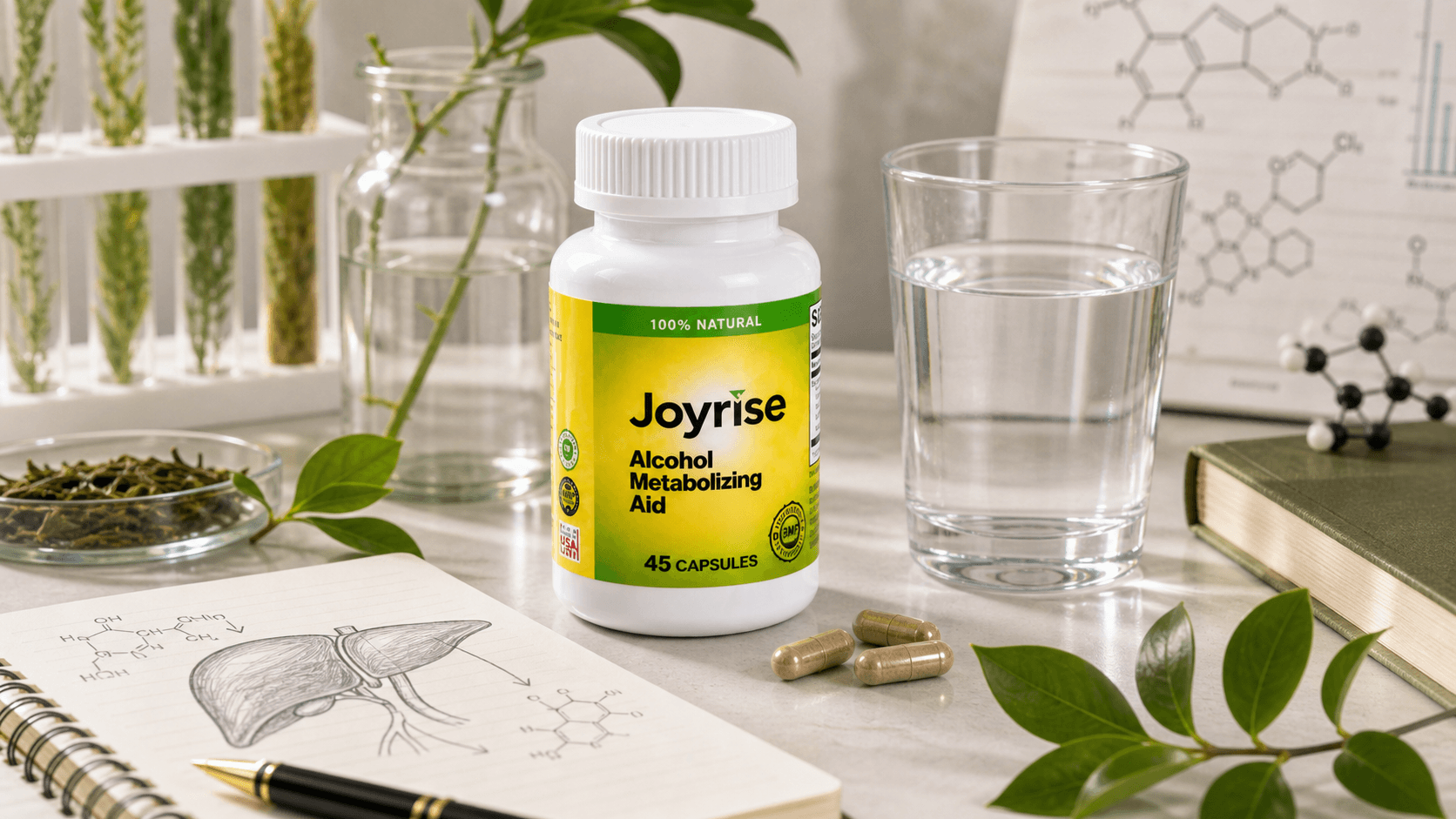
Supporting the liver’s natural enzymatic function is where supplements like Joyrise DHM can play a meaningful role. Dihydromyricetin (DHM), derived from Ampelopsis grossedentata (vine tea), has been studied for its ability to support acetaldehyde metabolism and activate the Nrf2 antioxidant pathway, which directly counters the oxidative stress that MEOS activity generates. That is not a cure for alcohol’s effects. It is targeted biochemical support for the exact mechanisms this article describes. You can explore the science behind DHMif you want to go deeper on the research.
The most honest advice: drink less, understand your metabolic baseline, and if you do drink, give your liver the support it needs rather than assuming it will handle everything without consequence.
— Joyrise
Support your liver with Joyrise DHM
Understanding liver alcohol processing mechanisms is the first step. Supporting your liver’s enzymatic function during and after alcohol consumption is the next one. Joyrise DHM is built around dihydromyricetin, a patented natural flavonoid from vine tea with peer-reviewed studies supporting its role in acetaldehyde metabolism, antioxidant (Nrf2) activation, and next-morning cognitive clarity. If you drink socially and want to give your liver meaningful biochemical support, explore Joyrise DHM hangover supportor browse the full range of Joyrise DHM capsulesformulated specifically for adults who want to drink more mindfully.
FAQ
What does the liver do with alcohol after you drink?
The liver converts ethanol to acetaldehyde via Alcohol Dehydrogenase (ADH), then to acetate via Aldehyde Dehydrogenase (ALDH), and finally to acetyl-CoA for energy or fat synthesis. Between 85 and 98%/07%3A_Alcohol/7.02%3A_Alcohol_Metabolism) of consumed alcohol is processed this way.
Why is acetaldehyde dangerous during alcohol metabolism?
Acetaldehyde is a carcinogen that binds to proteins and DNA, triggers immune responses, and causes direct cellular damage in the liver. It is more toxic than ethanol itself and is the primary driver of alcohol-related liver injury.
How does heavy drinking change how the liver processes alcohol?
Chronic heavy drinking upregulates the MEOS pathway (CYP2E1 enzyme), which processes more ethanol but generates significantly more reactive oxygen species. This increases oxidative stress and liver vulnerability even as tolerance to intoxication grows.
Can liver damage from alcohol be reversed?
Fatty liver (steatosis) is fully reversible with abstinence, and early fibrosis can partially resolve. Cirrhosis, the advanced stage of alcohol-related liver disease, is generally irreversible, which makes early detection and intervention critical.
Does having metabolic syndrome make alcohol more dangerous for the liver?
Yes. Combined metabolic risk factors and hazardous drinking increase liver injury odds more than threefold compared to drinking risk alone, making standard drinking guidelines unreliable for people with high triglycerides, low HDL, or abdominal obesity.
Recommended
The Silent Protector: DHM Beyond Alcohol
What Is Acetaldehyde? Alcohol Metabolism Guide | Joyrise
DHM for Hangover Relief Support | Joyrise
Could DHM Protect Your Brain From Alzheimer’s?
Designed for alcohol metabolism support. Made by Joyrise®.
Related: the science/ what is DHM/ DHM hangover relief/ hangover relief capsules.
Important: These statements have not been evaluated by the FDA. Joyrise is not intended to diagnose, treat, cure, or prevent any disease. Follow the exact product label. Joyrise does not reduce impairment or BAC.
Source trail
References and further reading.
Links are preserved from the article so readers can inspect the underlying material. A link does not mean every finding applies to Joyrise or predicts a finished-product outcome.
- MEOS, driven by the CYP2E1 enzymencbi.nlm.nih.gov · Public-health institution
- Acetaldehyde is a known carcinogenniaaa.nih.gov · Public-health institution
- Chronic alcohol disrupts intestinal permeabilitypmc.ncbi.nlm.nih.gov · Research publication
- LPS-driven immune activationmdpi.com · Research publication
- Metabolic syndrome factorsliverinstitute.medschool.vcu.edu · Secondary or commercial source
- FIB-4 scoreccjm.org · Research publication
- Liver injury from alcoholmy.clevelandclinic.org · Clinical or educational source
- oxidative burden on the livermdpi.com · Research publication
Suggested citation
Joyrise Science Team. “The Role of Liver Alcohol Processing Explained.” The Joyrise Journal, June 4, 2026. https://www.joyrise.com/blog/the-role-of-liver-alcohol-processing-explained