A DHM supplement is dihydromyricetin, a polyphenolic flavonoid extracted primarily from vine tea (Ampelopsis grossedentata) and used to support alcohol metabolism, liver function, and next-morning clarity. Known in traditional East Asian medicine for centuries, dihydromyricetin has attracted serious scientific attention over the past decade for its effects on the enzymes your body uses to process alcohol and its byproducts. Adults reaching for a DHM supplement are typically looking for support before or after drinking, not a cure, but a biochemical assist for the liver’s cleanup work. Understanding what DHM actually does at the molecular level separates informed buyers from people spending money on hope.
Designed for alcohol metabolism support
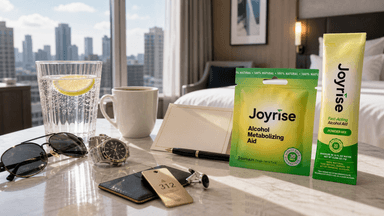
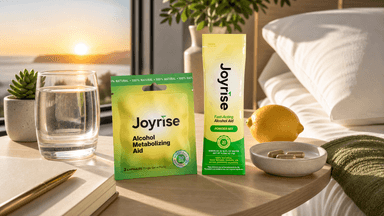
Joyrise capsules deliver our patented bioavailable DHM for alcohol metabolism support and next-morning clarity support. Follow the serving size, timing, and daily limit on your purchased Joyrise label.
What is a DHM supplement and how does it work in the body?
Dihydromyricetin is a natural flavonoidclassified as a polyphenol, meaning it belongs to the same broad family as the antioxidants found in green tea, berries, and red wine. Its primary botanical source for supplement use is Ampelopsis grossedentata, a climbing vine native to southern China where the leaves have been brewed as a tea for generations. Other sources include Hovenia dulcis, the Japanese raisin tree, whose fruit extract has been studied in clinical settings for alcohol-related effects.
The mechanism works in two connected steps. First, DHM appears to support the activity of alcohol dehydrogenase (ADH), the enzyme that converts ethanol into acetaldehyde in the liver. Second, it supports aldehyde dehydrogenase (ALDH), the enzyme that then converts acetaldehyde into acetate, a far less toxic compound. Acetaldehyde is the intermediate metabolite most researchers associate with the worst hangover symptoms: nausea, headache, and that general feeling of systemic inflammation the morning after drinking.
Beyond enzyme activity, DHM influences ethanol processingthrough antioxidant and anti-inflammatory pathways, including activation of the Nrf2 pathway, which governs the body’s own antioxidant defense response. This means DHM is not acting on a single target. It supports multiple systems simultaneously, which is one reason researchers find it worth studying across liver health, cognitive function, and oxidative stress contexts. The liver is the cleanup crew after a night of drinking, and DHM gives that crew better tools.
What does the clinical evidence say about DHM and hangover relief?
The strongest human evidence comes from randomized, double-blind crossover trials, the gold standard for supplement research. A 2025 clinical trial using Theracurmin-based products containing DHM found that 27 healthy adultsshowed meaningfully lower area under the curve values for both blood alcohol and blood acetaldehyde compared to placebo. Lower AUC means the body processed alcohol and its toxic intermediate faster, which translates directly to reduced exposure time and, in theory, reduced symptom severity.
A separate randomized, double-blind trial evaluated Hovenia dulcis fruit extract and found significant reductionsin both blood alcohol and acetaldehyde concentrations compared to placebo. Researchers tracked participants for up to 15 hours post-drinking, measuring pharmacokinetic outcomes alongside self-reported symptom scores. This is a critical methodological detail: hangover trials that only measure how people feel are far less reliable than those that also measure blood metabolite levels.
Key findings from the clinical literature include:
Faster acetaldehyde clearance in DHM groups versus placebo, reducing the duration of exposure to the compound most linked to hangover symptoms
Lower peak blood alcohol levels in some trials, suggesting DHM may modestly affect the rate of alcohol absorption or metabolism
Reduced self-reported symptom severity on standardized hangover scales, including headache, nausea, and fatigue scores
Antioxidant activity that supports the liver’s Nrf2 response, reducing oxidative stress generated during alcohol processing
One important distinction: these trials often used specific formulations combining DHM with glutathione or curcumin analogs like Theracurmin, not standalone DHM powder. The clinical evidence for hangover relief frequently relies on these combination products, which means the results do not automatically transfer to every DHM capsule on the market. Formulation matters as much as the active ingredient.
What are the safety profile and bioavailability challenges of DHM?
DHM has an excellent safety profile in preclinical studies, with very low acute toxicity observed across a wide range of doses. No serious adverse events have been reported in human clinical trials at supplement-realistic doses. This is reassuring for adults using DHM regularly, though it is worth noting that long-term human safety data remains limited compared to more established supplements.
The more pressing practical challenge is bioavailability. DHM is a large, polar molecule, and oral absorption is inherently limited. After a standard capsule dose, systemic DHM levels may not reach the concentrations shown to be effective in cell or animal studies. This gap between in vitro efficacy and real-world oral dosing is a known limitation that a 2025 Frontiers in Pharmacology review specifically flags as a key variable influencing outcomes. It explains why two products with identical DHM milligram counts on the label can produce very different results.
When comparing DHM products, look for formulations that address bioavailability directly, such as those using nanoparticle delivery, liposomal encapsulation, or co-ingredients like Theracurmin that have demonstrated improved absorption in human pharmacokinetic studies.
DHM supplements are not FDA-approved for any therapeutic purpose. No DHM product is legally permitted to claim it treats, cures, or support after-drinking recovery as a medical condition. Independent reviewers at ConsumerLab emphasize that clinical benefit and safety at supplement-realistic doses remain the key questions consumers should ask before purchasing. Responsible use means treating DHM as a support tool for alcohol metabolism, not a license to drink more.
How do DHM supplement brands compare in formula and effectiveness?
Not all DHM supplements are created equal, and the differences go well beyond price. The botanical source matters: Ampelopsis grossedentata vine tea extract and Hovenia dulcis fruit extract are the two most studied sources, but many products use generic “dihydromyricetin” without specifying origin or standardization percentage. Standardization tells you what fraction of the extract is actually DHM. A product listing 300 mg of unstandardized vine tea extract may contain far less active DHM than one listing 300 mg of extract standardized to 98% dihydromyricetin.
Single-ingredient DHM capsules are the most common format and the easiest to dose precisely. Combination products that add glutathione (a key liver antioxidant), B vitamins, or curcumin analogs like Theracurmin have shown stronger results in human trials, likely because they address multiple aspects of alcohol metabolism and recovery simultaneously. Beverage formats and powders are also available, with some functional drink brands incorporating Hovenia dulcis extract as a natural source of DHM-related compounds.
When you compare DHM supplement brands, the three variables that most reliably predict quality are: standardized extract percentage, a stated bioavailability strategy, and at least one human clinical trial cited in the product documentation. Products that cannot answer all three questions are relying on marketing rather than science.
What practical advice should adults follow when using DHM supplements?
Timing is the most consistently cited variable in clinical research. Trials that demonstrate the strongest effects on blood alcohol and acetaldehyde typically dose DHM approximately 30 minutes before alcohol consumption begins. This pre-loading approach gives the supplement time to reach circulation before the liver encounters ethanol, priming ADH and ALDH activity before the metabolic load arrives.
Here is a practical framework for adults using DHM supplements:
Take DHM before drinking, ideally 30 minutes prior, with water and a small amount of food to support absorption.
Follow the label dose from a standardized, clinically referenced product. More is not always better, and exceeding recommended amounts does not proportionally increase benefit.
Stay hydrated throughout the evening. DHM supports alcohol metabolism but does not replace the water your body loses through alcohol’s diuretic effect.
Consider a second dose after drinking if the product’s label supports it. Some formulations are designed for both pre- and post-drink use.
Use DHM consistently if you drink regularly. Some of DHM’s antioxidant and liver-support benefits, particularly via the Nrf2 pathway, may accumulate with regular use rather than acting only acutely.
Beyond hangover support, adults using DHM daily report benefits including improved next-morning cognitive clarity, reduced brain fog, and better overall energy levels. These outcomes align with DHM’s anti-inflammatory and antioxidant mechanisms, which operate independently of alcohol consumption. Joyrise positions its DHM products for daily liver and clarity supportas well as acute alcohol metabolism support, reflecting the compound’s broader biological activity.
If you are on any prescription medications, particularly those metabolized by the liver’s cytochrome P450 enzymes, consult a healthcare provider before adding a DHM supplement to your routine. DHM’s effects on liver enzyme activity are the same reason it works for alcohol metabolism.
Key takeaways
DHM supplements work because dihydromyricetin supports both ADH and ALDH enzyme activity, reduces acetaldehyde exposure, and activates antioxidant pathways, but only when sourced, standardized, and formulated for real bioavailability.
Joyrise’s perspective on DHM and what it actually means for your health routine
The science on DHM is genuinely promising, and we say that as a company that has spent years reading every peer-reviewed paper on dihydromyricetin we could find. But the supplement market has a habit of taking promising science and running it into the ground with overclaiming. You will see products promising to “eliminate” hangovers or “detox” your liver overnight. That language is not just legally problematic. It is scientifically dishonest.
What the evidence actually supports is more useful than the hype: DHM helps your liver process alcohol and acetaldehyde more efficiently, reduces oxidative stress during that process, and supports the antioxidant systems that take a hit every time you drink. For adults who drink socially and care about how they feel the next morning and the long-term health of their liver, that is a meaningful benefit. It is not magic. It is biochemistry.
The part of the DHM story that most articles skip is bioavailability. A 300 mg capsule of unstandardized DHM powder is not the same as 300 mg of clinically validated, high-absorption dihydromyricetin. The molecule’s size and polarity make oral absorption genuinely difficult, and the products that have not solved that problem are selling you a fraction of what the label implies. At Joyrise, we built our formulation around this specific challenge because we believe the science only delivers results when the compound actually reaches your system.
Our honest recommendation: treat DHM as a consistent support tool, not an occasional rescue pill. The adults who report the best outcomes use it regularly, choose products with transparent sourcing and standardization, and pair it with basic hydration and sleep. That combination is not glamorous, but it is what the research actually supports.
— Joyrise
Explore Joyrise DHM supplements
Joyrise formulates its DHM supplements from standardized Ampelopsis grossedentata vine tea extract, with a patented approach to bioavailability that addresses the absorption challenge most products ignore. Every product is built on peer-reviewed research and positioned for alcohol metabolism support, liver function support, and next-morning clarity. No detox claims. No cure language. Just transparent formulation backed by science you can read yourself. Explore the full DHM sciencebehind the hero ingredient, or go straight to the hangover support productsto see how Joyrise applies that science in practice. If you want to review the peer-reviewed studies directly, the research hubhas every citation organized by mechanism.
FAQ
What is DHM and where does it come from?
DHM is dihydromyricetin, a polyphenolic flavonoid extracted primarily from Ampelopsis grossedentata vine tea and Hovenia dulcis. It has been used in traditional East Asian medicine and is now studied for its effects on alcohol metabolism, liver function, and antioxidant activity.
How does DHM work in the body after drinking?
DHM supports the activity of alcohol dehydrogenase (ADH) and aldehyde dehydrogenase (ALDH), the two enzymes responsible for converting ethanol into acetaldehyde and then into the less toxic acetate. This process reduces the duration and intensity of acetaldehyde exposure, which is closely linked to hangover symptoms.
Is DHM safe to take regularly?
Preclinical studies report very low acute toxicity for dihydromyricetin, and human clinical trials have not identified serious adverse events at supplement-realistic doses. DHM is not FDA-approved for any therapeutic use, and adults on prescription medications should consult a healthcare provider before use.
When should you take a DHM supplement for best results?
Clinical trials showing the strongest effects on blood alcohol and acetaldehyde levels typically dosed DHM approximately 30 minutes before alcohol consumption. Pre-loading gives the compound time to reach circulation before the liver encounters ethanol.
Why do DHM supplement results vary so much between products?
Product variability comes down to botanical source, extract standardization, and bioavailability strategy. An unstandardized DHM powder delivers far less active compound per dose than a standardized, high-absorption formulation, even when the milligram count on the label looks identical.
Recommended
What Is DHM? The Science of Dihydromyricetin | Joyrise®
DHM for Hangover Relief Support | Joyrise
The Science of DHM — Peer-Reviewed Research | Joyrise®
The Silent Protector: DHM Beyond Alcohol
Designed for alcohol metabolism support. Made by Joyrise®.
Related: the science/ what is DHM/ DHM hangover relief/ hangover relief capsules.
Important: These statements have not been evaluated by the FDA. Joyrise is not intended to diagnose, treat, cure, or prevent any disease. Follow the exact product label. Joyrise does not reduce impairment or BAC.
Source trail
References and further reading.
Links are preserved from the article so readers can inspect the underlying material. A link does not mean every finding applies to Joyrise or predicts a finished-product outcome.
Suggested citation
Joyrise Science Team. “What Is a DHM Supplement? Your 2026 Science Guide.” The Joyrise Journal, June 3, 2026. https://www.joyrise.com/blog/what-is-a-dhm-supplement-your-2026-science-guide