DHM side effects

DHM Side Effects: Is Dihydromyricetin Safe?

What's known about DHM (dihydromyricetin) side effects, who should check with a doctor first, and how Joyrise's all natural, patented DHM formula is made.

Answer firstSource linksLimits included
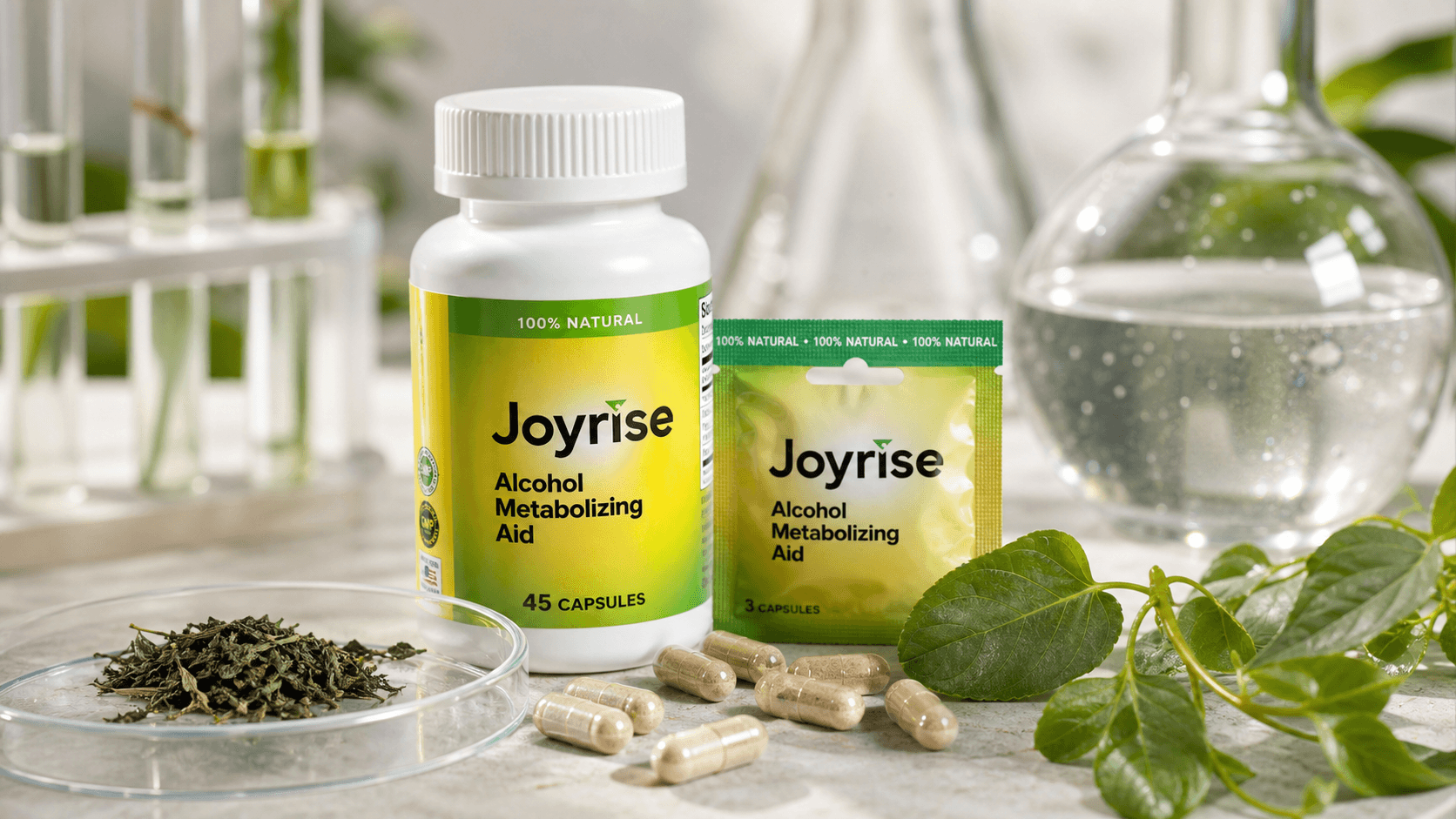
Joyrise capsule bottle, packet, and capsules with vine tea on a lab bench
Editorial context · not a clinical result
Short answer

DHM (dihydromyricetin) is a flavonoid from the Japanese raisin tree (Hovenia dulcis) and vine tea. NIH LiverTox says the few short-term human studies reported no adverse events, and that liver injury with jaundice has not been reported.

Explore the topic

What published sources say about tolerability

Updated · Joyrise Science Team

01

What DHM is

DHM, dihydromyricetin, is a flavonoid. NIH LiverTox says it is found in many plants, including Ampelopsis grossedentata (Chinese vine tea), Hovenia dulcis (the Japanese raisin tree), and some pine and cedar species. Joyrise's capsule page lists DHM from vine tea. The definition page is what is DHM.

LiverTox also says DHM is not approved for any use or disease in the United States, and that it is sold as a dietary supplement. A USC Today article from August 20, 2018 says the same thing in plain language: in the U.S., DHM had been used as a nutritional supplement, and pharmaceutical uses were not yet fully validated.

Sources: Dihydromyricetin; USC Today, August 20, 2018: DHM as a nutritional supplement; Joyrise capsules: product page, price and label directions

02

Reported DHM side effects

LiverTox says DHM has not been in many prospective safety trials, but is widely described as well tolerated and without side effects. The book's summary of the evidence is specific: the few studies of short-term DHM in humans reported no adverse events and no evidence of toxicity. It also says there have been no clinical case reports of clinically apparent liver injury with jaundice attributed to DHM, and it is not listed in large case series of liver injury from supplements. LiverTox gives that a likelihood score of E, which it defines as an unlikely cause of clinically apparent liver injury.

A separate 12-month randomized, double-blind, placebo-controlled trial in adults with metabolic dysfunction-associated steatotic liver disease tested a dietary supplement that contained DHM plus other ingredients. The safety section says tolerability was excellent in both groups and no patient reported any drug-related adverse event. The supplement was not DHM alone. Each tablet had vitamin C, vitamin E, choline, and 150 mg of DHM, and patients took two tablets twice a day, so the DHM amount in that product was 600 mg a day. Fifty-five patients were randomized. The authors say the multi-ingredient formula may not allow the results to be pinned on DHM alone. The trial measured liver enzymes and stiffness in people with a liver condition. It is not a hangover study.

Those sources do not publish a list of common consumer side effects with rates. Where they speak to harm, they report none in the short-term human studies LiverTox summarizes, none as drug-related events in the 12-month combination trial, and no jaundice cases attributed to DHM.

Sources: Dihydromyricetin; Michailidou et al.: DHM supplement in MASLD, 12-month randomized trial

03

Is DHM safe to take every day?

LiverTox describes a typical oral amount on products it has seen as 300 to 1000 mg daily, and it ties the "no adverse events" statement to short-term human studies. It also says DHM has not been subjected to many prospective safety trials, and that it is poorly absorbed and fairly rapidly metabolized.

The 12-month trial above is the longest human study read for this page. It used a combination product for up to a year and reported no drug-related adverse events. The authors still say larger studies are needed for the long-term safety profile. In the 2018 USC Today piece, Daryl Davies is quoted: "We know these products are safe for long-term use because she has done the safety and toxicity studies already." That is a researcher's statement about work already done, published as a quote, not a table of side effects.

Put those next to each other and the plain reading is: short-term studies and one year-long combination trial reported no adverse events they attributed to the product, a USC researcher has said safety work was already done, and everyday use of DHM on its own is still not settled by a large, long safety trial. Research on that question is ongoing.

Sources: Dihydromyricetin; Michailidou et al.: DHM supplement in MASLD, 12-month randomized trial; USC Today, August 20, 2018: DHM as a nutritional supplement

06

How Joyrise sources and formulates its DHM

The capsule page is the source for the finished product. It lists DHM from vine tea, a bioavailability design, and a patented invention. Joyrise describes that formula as all natural, fast-acting, and built for max DHM bioavailability, under U.S. Patent US11871770B1. The page also says the capsules are caffeine-free and made in the USA. On November 2, 2026 the bottle was $29.99 for 45 capsules, 15 labeled servings, $2.00 a serving, with a 30-day money-back guarantee.

The text on that page gives the serving as 3 capsules. It does not print a separate DHM milligram amount in the copy read that day, so the serving to follow is the one on the label in your hand. The label also says Joyrise does not lower BAC or impairment.

Sources: Joyrise capsules: product page, price and label directions

What each source read on November 2, 2026 says about DHM tolerability
SourceWhat it reports
NIH LiverToxShort-term human studies reported no adverse events. No jaundice cases attributed to DHM. Likelihood score E.
12-month MASLD trialNo drug-related adverse events reported. The product also contained vitamins C and E and choline.
USC Today, 2018Davies said safety and toxicity studies had already been done and described the products as safe for long-term use.

Frequently asked questions

What are the side effects of DHM?

NIH LiverTox says the few short-term human studies reported no adverse events, and that clinically apparent liver injury with jaundice has not been attributed to DHM. A 12-month trial of a DHM supplement that also contained vitamins and choline reported no drug-related adverse events. Those sources do not list a rate of common side effects.

Is dihydromyricetin safe?

LiverTox describes DHM as widely called well tolerated, gives it likelihood score E for clinically apparent liver injury, and says it has not been in many prospective safety trials. A 2018 USC Today article quotes a researcher saying safety and toxicity studies had already been done. That is the record these sources actually give.

Can you take DHM every day?

LiverTox describes typical products at 300 to 1000 mg a day and ties the no-adverse-event note to short-term studies. One combination product was taken for 12 months with no drug-related adverse events reported. The authors of that trial say the long-term safety profile still needs larger studies. Joyrise's own direction is the capsule label, not a daily milligram target.

Who should talk to a doctor before taking DHM?

If you are pregnant, nursing, taking medication, or managing a medical condition, consult your physician before use. That sentence is the warning on the Joyrise capsule page.

How is Joyrise's DHM formulated?

The capsule page lists DHM from vine tea, a bioavailability design, and a patented invention. Joyrise is an all natural, fast-acting hangover alcohol metabolizing aid with max DHM bioavailability, covered by U.S. Patent US11871770B1. Take 3 capsules while consuming alcohol, or before bed. See the Alcohol Metabolizing Aid capsules page.

A little more ready for your plans

Your cart 0