TL;DR: Joyrise®Backed by Joyrise scienceJoyrise formulas are built on the published science behind DHM, electrolytes, and after-drinking support - for next-morning clarity support without the marketing fluff. See the science →Recovering after an open bar involves addressing dehydration, blood sugar drops, toxic byproducts, and sleep disruption with supportive self-care. Hydrating with electrolytes, eating bland foods, resting adequately, and choosing safe pain relievers are essential for faster recovery. Supplements like dihydromyricetin can support liver metabolism but should complement, not replace, proper hydration, nutrition, and rest.
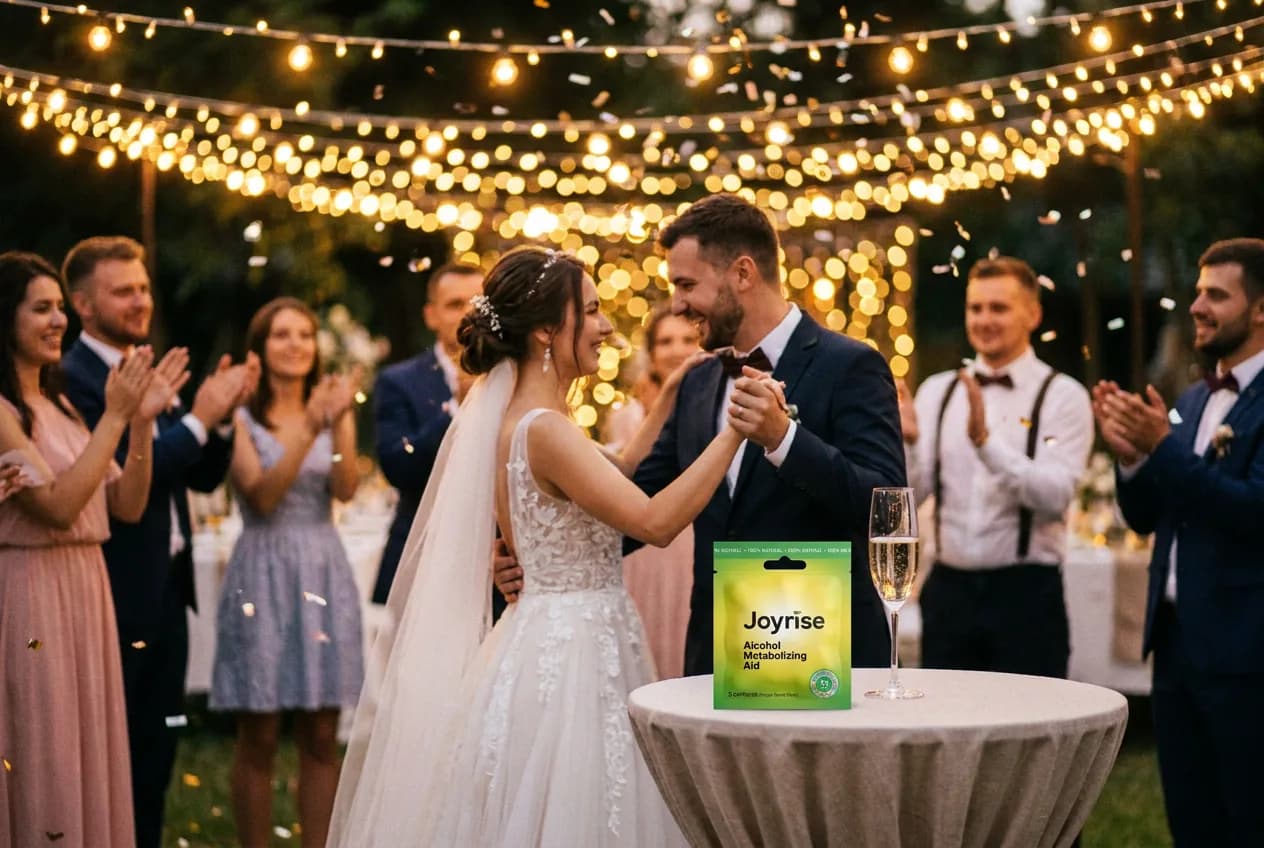
Recovering after an open bar reception means addressing dehydration, blood sugar crashes, toxic alcohol byproducts, and disrupted sleep all at once. There is no single magic fix. According to the Cleveland Clinic, hangover symptoms typically improve within 8–24 hours with supportive self-care. The most effective approach combines electrolyte-rich hydration, bland nutrition, quality rest, and careful use of pain relief. Whether you attended a wedding, a corporate party, or a milestone celebration, the recovery steps are the same. Joyrise has compiled this guide to help you feel better faster using evidence-backed strategies.
Why do you feel sick after drinking at an open bar?
Alcohol is a diuretic. Every drink you take signals your kidneys to flush more fluid than you consumed, which is why dehydration sets in fast at open bar events where refills are constant and easy.
Beyond fluid loss, your liver works to break down alcohol into acetaldehyde, a toxic compound that circulates in your bloodstream and causes nausea, headaches, and that general feeling of being poisoned. Your liver is the cleanup crew here, but it can only process roughly one standard drink per hour. Anything beyond that rate means acetaldehyde builds up.
Alcohol also drops your blood sugar. That drop triggers fatigue, shakiness, and brain fog the morning after. On top of that, alcohol suppresses REM sleep, so even if you slept eight hours, you wake up feeling like you barely rested. These four factors, dehydration, acetaldehyde accumulation, low blood sugar, and poor sleep quality, are the core reasons you feel sick after a night at an open bar.
Understanding the cause matters because it tells you exactly what to fix:
Dehydration: Replace fluids and electrolytes
Acetaldehyde buildup: Support liver metabolism with time and nutrition
Low blood sugar: Eat complex carbohydrates and protein
Sleep disruption: Prioritize rest and protect your recovery window
What are the best hydration and nutrition strategies to recover after an open bar reception?
Hydration is the single most important step when you want to restore energy after an open bar. Plain water helps, but electrolyte-enhanced fluids with sodium, potassium, and magnesium rehydrate you significantly faster. That is because alcohol depletes these minerals alongside water, and water alone cannot replace them.
Best drinks for post-drinking recovery
Reach for these options first:
Electrolyte drinks like Pedialyte or Liquid I.V.: deliver sodium and potassium in a ratio designed for rapid absorption
Coconut water: natural source of potassium and magnesium with less sugar than most sports drinks
Warm broth or soup: soups and broths supply sodium, fluids, and trace minerals simultaneously
Plain water: still valuable, especially between electrolyte drinks
Avoid coffee as your first drink. Caffeine is also a diuretic and can worsen dehydration before your fluid levels are restored.
Best foods for post-drinking recovery
Food choices matter more than most people realize. The best foods for post-drinking recovery are bland, complex carbohydrates that stabilize blood sugar without overwhelming a sensitive stomach.
Greasy food is one of the most persistent hangover myths. It may feel satisfying, but fat-heavy meals do not speed up alcohol metabolism and can irritate an already inflamed stomach lining.
Drink one full glass of water with electrolytes before you go to sleep after an event. Pre-emptive hydration cuts morning symptom severity significantly compared to waiting until you wake up feeling terrible.
How does rest and sleep help you recover after an open bar event?
Sleep is where your body does its most intensive repair work. Alcohol fragments your sleep architecture, cutting into REM cycles and leaving you in lighter, less restorative sleep stages. That is why you can sleep ten hours after a wedding reception and still wake up exhausted.
The goal is not just more sleep. It is better sleep. Give yourself permission to sleep in if your schedule allows. Avoid setting an alarm unless absolutely necessary. Your body needs uninterrupted time to clear acetaldehyde and restore neurotransmitter balance.
If you cannot sleep in, a short nap of about 20 minutes can restore alertness without pushing you into deep sleep, which would leave you groggy. Longer naps risk disrupting your nighttime sleep cycle, so keep them brief.
Practical steps to protect your recovery sleep:
Darken the room: alcohol sensitivity to light is real; blackout curtains or a sleep mask help
Keep the room cool: your body temperature regulation is off after drinking; a cooler room supports deeper sleep
Silence notifications: social media and event follow-up texts can wait
Avoid intense exercise: light movement is fine, but a hard workout before you are rehydrated stresses your body further
Stay horizontal if nauseous: lying on your side reduces the risk of aspiration if nausea is severe
If you wake up in the middle of the night after drinking, drink another glass of water before going back to sleep. Dehydration is often what wakes you up, and rehydrating immediately shortens your morning recovery window.
Seek medical attention if you experience confusion, seizures, severe vomiting that prevents any fluid intake, or a fever above 101°F. These symptoms go beyond a standard hangover and require professional evaluation.
What safe symptom relief options help after drinking?
Pain relief is where people make the most dangerous mistake in hangover recovery. The choice of medication matters more than most people think.
NSAIDs like ibuprofen (Advil, Motrin) or aspirin are the recommended options for headache and muscle aches after drinking. They reduce inflammation and relieve pain without adding stress to an already taxed liver.
Avoid acetaminophen (Tylenol) entirely. This is the most important medication warning in hangover care. Acetaminophen combined with alcohol significantly increases liver toxicity risk. Both substances are processed by the liver, and combining them can cause serious damage even at standard doses. This risk is widely underestimated because Tylenol is sold as a gentle, everyday pain reliever.
Here is a clear breakdown of what to use and what to avoid:
Safe options:
Ibuprofen (Advil, Motrin): effective for headache and body aches; take with food to protect your stomach
Aspirin: works for headache relief; avoid if you have a sensitive stomach or ulcer history
Antacids (Tums, Pepto-Bismol): help with nausea and stomach irritation
Avoid these:
Acetaminophen (Tylenol, Excedrin): liver toxicity risk when combined with alcohol
Prescription sleep aids: alcohol already sedates the central nervous system; adding sedatives is dangerous
More alcohol (“hair of the dog”): delays recovery and prolongs acetaldehyde exposure
NSAIDs can irritate the stomach lining, especially when it is already inflamed from alcohol. Always take them with food and stick to the lowest effective dose.
How long does it take to recover after an open bar reception?
Recovery time depends on how much you drank, your body weight, your age, and your overall health. For most adults, symptoms resolve within 8–24 hours with proper self-care. Full recovery, including restored energy and mental clarity, can take 1–3 days.
Multi-day events like destination weddings or bachelor weekends are a different story. Recovery from extended social events can take up to a week, especially when you factor in social fatigue, disrupted sleep across multiple nights, and repeated alcohol exposure.
Here is a practical recovery timeline to follow:
Night of the event: Drink one large glass of water with electrolytes before sleeping. Eat something bland if your stomach tolerates it.
Morning after (hours 1–4): Start with electrolyte fluids. Eat toast, crackers, or eggs. Take ibuprofen with food if you have a headache. Rest.
Mid-morning to afternoon (hours 4–12): Continue hydrating. Add a short nap if needed. Avoid alcohol, caffeine, and strenuous activity.
Evening (hours 12–24): Eat a full, balanced meal. Prioritize an early bedtime to restore your sleep cycle.
Days 2–3: If fatigue or brain fog persists, continue prioritizing sleep, hydration, and nutrient-dense meals. Reduce social commitments and protect your mental energy.
For multi-day events, pace your alcohol intake during the event itself. Alternate alcoholic drinks with water, eat before and during drinking, and use the morning recovery window between event days to rehydrate fully.
Key takeaways
Recovering after an open bar reception requires electrolyte hydration, blood-sugar-stabilizing food, quality rest, and careful medication choices working together in sequence.
What we have learned about recovery after open bar events
Here is something most recovery guides skip: the physical hangover and the social exhaustion are two separate problems that hit at the same time. After a wedding or large party, your body is dealing with alcohol metabolites while your nervous system is also recovering from hours of sustained social engagement. Treating only the physical symptoms and ignoring the mental fatigue is why so many people still feel off two days after an event.
We have found that the adults who recover fastest are the ones who plan ahead rather than react. Eating a real meal before the event, pacing drinks with water in between, and having electrolytes ready at home before they go out. These are not dramatic interventions. They are small decisions that cut recovery time in half.
On the supplement side, Joyrise is built around dihydromyricetin (DHM), a natural flavonoid from Ampelopsis grossedentata (vine tea) with peer-reviewed research supporting its role in alcohol and acetaldehyde metabolism. DHM does not prevent intoxication or support after-drinking recovery. What the research shows is that it supports the liver’s metabolic processes and may help with next-morning clarity and oxidative stress. That is a meaningful difference from the bold claims you see on most recovery products.
The most honest advice we can give: no supplement replaces hydration, food, and sleep. But for people who attend frequent events with open bars, having a science-backed tool in your routine is worth understanding.
— Joyrise
Support your recovery with Joyrise DHM capsules
If you want to go beyond the basics, Joyrise offers fast-acting DHM capsulesformulated with patented dihydromyricetin to support alcohol metabolism and next-morning clarity. DHM is a natural flavonoid backed by peer-reviewed research for its role in supporting liver function and reducing oxidative stress after drinking. Take Joyrise capsules before or after your event as part of a full recovery routine that includes hydration and rest. They are not a substitute for self-care, but they are a meaningful addition. Explore the full DHM supplement guideto understand how dihydromyricetin works and whether it fits your lifestyle.
FAQ
How long does a hangover last after an open bar event?
Most hangover symptoms resolve within 8–24 hours with proper hydration, food, and rest. Full energy recovery can take 1–3 days depending on how much you drank.
What is the best drink to have the morning after an open bar?
Electrolyte drinks like Pedialyte or coconut water are more effective than plain water because they replace sodium, potassium, and magnesium lost through alcohol’s diuretic effect.
Can you take tylenol for a hangover headache?
No. The Cleveland Clinic warns that acetaminophen (Tylenol) combined with alcohol increases liver toxicity risk. Use ibuprofen or aspirin with food instead.
Does eating greasy food help you recover after drinking?
Greasy food is a popular myth with little scientific support. Bland complex carbohydrates like toast, crackers, and eggs are more effective for stabilizing blood sugar and calming nausea.
Does DHM help with hangover recovery?
DHM (dihydromyricetin) is a natural flavonoid studied for its role in supporting alcohol and acetaldehyde metabolism and liver function. It is not a cure, but peer-reviewed research supports its use as a supplement to aid next-morning clarity when combined with hydration and rest.
Recommended
Wedding Hangover Relief Support | Joyrise
Hangover Relief and Remedies Guide | Joyrise
Hangover Remedies and Prevention Support | Joyrise
Hangover Relief Capsules — Fast-Acting DHM | Joyrise®
Backed by Joyrise science. Made by Joyrise®.
Related: the science/ what is DHM/ DHM hangover relief/ hangover relief capsules.
Important: These statements have not been evaluated by the FDA. Joyrise is not intended to diagnose, treat, cure, or prevent any disease. Follow the exact product label. Joyrise does not reduce impairment or BAC.
Source trail
References and further reading.
Links are preserved from the article so readers can inspect the underlying material. A link does not mean every finding applies to Joyrise or predicts a finished-product outcome.
Suggested citation
Joyrise Science Team. “How to Recover After an Open Bar Reception.” The Joyrise Journal, June 14, 2026. https://www.joyrise.com/blog/how-to-recover-after-an-open-bar-reception