
Evidence and responsible choices
Supplements that help with hangovers: what does the evidence show?
People searching for supplements that help with hangovers deserve a clear account of the evidence, not a promise of a better morning. Ingredients and formulas have been studied, but findings vary and do not transfer automatically to another product. Start with the actual research, the current label, and the limits of what either can tell you.
What counts as evidence for a hangover benefit?
A relevant study tests the outcome you care about. An experiment measuring an enzyme, a blood marker, or behavior in animals answers a different question from a trial asking people about next-day symptoms. Even a human study may test a particular formula at a particular time. Read those details before treating an ingredient name as the result.
Roberts and colleagues' systematic review found very low quality efficacy evidence for the interventions it examined. That conclusion calls for caution, rather than a ranking of guaranteed winners. Ask whether a finding has been repeated independently and whether the finished product being offered was actually studied.
Testimonials are experiences, not controlled comparisons. Different evenings can involve different amounts of alcohol, meals, sleep, and expectations. A favorable review cannot isolate which change mattered. Keep that distinction when reading a buying guide or deciding how much confidence to place in a claim.
Ingredients often discussed, and their limits
DHM and botanical extracts
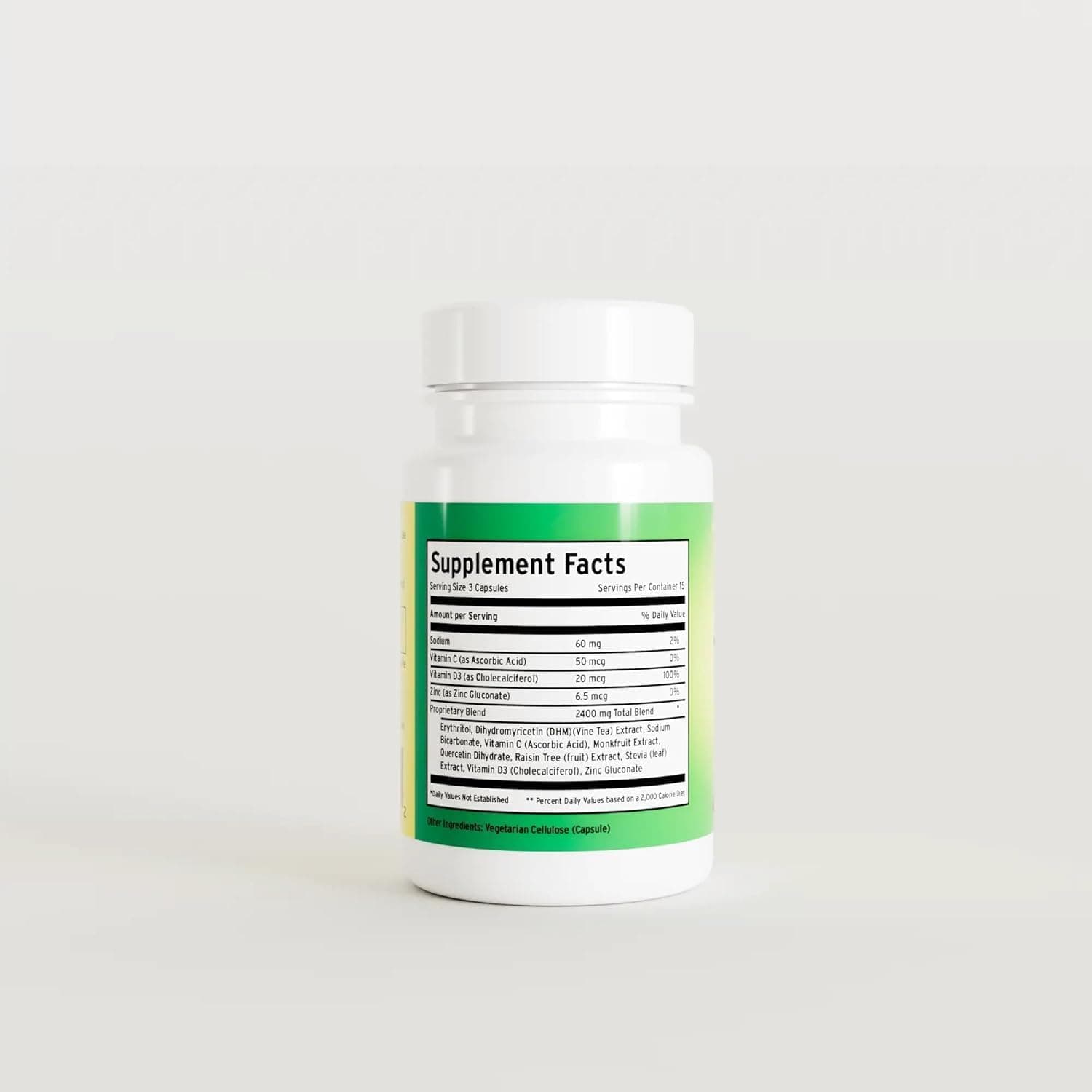
DHM is dihydromyricetin. Shen and colleagues' DHM research involved animal and laboratory models; it should not be presented as proof of consumer outcomes from Joyrise. A botanical source, an extract amount, and a declared amount of an isolated compound are also different label details. See our DHM supplement guide for the topic-specific comparison.
Vitamins, minerals, and electrolyte mixtures
Lieb and Schmitt's randomized trial did not establish a hangover benefit for the vitamins-and-minerals formulation it tested. That finding is about a specific preparation, not proof that every hydration product is useless. It is a reason to separate supporting fluid intake from promising a change in overall symptoms.
More is not automatically a better comparison. The NIH Office of Dietary Supplements warns that excessive long-term vitamin B6 supplement intake can cause nerve damage. Check the combined amounts across products rather than assuming familiar vitamins are harmless at any dose. This guide does not recommend a supplement dose.
N-acetylcysteine and other amino-acid approaches
N-acetylcysteine is often discussed because of its biochemical role, but mechanism and symptom outcomes are separate questions. Podobnik and colleagues' 2024 clinical study did not demonstrate a hangover benefit under its tested conditions. Do not turn either a laboratory rationale or one trial into a blanket claim about all related preparations.
Compare labels before comparing slogans
Make a small comparison sheet for the exact products you are considering. Record the serving size, ingredient amounts, format, directions, warnings, and whether the label identifies an extract or its standardized compound. A packet, bottle, and powder may have different directions even when their branding looks similar.
Next, compare the cited research with that label. Does the formula match? Was the outcome measured in people? Did the study use the same amount and timing? If those answers are unavailable, mark the evidence as uncertain. Clear uncertainty is more useful than assigning a numerical score that the research cannot support.
The FDA explains that it does not approve dietary supplements for safety and effectiveness before marketing. A compliant label, a manufacturing statement, and a clinical outcome are different kinds of information. Look for evidence relevant to the claim rather than treating a supplement as equivalent to an approved medicine.
According to NCCIH's supplement guidance, medicines and supplements can interact. Share what you take with a healthcare professional, especially if you have a health condition or are considering a combination. Do not add several products just because each contains a different advertised ingredient.
Where a hangover relief aid fits
Joyrise's packaging describes it as a hangover relief aid and alcohol metabolizing aid. Use those terms as product descriptions, not a guarantee of a particular outcome. Review the current label for the exact format. The hangover relief aid capsules guide explains the capsule category without turning ingredient research into a finished-product claim.
A product comparison should leave room for deciding not to use a supplement. Suitability, directions you can follow, and honest expectations matter more than collecting additional ingredients. No supplement should become a reason to drink more or assume that you can drive after drinking.
For the broader question, read is there a hangover cure? For practical next-day decisions, see hangover recovery. A supplement comparison is a narrow part of that picture; it is not a substitute for reducing alcohol exposure or seeking help for concerning symptoms.
Frequently asked questions
Is there a supplement that reliably works for everyone?
The cited research does not establish that. Formulas, participants, and outcomes differ, and the systematic review rated efficacy evidence as very low quality.
Does DHM research prove Joyrise's results?
No. Research on DHM in animal and laboratory models does not establish outcomes from a finished Joyrise product in people.
Should I combine several supplements?
Do not assume their amounts and warnings are compatible. Check the full ingredient lists and discuss combinations with a healthcare professional.
What should I check on a label?
Serving size, ingredients and amounts, directions, warnings, and the exact format. Then ask whether the cited research tested a matching preparation and relevant outcome.
Sources
Research and agency guidance used for this educational article. A study of an ingredient is not a study of a finished Joyrise product.
- Roberts et al. (2022): Placebo-controlled hangover intervention evidence
- Shen et al. (2012): DHM animal and laboratory research
- Lieb and Schmitt (2020): Nutritional intervention trial
- NIH ODS: Vitamin B6 fact sheet
- Podobnik et al. (2024): N-acetylcysteine clinical study
- FDA: Questions and answers on dietary supplements
- NCCIH: Using dietary supplements wisely