An interesting research question, not a prevention claim
Dihydromyricetin has been studied in experimental models relevant to Alzheimer's disease. Those studies can help researchers examine brain signaling and disease-related processes. They do not establish that taking DHM or Joyrise prevents Alzheimer's disease, treats memory loss, or protects a person's brain from alcohol. A laboratory finding should retain its model when it reaches a consumer article.
The phrase “hangover molecule” is a marketing shorthand, not a scientific category. DHM is a plant flavonoid investigated for several different questions. Evidence about one question does not automatically support another. An alcohol-related animal experiment and an Alzheimer's mouse study differ in purpose, exposures, and outcomes, even if the same molecule appears in both.
What happened in the 2014 mouse study?
In Liang and colleagues' 2014 research, investigators studied transgenic mouse models with Alzheimer's-like pathology, including TG2576 and TG-SwDI mice. The reported regimen used DHM at 2 mg/kg for three months. Researchers examined behavior and brain-related measures, including amyloid-beta, GABA-A signaling, and gephyrin, a protein associated with inhibitory synapses.
The study reported changes in those experimental outcomes. Its importance is that it connects a proposed mechanism with observations in a defined disease model. It did not enroll people with Alzheimer's disease, test the Joyrise formulation, or establish a human prevention regimen. The animal dose identifies the experiment; it should not be converted into a personal supplement instruction.
Why another mouse model is useful but still preclinical
A 2018 study involving APP/PS1 transgenic mice examined DHM in relation to microglial activation and NLRP3 inflammasome signaling. Microglia are involved in the brain's immune environment, and the experiment explored a different part of the biological picture from simply measuring a compound in blood.
Work across models can strengthen the rationale for more research. It does not remove the need for human trials. Genetically engineered mice model selected features of a complex disease, rather than recreating every feature of aging, illness, medicines, and daily life in people. That limitation belongs in the interpretation even when multiple laboratory results appear consistent.
Mechanisms are not interchangeable with outcomes
Amyloid-related measurements, synaptic proteins, inflammatory signaling, and performance on animal tasks are distinct endpoints. A change in one can be biologically interesting without demonstrating preserved independence, improved human memory, or delayed disease onset. A consumer headline that jumps between these endpoints can sound stronger than the underlying evidence.
Ask what success meant in the actual study. Was the measured result a tissue analysis, a behavioral test, or a clinical symptom? Was it assessed immediately after treatment or over an extended follow-up? These questions help separate the experiment's finding from broader hopes about what future work might establish. The hope can be reasonable without already being a proven use.
Absorption and formulation create another gap
An oral supplement must be evaluated as an oral supplement. A 2021 DHM pharmacokinetic study in mice compared routes of administration and measured exposure in serum and brain. It helps explain why researchers consider absorption and metabolites, but it does not demonstrate a clinical brain-health benefit in humans.
Detecting a substance in tissue is not the same as showing that it reaches an effective and safe exposure for a specific human purpose. A formulation claim therefore needs its own supporting methods. A patent, a laboratory absorption result, and an Alzheimer's treatment trial would represent different kinds of evidence. One cannot stand in for the others.
What a relevant human claim would need
A claim about preventing Alzheimer's disease would need research designed around that prevention question, with appropriate participants, outcomes, duration, and comparison groups. A treatment claim would need evidence relevant to people with the condition. Neither question is answered by a short consumer testimonial or by quoting the conclusion of a mouse paper without its methods.
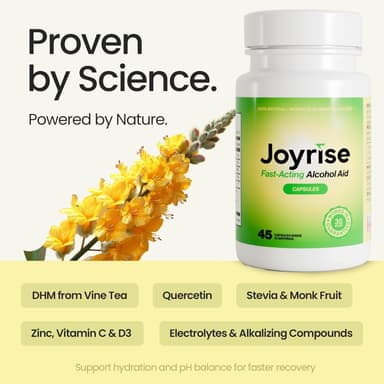
The commercial product also matters. Evidence about purified DHM cannot automatically validate a different blend with other ingredients and a different serving schedule. A careful account identifies the precise intervention and the population instead of relying on a broad ingredient name. It should also describe uncertainty and adverse-event monitoring, rather than discussing potential benefits alone.
Memory concerns deserve assessment
Occasionally forgetting a name is not enough to diagnose a disease, and an online supplement article cannot determine the cause of a person's symptoms. The National Institute on Aging's memory guidance explains why persistent changes or memory problems that affect everyday tasks deserve a health professional's assessment. Different causes require different evaluations and care.
Keep a concrete record of what changed, when it began, and whether others have noticed it. Include medicines, sleep changes, alcohol use, and any problems with familiar activities. This gives a clinician more useful information than deciding that an ingredient must fit a mechanism mentioned online. Do not delay established medical care while trying an unproven prevention product.
What this means for Joyrise
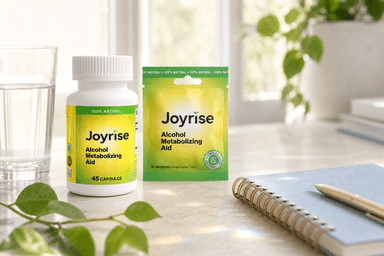
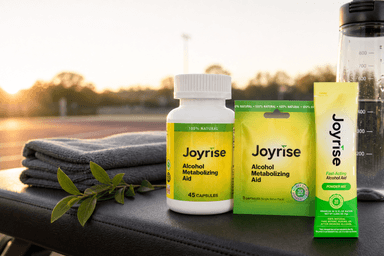
Joyrise is a DHM-based dietary supplement for alcohol metabolism support. The studies cited here do not establish that it prevents or treats Alzheimer's disease, improves a memory disorder, or offsets alcohol-related brain harm. The brand has a commercial interest in the ingredient, which is why the source trail and the limits need to remain easy to find.
If comparing supplements, use the current product label for the actual serving and ingredients, and the DHM research overview for study context. No supplement makes drinking or driving after drinking safe. Choosing less alcohol should not depend on a belief that a separate product will neutralize the exposure.
Questions readers ask
Does reducing an Alzheimer's-related marker in mice prove prevention in people?
No. It identifies an experimental result in that model. A human prevention claim requires evidence about human prevention, not a substitution of one endpoint or species for another.
Should an animal research dose become my serving size?
No. Species, administration route, formulation, duration, and purpose differ. Follow the purchased product's label and seek medical advice for memory concerns rather than constructing a regimen from a laboratory paper.
Important: These statements have not been evaluated by the FDA. Joyrise is not intended to diagnose, treat, cure, or prevent any disease. Follow the exact product label. Joyrise does not reduce impairment or BAC.
Source trail
References and further reading.
Links are preserved from the article so readers can inspect the underlying material. A link does not mean every finding applies to Joyrise or predicts a finished-product outcome.
- Liang and colleagues' 2014 researchpubmed.ncbi.nlm.nih.gov · Research publication
- 2018 study involving APP/PS1 transgenic micepubmed.ncbi.nlm.nih.gov · Research publication
- 2021 DHM pharmacokinetic study in micepubmed.ncbi.nlm.nih.gov · Research publication
- National Institute on Aging's memory guidancenia.nih.gov · Public-health institution
Suggested citation
Joyrise Science Team. “DHM and Alzheimer's Research: What Mouse Studies Can Tell Us.” The Joyrise Journal, October 27, 2025. https://www.joyrise.com/blog/could-a-hangover-molecule-protect-your-brain-from-alzheimer-s