Antioxidants aren't a cure for alcohol-related liver damage. A grounded look at what they actually support during recovery — and where DHM fits in.
Antioxidants are not a cure for alcohol-related liver damage. That’s the honest starting point. Too many people enter recovery believing that a handful of vitamin C tablets or a “detox” smoothie will flush the damage away. The role of antioxidants in alcohol recovery is real and scientifically supported, but it’s also more specific and more nuanced than most wellness content suggests. What antioxidants actually do is help your body’s repair systems work more effectively by neutralizing the oxidative damage that alcohol metabolism generates. This article explains the mechanisms, reviews the most current evidence, and gives you practical guidance grounded in science.
Table of Contents
The role of antioxidants in alcohol recovery starts with oxidative stress
What the research actually shows
Timing, dose, and medical integration
Practical food and supplement strategies
What I’ve learned about antioxidants and realistic recovery
Support your recovery with science-backed formulas
Key takeaways
The role of antioxidants in alcohol recovery starts with oxidative stress
When your liver processes alcohol, it uses two primary enzymes: alcohol dehydrogenase (ADH) and aldehyde dehydrogenase (ALDH). Both are necessary, but neither is clean. The process generates reactive oxygen species (ROS), which are unstable molecules that damage cell membranes, proteins, and DNA. Think of ROS as sparks flying off a fire. A few sparks are manageable. A sustained blaze overwhelms everything nearby.
Your body has natural defenses against this. Enzymatic antioxidants like superoxide dismutase (SOD), catalase, and glutathione peroxidase work continuously to neutralize ROS before they cause lasting harm. Non-enzymatic antioxidants, including vitamins C and E and selenium, provide additional support. The problem is that chronic alcohol exposuredecreases SOD and catalase activity while sharply increasing lipid peroxidation, a marker of cellular damage from oxidative injury.
Here is a quick breakdown of the key players:
Glutathione (GSH): The liver’s most abundant antioxidant. Alcohol metabolism depletes it rapidly, leaving cells exposed.
Superoxide dismutase (SOD): Converts the most reactive oxygen species into less harmful compounds. Activity drops significantly with heavy drinking.
Catalase: Breaks down hydrogen peroxide before it damages tissue. Alcohol suppresses its efficiency.
Vitamins C and E: Water- and fat-soluble antioxidants, respectively, that neutralize ROS in different cellular compartments.
Selenium: A trace mineral that activates glutathione peroxidase, one of the body’s main antioxidant enzymes.
Chronic alcohol use also suppresses the Nrf2 pathway, a master regulator of antioxidant gene expression, while simultaneously activating NF-κB, which drives inflammation. The result is a system that is simultaneously less capable of defense and more prone to inflammatory damage.
What the research actually shows
The science on antioxidants and alcohol-related liver injury has advanced considerably. Two 2026 studies published in peer-reviewed journals offer specific and useful findings.
A study on a flavonoid-rich plant-based beverage (JHB) showed dose-dependent liver protectionin mice exposed to acute alcohol injury. The beverage increased ADH and ALDH enzyme activity, raised SOD and catalase levels, and lowered markers of liver injury including ALT and AST. These are the same liver enzymes your doctor checks on a blood panel to assess liver health.
Separately, dietary quercetin, a flavonoid found in apples, onions, and citrus fruits, demonstrated the ability to lower AST and ALT levelswhile reducing inflammatory cytokines TNF-α and IL-6 and increasing SOD, glutathione, and catalase activities in alcohol-exposed mice. Quercetin also modulated lipid metabolism gene expression, reducing liver fat accumulation.
These findings matter. But they come with an important caveat.
Animal model results are not automatically transferable to humans. Mice metabolize alcohol differently, receive controlled doses, and start treatment before or immediately after injury. Most human clinical trials begin after damage is already established, which limits reversal potential. Clinical antioxidant trials also face challenges from differences in bioavailability, genetic variation in antioxidant enzymes, and disease stage at the time of treatment.
The glutathione story is particularly well-supported. Glutathione peroxidase and thiol-based antioxidants represent the primary defenses overwhelmed by alcohol. N-acetylcysteine (NAC), a precursor that the body converts into glutathione, has shown the ability to replenish GSH stores in both animal models and some human injury contexts. NAC is one of the more clinically defensible antioxidant supplements in recovery, though it is not a treatment for alcohol use disorder itself.
The honest framing here is this: antioxidants support repair pathways. They do not rapidly detox the liver or reverse years of damage in days. Understanding that distinction is what separates useful supplementation from wishful thinking.
Timing, dose, and medical integration
Here is something most antioxidant articles skip entirely: more is not always better, and timing matters more than most people realize.
Research from exercise physiology, specifically on redox signaling during recovery, shows that high-dose vitamins C and Etaken close to adaptive cellular processes can blunt beneficial signaling. The body uses controlled amounts of ROS as signals to trigger repair and adaptation. Flooding the system with antioxidants at the wrong moment can interfere with that process. This concept, sometimes called Redox-Adaptive Periodization, has not been studied extensively in alcohol recovery specifically, but the underlying biology applies.
What this means practically:
Avoid mega-dosing antioxidant supplements without medical guidance, particularly during early recovery when the body is actively recalibrating.
Prioritize nutrient repletion over supplementation. Thiamine, B vitamins, vitamin C, and magnesiumare commonly depleted by heavy drinking and correcting those deficiencies is the most evidence-backed nutritional priority in alcohol recovery.
Do not substitute antioxidants for medical withdrawal care. Alcohol withdrawal can be medically serious. Antioxidants do not prevent or treat withdrawal symptoms. Medical monitoring is non-negotiable.
Consider food-first strategies. Antioxidant-rich whole foods deliver compounds in forms the body recognizes, often with better bioavailability than isolated supplements.
Work with a physician or registered dietitian to identify specific deficiencies before adding supplements to your routine.
If you are in early recovery, ask your care team about checking your thiamine and B12 levels specifically. These are often the most depleted and the most consequential to correct first, before layering in other antioxidant support.
The importance of antioxidants in detox is real, but it is most accurately understood as part of a broader nutritional stabilization effort, not as a standalone strategy.
Practical food and supplement strategies
Building your antioxidant defenses through food is both safer and more sustainable than relying on supplements. Here is a practical, prioritized approach.
Load up on flavonoid-rich fruits and vegetables. Berries, citrus fruits, apples, onions, and leafy greens all contain quercetin, vitamin C, and other polyphenols that support antioxidant enzyme activity. These are the same compound classes showing protective effects in the most recent liver injury research.
Eat cruciferous vegetables regularly. Broccoli, Brussels sprouts, and cauliflower support the Nrf2 pathway, helping your body produce more of its own antioxidant enzymes rather than relying on external sources.
Consider NAC supplementation with medical guidance. NAC is one of the most studied glutathione precursors. It is available as a supplement and has a reasonable safety profile, but dosing and timing should be discussed with a healthcare provider, particularly during recovery.
Look at silymarin (milk thistle extract). Silymarin has a long history of use in liver support and shows antioxidant and anti-inflammatory properties in preclinical models. Human evidence is mixed, but it is widely used and generally considered safe at standard doses.
Stay hydrated and eat balanced meals. Alcohol is dehydrating and disrupts nutrient absorption. Consistent hydration and regular, balanced meals support the liver’s ability to process and eliminate metabolic waste.
Approach functional beverages with informed skepticism. Plant-based antioxidant drinks like the JHB studied in 2026 research show genuine promise in animal models. Whether those effects translate to humans at commercially available doses remains to be confirmed. They can be part of a healthy diet, but should not be positioned as liver treatments.
The benefits of antioxidants in recovery are best realized when they are part of a consistent, food-forward nutrition plan, not a reactive supplement stack. You can learn more about how specific compounds like DHM interact with alcohol metabolism pathwaysto understand why targeted support works differently than general antioxidant loading.
What I’ve learned about antioxidants and realistic recovery
At Joyrise, we spend a lot of time in the research. And one thing I’ve come to believe strongly is that the antioxidant conversation in recovery gets distorted in two directions. Some people dismiss antioxidants entirely as wellness noise. Others treat them as a shortcut, stacking supplements and expecting rapid liver repair. Both miss the point.
What I’ve found is that the most meaningful antioxidant support in recovery is unglamorous. It’s correcting thiamine deficiency. It’s eating berries instead of skipping meals. It’s giving the liver consistent, low-stress nutritional input over weeks and months, not a dramatic cleanse over a weekend.
The science on compounds like quercetin and NAC is genuinely exciting. But the gap between a mouse study and a human clinical outcome is real, and I think it’s worth being honest about that rather than overpromising. The people I’ve seen benefit most from antioxidant-focused nutrition are those who treat it as one layer of a larger recovery plan, not the whole plan.
What most people miss is the timing piece. Your body’s repair systems need some oxidative signaling to function. Flooding that system indiscriminately can actually slow adaptation. The goal is support, not suppression.
Recovery is a whole ecosystem. Nutritional, behavioral, and medical care all work together. Antioxidants belong in that ecosystem, not above it.
— Joyrise
Support your recovery with science-backed formulas
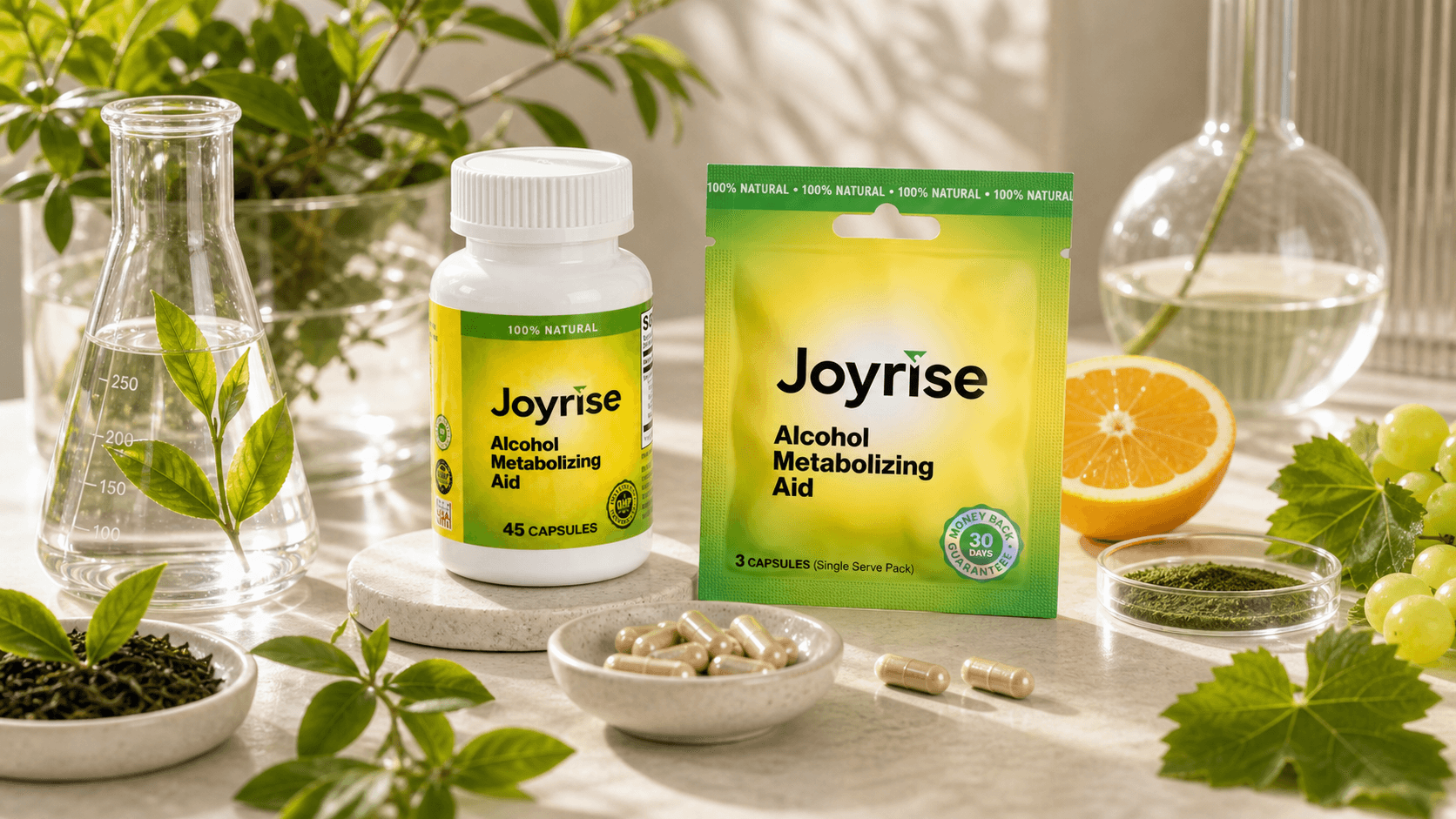
If you’re recovering from alcohol use and looking for supplemental support grounded in real research, Joyrise was built for exactly this. Our patented DHM (dihydromyricetin) formula works alongside your body’s antioxidant systems, supporting alcohol metabolism, liver function, and next-morning clarity.
DHM is a natural flavonoid with deep roots in traditional East Asian medicine and a growing body of peer-reviewed research behind it. It supports ADH and ALDH enzyme activity, the same metabolic pathways central to reducing oxidative stress from alcohol. You can read the full breakdown of DHM’s antioxidant scienceor explore the peer-reviewed researchthat informs our formulation. Joyrise products are designed as alcohol metabolism support supplements for people who choose to drink, not as treatments for alcohol use disorder. Use them as part of a broader recovery plan that includes medical care and proper nutrition.
FAQ
What is the role of antioxidants in alcohol recovery?
Antioxidants help neutralize reactive oxygen species generated during alcohol metabolism, supporting the liver’s repair processes and reducing oxidative damage. They work best as one component of a broader recovery plan that includes medical care and nutritional support.
Which antioxidants are most useful for liver support during recovery?
Glutathione (and its precursor NAC), vitamins C and E, quercetin, and selenium have the strongest mechanistic support for combating alcohol-induced oxidative stress. Correcting thiamine and B vitamin deficiencies is typically the most clinically urgent nutritional priority.
Can antioxidant supplements replace medical care during alcohol withdrawal?
No. Alcohol withdrawal can be medically serious, and nutritional support including vitamins is intended to complement, not replace, medical monitoring and treatment. Always work with a healthcare provider during withdrawal.
Is it possible to take too many antioxidant supplements during recovery?
Yes. High-dose antioxidants taken at the wrong time can interfere with beneficial redox signaling that the body uses to drive cellular repair. Moderate, food-based antioxidant intake is generally safer and more effective than aggressive supplementation.
How long does it take for antioxidant support to make a difference in liver health?
There is no universal timeline. Animal studies show measurable changes in liver enzyme markers within days of antioxidant treatment, but human recovery depends on the extent of prior damage, overall nutrition, abstinence, and medical care. Consistent support over weeks to months is more realistic than rapid results.
Recommended
The Silent Protector: DHM Beyond Alcohol
Could DHM Protect Your Brain From Alzheimer’s?
DHM for Hangover Relief Support | Joyrise
Joyrise Blog — Science of Recovery, DHM & Hangover Relief
Designed for alcohol metabolism support. Made by Joyrise®.
Related: the science/ what is DHM/ DHM hangover relief/ hangover relief capsules.
Important: These statements have not been evaluated by the FDA. Joyrise is not intended to diagnose, treat, cure, or prevent any disease. Follow the exact product label. Joyrise does not reduce impairment or BAC.
Source trail
References and further reading.
Links are preserved from the article so readers can inspect the underlying material. A link does not mean every finding applies to Joyrise or predicts a finished-product outcome.
- chronic alcohol exposurepmc.ncbi.nlm.nih.gov · Research publication
- suppresses the Nrf2 pathwaymdpi.com · Research publication
- dose-dependent liver protectionfrontiersin.org · Research publication
- lower AST and ALT levelsfrontiersin.org · Research publication
- high-dose vitamins C and Emdpi.com · Research publication
- Thiamine, B vitamins, vitamin C, and magnesiumfloridarehab.com · Secondary or commercial source
Suggested citation
Joyrise Science Team. “The Role of Antioxidants in Alcohol Recovery.” The Joyrise Journal, May 28, 2026. https://www.joyrise.com/blog/the-role-of-antioxidants-in-alcohol-recovery