Brain fog is a description, not a single mechanism
People use “brain fog” for experiences such as feeling slow, distracted, forgetful, or mentally tired. Those descriptions do not identify one cause or one treatment. After drinking, lost sleep and other alcohol effects can contribute to an unpleasant morning. Persistent difficulty with concentration can also warrant a different conversation from choosing an alcohol-related supplement.
DHM appears in research involving cognition and brain signaling, but the available studies discussed here do not establish that Joyrise sharpens attention in healthy adults. A useful review names what the research measured, then asks whether that measure matches the desired outcome. Remembering a task, feeling alert, and performing safely are related questions, but they are not identical.
What a cognition study in diabetic mice tells us
A 2018 study of type 2 diabetes-related cognitive impairment in mice investigated DHM in a disease model. The researchers examined cognitive outcomes alongside oxidative-stress and brain-derived neurotrophic factor-related measures. The model is relevant to a specific experimental question about metabolic disease and the brain, not a routine office worker's productivity.
Disease-model research can reveal a possible mechanism worth investigating. It does not show that a consumer capsule increases concentration in people who do not have that condition. The intervention, species, baseline impairment, and endpoint all differ. Quoting the word “cognitive” from a study title without those details can turn a narrow result into a much broader claim.
Alzheimer's models answer a different question again
The 2014 DHM study in transgenic Alzheimer's mouse models reported changes in behavior and brain-related measures after a defined experimental regimen. It contributes to research on those models. It is not a clinical trial of a focus supplement in healthy adults and should not be used to imply prevention or treatment of dementia.
For an account of that research, read the DHM and Alzheimer's evidence guide. Keeping the topics separate prevents a common evidence shortcut: taking a result from a disease model and treating it as proof of general enhancement. A product's usefulness for a particular person must be assessed against the outcome actually relevant to that person.
Exposure is not a performance score
A 2021 mouse study examined DHM and metabolites in serum and brain after different administration routes. That is pharmacokinetic evidence: it concerns exposure over time. A claim about improved human attention would require a different kind of measurement, with an appropriate task, comparison group, and study population.
Even a well-characterized delivery system does not by itself prove better memory or concentration. The formulation may be worth studying, but the desired benefit still needs testing. When a page connects “absorbs better” directly to “think faster,” look for the missing human-outcome evidence between those statements. If it is absent, the connection remains a hypothesis rather than an established result.
The next morning is not an ordinary baseline
NIAAA's hangover overview describes several contributors to next-day symptoms, including disrupted sleep and other effects of alcohol. A morning after drinking therefore involves more than one variable. Comparing it with an easy morning after a full night's rest would not isolate a supplement's effect.
Timing matters too. Symptoms change as the body recovers, so an improvement after taking something does not show that the product caused the improvement. Food, fluids, sleep, alcohol intake, and expectations may also differ. A controlled trial tries to account for those factors; an individual review usually cannot. That does not make someone's experience unreal, but it limits the conclusion that can be drawn from it.
Alertness is not proof of safe performance
Coffee or another source of caffeine may change how awake someone feels without lowering BAC or reversing impairment. A person should not use their subjective sense of focus to decide whether it is safe to drive, use machinery, or undertake another demanding task after alcohol. A supplement is not a clearance test for those activities.
This distinction also matters in marketing language. “Ready for the morning” can mean a pleasant ritual, an expectation, or a tested performance result. If it implies a measured improvement, the evidence should identify the relevant human test. A general brain-signaling paper cannot silently supply that missing proof. Practical decisions should account for the previous night's exposure and actual recovery time.
How to assess a focus claim before buying
First, define the result you want: fewer mistakes, improved sustained attention, better memory, or less perceived fatigue. Then ask whether a trial measured that result in a relevant population. A composite wellness score, a customer review, and a timed attention task provide different information. A meaningful claim should make its outcome clear enough to be evaluated.
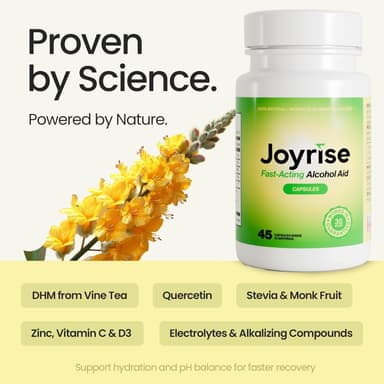
Next, match the tested formula to the current product. Check the DHM amount per serving, other ingredients, and the delivery system. A study of an ingredient alone cannot establish the effect of every blend containing it. Review the duration and comparator as well; a single-dose result does not automatically describe months of use, and a comparison without placebo may leave important uncertainty.
Finally, ask about limitations and adverse events. Useful evidence does not consist only of positive findings. A source-backed comparison should describe what was tested and what remains unknown, without inventing a winner among products that have not been compared in the same trial. The DHM bioavailability guide explains another part of that evaluation.
A sensible role for Joyrise
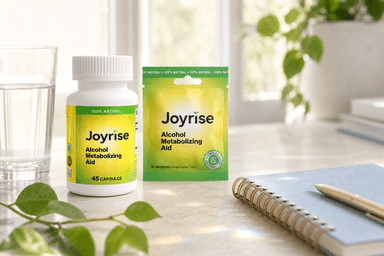
Joyrise is a dietary supplement for alcohol metabolism support, not a treatment for attention problems or a substitute for adequate sleep. Follow its current label, and do not add servings to chase a focus effect. The company has a commercial interest in DHM, so the distinction between ingredient research and finished-product evidence remains important.
If concentration or memory difficulties persist, worsen, or interfere with everyday activities, discuss them with a qualified professional. Bring specific examples, timing, medicines, sleep patterns, and alcohol use. That helps identify the right question instead of assuming every episode of mental fatigue has the same mechanism. Sudden confusion or other severe symptoms need prompt medical assessment.
Questions readers ask
Does a mouse memory result prove better human focus?
No. Both the species and the outcome need to match the claim. Memory in a disease model is not the same as sustained attention in a healthy adult.
Does feeling clearer mean alcohol impairment has ended?
No. Subjective clarity is not a BAC measurement or proof of safe performance. No supplement makes drinking and driving safe.
Important: These statements have not been evaluated by the FDA. Joyrise is not intended to diagnose, treat, cure, or prevent any disease. Follow the exact product label. Joyrise does not reduce impairment or BAC.
Source trail
References and further reading.
Links are preserved from the article so readers can inspect the underlying material. A link does not mean every finding applies to Joyrise or predicts a finished-product outcome.
- 2018 study of type 2 diabetes-related cognitive impairment in micepubmed.ncbi.nlm.nih.gov · Research publication
- 2014 DHM study in transgenic Alzheimer's mouse modelspubmed.ncbi.nlm.nih.gov · Research publication
- 2021 mouse studypubmed.ncbi.nlm.nih.gov · Research publication
- NIAAA's hangover overviewniaaa.nih.gov · Public-health institution
Suggested citation
Joyrise Science Team. “DHM and Brain Performance: Separating Research From Focus Claims.” The Joyrise Journal, October 24, 2025. https://www.joyrise.com/blog/from-fog-to-focus-how-dhm-sharpens-brain-performance