TL;DR: Vine tea extract DHM is a natural flavonoid that supports alcohol metabolism and liver health through antioxidant activity and cellular defense pathways. Taking 300 to 600 mg of DHM 30 to 60 minutes before drinking enhances its effectiveness, especially when using standardized, bioavailability-optimized formulations. Regular, long-term use improves liver enzyme normalization and overall metabolic support, but timing and product quality are crucial for optimal results.
Vine tea extract DHM is a natural flavonoid derived from Ampelopsis grossedentata, a plant with deep roots in traditional East Asian medicine, and it is now one of the most studied nutraceuticals for alcohol metabolism and liver function support. The active compound, dihydromyricetin (DHM), works by modulating oxidative stress, supporting acetaldehyde clearance, and activating key cellular defense pathways including Nrf2 and AMPK. Recent 2026 clinical trials and peer-reviewed molecular reviews have strengthened the case for DHM as a science-backed supplement. For adults who drink socially and want real next-morning clarity, understanding how this compound works is the first step toward using it well.
How does vine tea extract DHM support alcohol metabolism and liver function?
DHM supports alcohol metabolism by targeting the biochemical processes that make drinking hard on your body. When you drink, your liver converts alcohol into acetaldehyde, a toxic byproduct that drives inflammation, oxidative stress, and that familiar morning fog. DHM accelerates the clearance of acetaldehyde by supporting the enzymes responsible for breaking it down, reducing the window during which acetaldehyde causes cellular damage.
The antioxidant mechanism is specific and measurable. DHM scavenges reactive carbonyl species at approximately 70% efficiency within 0.5–2 hours at body temperature. That means it actively neutralizes methylglyoxal and acrolein, two of the most damaging reactive compounds produced during alcohol metabolism, before they can accumulate.
Beyond direct scavenging, DHM modulates three critical signaling pathways:
AMPK activation: Supports cellular energy balance and fat metabolism in the liver, which alcohol disrupts.
NF-κB suppression: Reduces the inflammatory signaling cascade triggered by alcohol and its byproducts.
Nrf2 activation: Upregulates the body’s own antioxidant defense enzymes, including glutathione synthesis.
These kinase signaling pathways explain why DHM’s effects extend well beyond a single night out. The compound essentially primes the liver’s cleanup systems rather than just masking symptoms.
Take DHM before you start drinking, not after. The Nrf2 and AMPK pathways need time to activate, so front-loading the dose gives your liver a head start.
A 2026 molecular mechanism review confirmed DHM’s multi-target activity across metabolic, neuroprotective, and liver health domains. This positions it as a genuinely broad-spectrum nutraceutical, not a single-trick supplement.
What is the recommended dosage and timing for DHM supplementation?
Getting the dose and timing right is where most people leave results on the table. DHM is not a compound where “more is always better,” but underdosing is equally common and equally ineffective.
The standard dosage range for alcohol metabolism support and liver maintenance is 300–600 mg per session or per day. Here is how to apply that in practice:
For alcohol metabolism support: Take 300–600 mg approximately 30–60 minutes before your first drink. This timing window allows DHM to reach peak plasma concentration as alcohol enters your system.
For daily liver and antioxidant support: A consistent 300 mg daily dose supports ongoing Nrf2 activity and oxidative stress management, independent of alcohol consumption.
For heavier sessions: Some adults use 600 mg before drinking and an additional 300 mg before sleep. Clinical trials have used this split-dose approach with measurable liver enzyme improvements.
For general maintenance: Daily use at the lower end of the range (300 mg) is appropriate for people who want the metabolic and anti-inflammatory benefits without a specific alcohol-related event.
Consistency matters more than single-dose heroics. DHM’s liver enzyme benefits in the 2026 MASLD trial required 12 months of daily use. Think of it as a long-term support tool, not a one-night fix.
The most common mistake is taking DHM reactively, meaning after drinking is already underway or the morning after. Optimal timing before drinkingallows liver enzyme priming to occur before the metabolic burden arrives. Taking it after the fact still provides antioxidant support, but the window for maximum alcohol metabolism support has passed.
Dosage also varies by body weight, liver health status, and the quality of the extract. A standardized extract with verified DHM content will perform more predictably than a loosely labeled “vine leaf extract” with unknown potency.
What are the bioavailability challenges with DHM supplements?
DHM has a well-documented absorption problem. The compound is hydrophobic, meaning it does not dissolve easily in water, which limits how much of an oral dose actually reaches systemic circulation. Poor natural bioavailabilityis the single biggest reason two products with the same labeled dose can produce very different results.
Hot-brewed vine tea vs. concentrated extract capsules
Hot-brewed vine tea delivers DHM alongside degradation products formed during brewing. Hot-brewed tea provides approximately 13.5% reactive carbonyl species scavenging via these degradation products, which complement the flavonoid itself. This is a meaningful contribution, but the total DHM dose in a cup of tea is far lower than in a standardized capsule.
Concentrated extract capsules, when properly formulated, deliver a controlled, standardized dose. The tradeoff is that a basic capsule without enhanced delivery technology still faces the same hydrophobicity barrier as the raw compound.
Advanced delivery systems
The most promising solutions to DHM’s absorption problem include:
Nanoliposome encapsulation: Wraps DHM in a lipid bilayer that mimics cell membranes, dramatically improving uptake.
Lipid-based formulations: Combining DHM with dietary fats or lipid carriers increases solubility and absorption rate.
Standardized high-potency extracts: Products standardized to a specific DHM percentage from Ampelopsis grossedentata deliver consistent doses rather than variable raw plant material.
When selecting a supplement, look for products that specify the DHM percentage from the extract, not just the total extract weight. A product listing “500 mg vine tea extract” with no DHM standardization could contain anywhere from 5 mg to 400 mg of actual dihydromyricetin. That gap in potency is the difference between a supplement that works and one that does not. Learn more about DHM absorption factorsbefore committing to a product.
What additional health benefits does DHM research support?
DHM’s benefits extend well beyond the morning after a social event. The compound’s multi-target mechanism means it touches several metabolic systems simultaneously, and 2026 research has clarified both the promise and the limits of that reach.
The most clinically significant finding comes from a 2026 trial examining DHM in people with metabolic-associated steatotic liver disease (MASLD). 300 mg/day for 12 monthsnormalized ALT and GGT liver enzymes in 35% of the treatment group, compared to 5% in the placebo group. That is a seven-fold difference in liver enzyme normalization, which is a meaningful clinical outcome.
Beyond liver health, peer-reviewed research points to several additional areas of support:
Insulin resistance and lipid regulation: AMPK activation supports glucose uptake and fat metabolism, both of which are disrupted in metabolic syndrome.
Neuroinflammation support: DHM’s NF-κB suppression extends to brain tissue, with preclinical data suggesting cognitive protection under oxidative stress conditions.
Exercise recovery: Antioxidant and anti-inflammatory activity supports muscle recovery from exercise-induced oxidative stress, though most data here remain preclinical.
General antioxidant defense: Daily DHM use supports Nrf2-driven glutathione production, the body’s primary internal antioxidant system.
One critical caveat: clinical translation from animal models requires caution. Much of the metabolic and neuroprotective data comes from rodent studies, and human trials are still in early stages for most applications outside liver health. The peer-reviewed scienceis promising, but responsible use means understanding what is proven in humans versus what is still emerging. DHM is a supportive nutraceutical with a strong mechanistic foundation. It is not a treatment for any disease.
Key Takeaways
Vine tea extract DHM supports alcohol metabolism and liver function through antioxidant scavenging, Nrf2 activation, and AMPK signaling, with clinical evidence strongest at 300–600 mg daily over sustained use.
What I’ve learned from watching people use DHM wrong
Most people who try DHM and report disappointing results made one of two mistakes: they took it too late, or they bought a poorly standardized product. Both errors are completely avoidable.
The timing issue is the more frustrating one because it is counterintuitive. People reach for a supplement after they feel bad, which is the natural instinct. But DHM’s mechanism requires lead time. The Nrf2 pathway does not switch on instantly. Taking DHM 30–60 minutes before drinking gives the compound time to prime your liver’s defenses before the metabolic load arrives. Taking it the morning after still provides antioxidant support, but the primary window for alcohol metabolism support is gone.
The product quality issue is subtler but equally important. The supplement market is full of products labeled “vine tea extract” or “vine leaf extract” with no standardization data. Without knowing the actual DHM percentage, you cannot know what dose you are taking. A 500 mg capsule of unstandardized extract might deliver 50 mg of DHM or 400 mg. That variability makes it impossible to dose consistently or evaluate whether the supplement is actually working.
The 2026 MASLD clinical trial used a specific, controlled dose of 300 mg/day for 12 months. That result did not happen by accident. It happened because the researchers used a standardized, verified compound at a consistent dose over a long period. That is the model worth following.
DHM is not a shortcut or a license to drink irresponsibly. It is a well-researched flavonoid that supports the systems your body already uses to process alcohol and manage oxidative stress. Used correctly, with the right product, at the right time, it is one of the most evidence-backed natural tools available for liver and metabolic support.
— Joyrise
Joyrise DHM: science-backed alcohol metabolism support
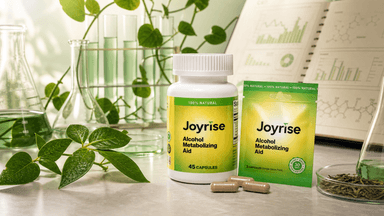
Joyrise formulates its DHM supplements around standardized Ampelopsis grossedentata extract, with verified dihydromyricetin content and bioavailability-focused delivery. Every product is built on the same peer-reviewed science covered in this article, with dosing aligned to the 300–600 mg range supported by clinical research.
Adults who want next-morning clarity and liver function support without guesswork can explore the full Joyrise DHM supplement guideto find the right product for their routine. For those new to DHM, the what is DHMpage covers the full science in plain language, including the patented formulation details that set Joyrise apart from generic vine tea extracts on the market.
FAQ
What is vine tea extract DHM?
Vine tea extract DHM is dihydromyricetin, a natural flavonoid extracted from Ampelopsis grossedentata. It supports alcohol metabolism, liver function, and antioxidant defense through Nrf2, AMPK, and NF-κB signaling pathways.
How much DHM should I take for alcohol support?
The standard dose is 300–600 mg taken 30–60 minutes before drinking. Daily use at 300 mg also supports ongoing liver enzyme health and antioxidant activity independent of alcohol consumption.
Is vine tea extract effective for liver health?
A 2026 clinical trial found that 300 mg/day DHM for 12 months normalized liver enzymes (ALT/GGT) in 35% of participants with MASLD, compared to 5% in the placebo group. Results are dose- and duration-dependent.
Why does DHM bioavailability matter when choosing a supplement?
DHM is hydrophobic, which limits natural absorption. Products using nanoliposome encapsulation or lipid-based delivery systems improve how much active compound reaches your bloodstream, making the labeled dose more reliable.
Can I take DHM every day?
Yes. Daily DHM use at 300 mg supports Nrf2-driven antioxidant activity and liver enzyme health over time. The strongest clinical evidence for liver benefits comes from consistent long-term use, not single-dose applications.
Recommended
What Is DHM? The Science of Dihydromyricetin | Joyrise®
The Science of DHM — Peer-Reviewed Research | Joyrise®
DHM Supplement Guide for Alcohol Support | Joyrise
Best DHM Supplement on Amazon: Buyer Guide | Joyrise
Designed for alcohol metabolism support. Made by Joyrise®.
Related: the science/ what is DHM/ DHM hangover relief/ hangover relief capsules.
Important: These statements have not been evaluated by the FDA. Joyrise is not intended to diagnose, treat, cure, or prevent any disease. Follow the exact product label. Joyrise does not reduce impairment or BAC.
Source trail
References and further reading.
Links are preserved from the article so readers can inspect the underlying material. A link does not mean every finding applies to Joyrise or predicts a finished-product outcome.
Suggested citation
Joyrise Science Team. “Vine Tea Extract DHM: Benefits, Dosage, and Science.” The Joyrise Journal, July 15, 2026. https://www.joyrise.com/blog/vine-tea-extract-dhm-benefits-dosage-and-science