What is Vine Tea extract?
Vine Tea extract is a high-potency botanical concentrate derived from Ampelopsis grossedentata, a wild climbing plant native to southern China. Its defining feature is dihydromyricetin (DHM), also known as ampelopsin, a flavonoid that is the major component of the extract’s flavonoid content. That concentration is unusually high for a single flavonoid in any botanical source, which is why researchers have focused so intensely on this plant over the past two decades.
Unlike traditional teas from Camellia sinensis, Vine Tea contains zero caffeine or theophylline. No stimulants, no jitteriness, no afternoon crash. The extract’s primary biological actions center on antioxidant activity, liver function support, and metabolic regulation, all of which trace back to DHM’s molecular structure and its interaction with key enzymatic pathways.
Key characteristics at a glance:
Source plant: Ampelopsis grossedentata (leaves and tender stems)
Primary bioactive: Dihydromyricetin (DHM), standardized from 10% to 98% purity depending on application
Secondary bioactives: Myricetin, myricitrin, quercetin, kaempferol, rutin
Caffeine content: None confirmed by scientific analysis
Main health actions: Antioxidant, anti-inflammatory, hepatoprotective, metabolic support
How the chemical composition of Vine Tea extract drives its potency
DHM dominates the flavonoid profile, but the full picture is richer. Peer-reviewed researchhas identified more than 20 distinct flavonoids in Ampelopsis grossedentata, alongside polyphenols and terpenoids. Myricetin and myricitrin rank second and third in abundance, and both contribute meaningfully to the extract’s antioxidant capacity.
What separates Vine Tea’s chemistry from green tea catechins is structural stability. DHM is chemically more stable than epigallocatechin gallate (EGCG), the headline compound in green tea, which degrades readily during processing and storage. That stability translates directly into longer shelf life and more predictable dosing in finished supplements.
Key insight: Dihydromyricetin’s unique chemical architecture allows it to scavenge reactive oxygen species (ROS) while simultaneously activating alcohol dehydrogenase (ADH) and acetaldehyde dehydrogenase (ALDH). No other single flavonoid in common botanical extracts performs both functions at once.
When evaluating a Vine Tea supplement, request the HPLC certificate of analysis. A reputable supplier will show dihydromyricetin concentration, myricetin levels, and absence of heavy metals for every batch.
Standardization matters more here than with most botanicals. Because DHM is the primary driver of efficacy, a product listing “Vine Tea extract” without specifying DHM percentage could contain anywhere from 10% to 98% of the active compound. That gap in potency is not trivial for anyone using the extract for liver support or metabolic wellness.
What health benefits does Vine Tea extract actually support?
The biological effects of DHM span antioxidant, anti-inflammatory, neuroprotective, and anti-atherosclerosis activities, demonstrated across preclinical models and, increasingly, in human research. Most of the mechanistic data comes from animal studies, so the distinction between preclinical and clinical evidence matters here.
Liver function support
DHM’s hepatoprotective mechanism is one of the most studied aspects of Vine Tea research. A 2024 study in mouse models showed that DHM modulates gut microbiotaand activates bile acid-FXR/TGR5 signaling pathways, maintaining bile acid homeostasis in both the liver and intestine. Liver enzymes aspartate aminotransferase (AST) and alanine aminotransferase (ALT) dropped significantly after DHM intervention in those models. Think of the liver as the cleanup crew after a long shift. DHM helps that crew work faster and recover more efficiently.
Antioxidant and anti-inflammatory activity
DHM and myricetin both scavenge DPPH radicals and ABTS radicals in vitro, with vine tea extract showing free radical scavenging capacity that surpasses comparable plant extracts including green tea and grape seed. Myricetin specifically activates the Nrf2 antioxidant response element in hepatic cells, a pathway linked to cellular defense against oxidative stress. This Nrf2 activation is also relevant to brain health, which connects to DHM’s neuroprotective profile.
Metabolic regulation
Preclinical data shows vine tea polysaccharides and DHM both inhibit alpha-glucosidase activity, slowing glucose absorption and supporting blood sugar regulation. Lipid metabolism benefits appear in animal models as well, with DHM reducing fat accumulation in liver tissue.
Clinical endpoints and biological effects:
For liver support applications, look for extracts standardized to 50–90% DHM. Typical vine tea extracts contain 35–45% DHM, but hepatoprotective effects in research models use higher-purity fractions.
The low bioavailability of isolated DHM remains an active research challenge. Current studies focus on gut microbiota modulation as a strategy to enhance systemic uptake, which is why formulations pairing DHM with gut-health ingredients are gaining traction in 2026.
How Vine Tea has been used for over 1,200 years
Vine Tea’s documented history in Chinese ethnic medicine stretches back to the Southern and Northern Dynasties (420–589 AD), making it one of the longer-running botanical traditions in the pharmacopeial record. Historical records confirm that ethnic groups across at least 10 provinces used it under more than 35 regional aliases, with the Tujia and Yao peoples among the most consistent practitioners.
Traditional applications split along geography. Coastal communities used vine tea primarily for heatstroke relief, mouth sores, and throat pain. Inland communities in southwest China leaned on it for clearing heat, reducing inflammation, lowering blood pressure, and supporting circulation. Both traditions converge on the same underlying biology: DHM’s antioxidant and anti-inflammatory activity.
Historical note: The Yao people of southern China used Ampelopsis grossedentata as a daily tea to treat pyretic fever, cough, jaundice hepatitis, and pharyngeal pain. Modern pharmacology has since confirmed mechanisms that explain each of those traditional applications.
Three species have served as the source of vine tea across history: Nekemias grossedentata, Nekemias cantonensis, and Nekemias megalophylla. Of these, Nekemias grossedentata (formerly classified as Ampelopsis grossedentata) received formal recognition as a new food resource under China’s Food Safety Standards, which opened the door to its commercial use in functional foods and supplements.
The continuity between traditional use and modern science is unusually tight for a botanical extract. Practitioners used vine tea for liver-related conditions like jaundice for centuries before researchers identified DHM’s hepatoprotective mechanisms. That alignment between ethnopharmacological observation and laboratory confirmation gives the research a credibility that purely lab-derived compounds often lack.
For those interested in how herbal teas compare across quality tiers and sourcing standards, loose leaf tea sourcing provides useful context on what separates premium botanical ingredients from commodity versions.
Is Vine Tea extract safe? What you need to know
The safety profile of Vine Tea extract is one of its clearest advantages over many botanical alternatives. No addictive compounds or stimulant-related adverse effects have been identified in clinical or preclinical trials, and the absence of caffeine and theophylline removes the most common side effect category associated with tea-based supplements.
Peer-reviewed literature to date reports no toxicity from vine tea at standard doses. That said, most long-term safety data comes from preclinical models, and large-scale human trials remain limited.
What the current evidence shows:
No stimulant effects, making it suitable for evening use and for people sensitive to caffeine
No reported addictive properties in any study to date
Liver enzyme profiles improved, not worsened, in animal models receiving DHM
Anti-inflammatory activity suggests potential benefit for people with chronic low-grade inflammation
Populations and situations requiring caution:
Pregnant or breastfeeding individuals should consult a physician before use, as clinical data for these groups is absent
People taking medications metabolized by the liver’s cytochrome P450 enzymes should discuss DHM supplementation with a healthcare provider, since flavonoids can influence enzyme activity
Standard dosing for liver support applications runs 200–600 mg daily of extract standardized to 50–90% DHM; antioxidant applications often use 100–300 mg
The drug interaction question is worth taking seriously. DHM’s influence on ADH and ALDH enzymes, the same enzymes that process alcohol and acetaldehyde, means it could theoretically interact with medications that rely on those same pathways. No adverse interactions have been documented in published trials, but the mechanistic possibility is real enough to warrant a conversation with a clinician for anyone on regular medication.
How Joyrise approaches DHM quality and research
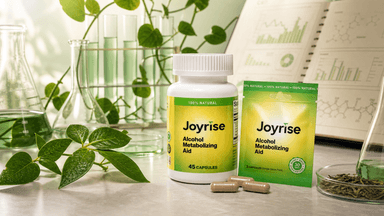
Joyrise built its formulations around one core principle: DHM concentration and purity determine outcomes. The brand’s patented DHM formulationsare standardized to 50–90% dihydromyricetin, a range selected specifically to support alcohol metabolism, liver function, and next-morning clarity in people who choose to drink.
Quality control at Joyrise operates through HPLC verification of DHM and myricetin concentrations in every batch, alongside certifications including ISO9001, FSSC22000, and USDA Organic. These aren’t marketing checkboxes. HPLC standardization is the only method that reliably confirms what percentage of the extract is actually DHM versus filler flavonoids, and it’s the standard that separates clinical-grade supplements from commodity powders.
Joyrise’s science communications are built around transparency. The brand distinguishes clearly between preclinical animal data and human clinical findings, uses supplement-appropriate language, and avoids disease claims. That approach reflects both regulatory compliance and a genuine commitment to not overpromising what the science currently supports.
What Joyrise’s DHM formulations target:
Alcohol and acetaldehyde metabolism support (ADH and ALDH enzyme activity)
Liver function support through antioxidant and Nrf2 pathway activity
Next-morning cognitive clarity and reduction of brain fog
Oxidative stress and inflammation support
Metabolic wellness in adults seeking non-stimulant supplementation
Timing matters with DHM. For alcohol metabolism support, taking DHM before or during alcohol consumption gives the compound time to support enzyme activity when it’s most needed. Joyrise’s dosage and timing guidecovers the specifics.
Joyrise also invests in consumer education through its DHM science resource, which aggregates peer-reviewed research on dihydromyricetin’s mechanisms. For researchers and health-conscious adults who want to read the primary literature, that resource connects directly to the studies behind the formulation decisions.
Joyrise DHM supplements: built on Vine Tea science
Joyrise offers people who choose to drink a direct path from the research on Ampelopsis grossedentata to a standardized, quality-verified supplement. The Joyrise hangover relief capsulesdeliver patented DHM at concentrations shown in preclinical research to support alcohol metabolism and liver enzyme profiles, without stimulants, without synthetic preservatives, and without the guesswork of unstandardized extracts.
Where most botanical supplements leave DHM concentration unstated or vague, Joyrise publishes its standardization levels and backs them with HPLC analysis. That transparency is the practical difference between a supplement you can trust and one you’re hoping works. If you’re an adult who drinks socially and wants science-backed liver and metabolic support, the DHM supplement guideis the right next step.
FAQ
What is Vine Tea extract good for?
Vine Tea extract supports antioxidant activity, liver function, and metabolic health, primarily through its main compound dihydromyricetin (DHM). Preclinical research shows DHM reduces liver enzymes AST and ALT, activates the Nrf2 antioxidant pathway, and supports alcohol and acetaldehyde metabolism via ADH and ALDH enzyme activity.
Does Vine Tea extract contain caffeine?
No. Scientific analysis confirms that Vine Tea extract contains zero caffeine or theophylline, making it suitable for evening use and for people who are sensitive to stimulants.
What are the benefits of vine leaf extract?
The leaves of Ampelopsis grossedentata are the primary source of DHM and myricetin, both of which show antioxidant, anti-inflammatory, hepatoprotective, and neuroprotective activity in peer-reviewed studies. Traditional use across 1,200 years in Chinese ethnic medicine covered heatstroke, jaundice, inflammation, and blood pressure support.
Are there side effects from Vine Tea extract?
Published trials report no toxicity and no stimulant-related adverse effects at standard doses. People taking medications metabolized by liver enzymes, or those who are pregnant or breastfeeding, should consult a healthcare provider before use.
How much DHM should you take for liver support?
Liver support formulations typically use 200–600 mg daily of extract standardized to 50–90% dihydromyricetin. Standard vine tea extract contains 35–45% DHM, but specialized products may be standardized to higher concentrations. Antioxidant applications often use lower amounts in the 100–300 mg range, sometimes combined with synergistic ingredients.
Key Takeaways
Vine Tea extract’s primary value comes from dihydromyricetin (DHM), a caffeine-free flavonoid from Ampelopsis grossedentata that supports liver function, antioxidant defense, and alcohol metabolism and constitutes a substantial portion of its flavonoid content.
Recommended
Alcohol Support Supplement 2026 Trends: What’s New | Joyrise
Hangover Prevention: What Helps and What Does Not | Joyrise
The Science of DHM — Peer-Reviewed Research | Joyrise®
Best DHM Supplement on Amazon: Buyer Guide | Joyrise
Backed by Joyrise science. Made by Joyrise®.
Related: the science/ what is DHM/ DHM hangover relief/ hangover relief capsules.
Important: These statements have not been evaluated by the FDA. Joyrise is not intended to diagnose, treat, cure, or prevent any disease. Follow the exact product label. Joyrise does not reduce impairment or BAC.
Source trail
References and further reading.
Links are preserved from the article so readers can inspect the underlying material. A link does not mean every finding applies to Joyrise or predicts a finished-product outcome.
Suggested citation
Joyrise Science Team. “Vine Tea Extract: Science, Benefits, and Research Guide.” The Joyrise Journal, July 24, 2026. https://www.joyrise.com/blog/vine-tea-extract