Antioxidant liver supplements are products containing compounds that neutralize oxidative stress and support liver function through distinct biological pathways, including lipid-soluble protection, glutathione synthesis, and Nrf2 pathway activation. The most clinically studied examples of antioxidant liver supplements include vitamin E, milk thistle (silymarin), curcumin, and N-acetylcysteine (NAC). Each works through a different mechanism, which is why ingredient category matters as much as the label claim. This article breaks down the major categories, the evidence behind each, and what to watch for when choosing a liver health supplement that actually delivers.
Designed for alcohol metabolism support
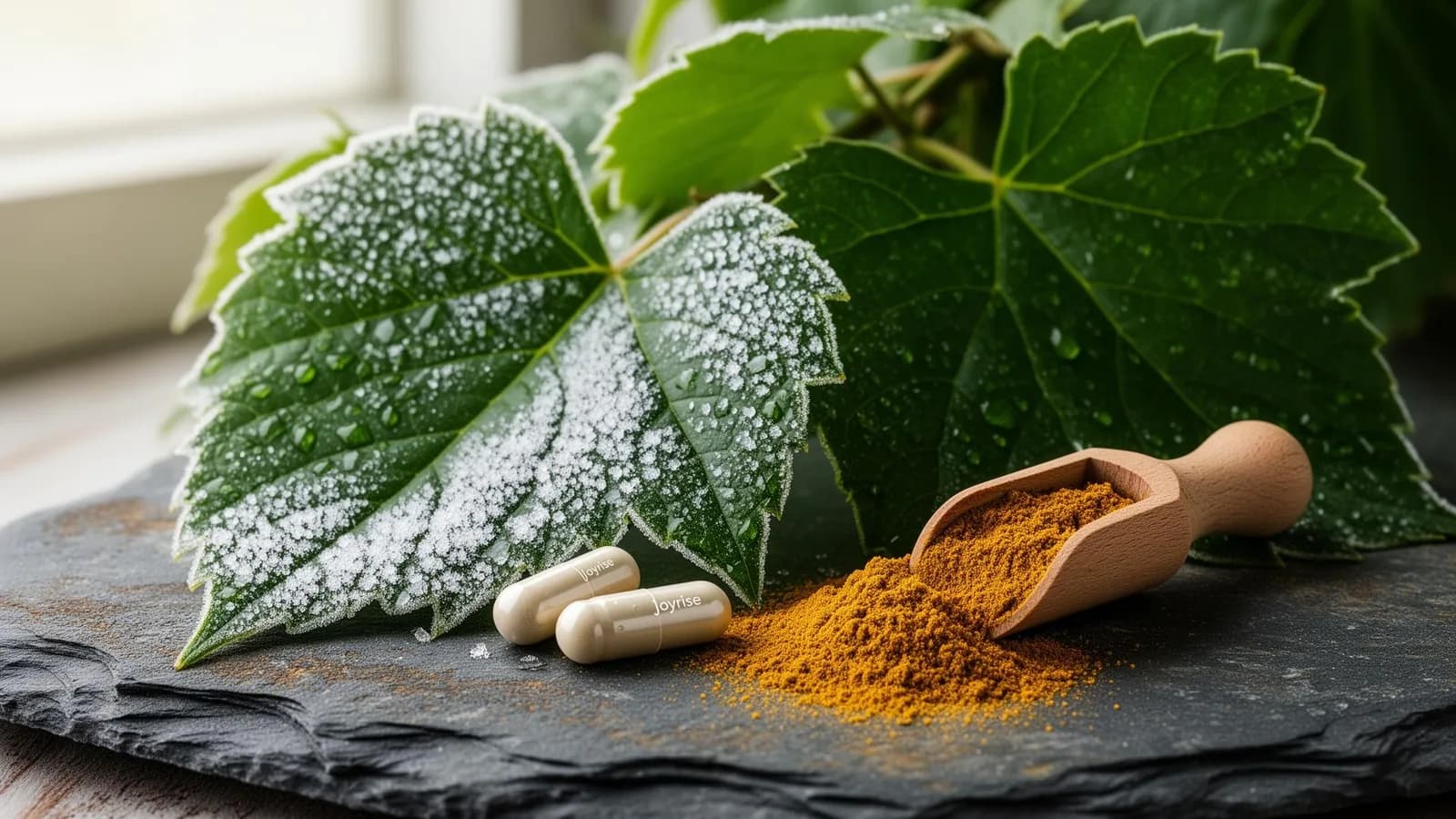
Joyrise capsules deliver our patented bioavailable DHM for alcohol metabolism support and next-morning clarity support. Follow the serving size, timing, and daily limit on your purchased Joyrise label.
1. Vitamin E: the lipid-soluble antioxidant benchmark
Vitamin E is the most researched single-ingredient antioxidant for liver health, particularly in the context of metabolic dysfunction-associated steatotic liver disease (MASLD), the clinical term for fatty liver disease. It works by protecting cell membranes from lipid peroxidation, a process where free radicals damage fat-containing structures inside liver cells. 46% of adultswith fatty liver disease show improved liver biochemistry with vitamin E supplementation. That figure means nearly half of people in the most studied population respond measurably to this single nutrient.
The standard form used in clinical research is alpha-tocopherol, typically dosed at 800 IU daily for MASLD. Mixed tocopherol formulas are common in retail supplements, but most published evidence focuses on alpha-tocopherol specifically. Vitamin E is fat-soluble, so taking it with a meal containing dietary fat improves absorption significantly.
2. N-acetylcysteine (NAC): the glutathione precursor
NAC is the acetylated form of the amino acid cysteine and is the most direct way to raise intracellular glutathione, the liver’s primary antioxidant molecule. Glutathione handles a large share of the liver’s detoxification workload, neutralizing acetaldehyde (the toxic byproduct of alcohol metabolism) and reactive oxygen species generated during normal metabolic activity. NAC is used clinically to treat acute liver injury, which speaks to its potency as a hepatoprotective compound.
Unlike vitamin E, which works in the lipid layer of cell membranes, NAC operates inside the cell. This makes it a complementary antioxidant rather than a redundant one. Typical supplemental doses range from 600 mg to 1,800 mg daily, and NAC is generally well tolerated at these levels. It is one of the most evidence-backed liver supplement ingredients available without a prescription.
3. Milk thistle (silymarin): the botanical standard
Milk thistle is the most widely used herbal liver supplement in the world, and its active compound silymarin is a flavonoid complex with documented antioxidant and anti-inflammatory properties. Silymarin lowers liver inflammation and may protect liver cells, supported by both animal studies and a growing body of human trials. The mechanism involves scavenging free radicals, stabilizing hepatocyte membranes, and modulating inflammatory signaling pathways.
The bioavailability of standard milk thistle extracts is limited because silymarin is poorly water-soluble. Siliphos, a phosphatidylcholine-bound form of silybin (the most active silymarin component), shows significantly higher absorption in clinical pharmacokinetic studies. This distinction matters when comparing products. A supplement listing “milk thistle extract” without specifying the form or standardization percentage may deliver far less active compound than one using Siliphos or a standardized 80% silymarin extract.
When reading a milk thistle supplement label, look for “standardized to 70-80% silymarin” or the branded form Siliphos. A product that simply says “milk thistle 500 mg” tells you almost nothing about actual silymarin content.
4. Curcumin: the anti-inflammatory antioxidant from turmeric
Curcumin is the primary polyphenol in turmeric (Curcuma longa) and has been studied extensively for its antioxidant and anti-inflammatory effects. Animal and lab studies show curcumin lowers oxidative stress markers linked to liver health, including malondialdehyde and 4-hydroxynonenal, two well-established indicators of lipid peroxidation. Human trials are more limited but show promising results for liver enzyme normalization in MASLD.
Curcumin’s biggest challenge is bioavailability. Standard curcumin powder is poorly absorbed from the gut. Formulations like BCM-95, Meriva (phospholipid complex), and Theracurmin (colloidal dispersion) each use different technologies to improve absorption, with some showing 20 to 30 times higher plasma levels than standard curcumin. If you are evaluating a turmeric supplement for liver support, the delivery form is the deciding factor.
5. Beta carotene and lycopene: dietary carotenoid antioxidants
Beta carotene and lycopene are fat-soluble carotenoids that the liver stores and uses as antioxidant reserves. Lower beta carotene levels are observed in people with BMI over 40 and MASLD, suggesting that depleted carotenoid status correlates with liver stress. Beta carotene converts to vitamin A in the body, and vitamin A metabolites regulate hepatic stellate cells, the cells responsible for liver fibrosis. This means carotenoid status has implications beyond simple antioxidant activity.
Lycopene, found in high concentrations in cooked tomatoes, is a potent singlet oxygen quencher. It does not convert to vitamin A but provides independent antioxidant protection in liver tissue. Both carotenoids are available as standalone supplements and as components in broad-spectrum antioxidant formulas. Food sources remain the most reliable delivery method for these compounds, but supplemental forms are useful when dietary intake is consistently low.
6. Selenium: the trace mineral behind antioxidant enzymes
Selenium is a trace mineral that serves as a cofactor for glutathione peroxidase and thioredoxin reductase, two enzyme systems that neutralize hydrogen peroxide and lipid hydroperoxides inside liver cells. Without adequate selenium, these enzymatic antioxidant defenses are structurally compromised regardless of how much dietary antioxidant intake a person has. Vitamin deficiencies accelerate liver fibrosisprogression due to reduced intake and increased consumption, and selenium deficiency fits this pattern precisely.
Selenium is available as selenomethionine (organic, higher bioavailability) and sodium selenite (inorganic, lower bioavailability). The recommended dietary allowance for adults is 55 micrograms daily, and the tolerable upper limit is 400 micrograms. High-dose selenium supplementation carries toxicity risk, so this is one ingredient where more is definitively not better.
7. Artichoke leaf extract and dandelion root
Artichoke leaf extract (Cynara scolymus) contains cynarin and chlorogenic acid, two polyphenols with antioxidant properties and documented effects on bile flow and liver enzyme activity. Increased bile flow supports the liver’s ability to process and excrete fat-soluble waste products, which reduces the oxidative burden on hepatocytes. Artichoke extract is a common ingredient in herbal liver supplementsand is generally well tolerated.
Dandelion root (Taraxacum officinale) contains luteolin, quercetin, and chicoric acid, all of which have antioxidant activity in cell-based studies. Dandelion root tea has a long history of traditional use for liver and digestive support. Human clinical evidence for dandelion root is limited, but its safety profile is favorable and it pairs well with more studied botanicals in multi-ingredient formulas.
8. Botanical blends vs. single-ingredient supplements: how to compare
The choice between a single-ingredient antioxidant supplement and a multi-ingredient botanical blend depends on your specific liver health goal and the evidence base you are working from.
Clinical evidence generally favors standardized extracts like Siliphos over generic botanical powders. Multi-ingredient formulas can offer synergistic benefits, but they also introduce more variables and potential interactions. Single-ingredient supplements make it easier to attribute effects and adjust dosing.
If you are new to liver supplements, start with one well-studied ingredient at a clinically relevant dose before adding a multi-ingredient formula. This makes it easier to assess what is actually working.
9. Natural dietary sources that complement antioxidant supplements
Food-based antioxidants work through the same pathways as supplements and should be the foundation of any liver health strategy. Key dietary sources include:
Tomatoes and tomato products: Cooked tomatoes are the richest dietary source of lycopene. Cooking increases lycopene bioavailability by breaking down cell walls.
Leafy greens (spinach, kale): High in vitamin E, lutein, and folate, all of which support liver antioxidant status.
Nuts and seeds (almonds, sunflower seeds): Among the highest dietary sources of alpha-tocopherol (vitamin E).
Fatty fish (salmon, sardines, mackerel): Provide omega-3 fatty acids that may reduce liver fat and inflammation, though research results are mixed.
Olive oil: Contains oleocanthal and hydroxytyrosol, polyphenols with antioxidant and anti-inflammatory activity. The polyphenol content in extra-virgin olive oil is substantially higher than in refined olive oil.
Mango and grapefruit: Rich in beta carotene and vitamin C, supporting both carotenoid reserves and water-soluble antioxidant defense.
Diet and supplementation are not competing strategies. They address overlapping but distinct aspects of liver antioxidant defense, and the combination is more effective than either alone.
10. Safety considerations and ingredients to approach carefully
Not all products marketed as liver detox supplements are safe. Some liver detox supplements can cause liver harm, which is a direct contradiction of their stated purpose. Green tea extract (EGCG) at high doses has been linked to drug-induced liver injury in case reports, particularly when taken in concentrated supplement form rather than as brewed tea. Kava, comfrey, and pyrrolizidine alkaloid-containing herbs carry documented hepatotoxicity risk.
The safest approach is to prioritize supplements with a clear ingredient list, standardized extract percentages, and a published evidence base. Third-party testing certifications from NSF International, USP, or Informed Sport add a meaningful layer of quality assurance. Correcting nutrient deficiencies is often the most impactful first step, particularly for vitamin E, selenium, and carotenoids, before adding complex botanical formulas.
Key takeaways
The most effective antioxidant liver supplements combine clinically studied ingredients like vitamin E, NAC, and standardized milk thistle with a transparent label and a delivery form that supports actual absorption.
Joyrise’s perspective on choosing antioxidant liver supplements
The supplement market for liver health is crowded, and most products compete on label claims rather than ingredient quality. What we have learned building Joyrise around clinically studied compounds is that the gap between a well-formulated supplement and a poorly formulated one is enormous, even when the label lists the same ingredient names.
One thing the research makes clear: risk stratification tools like FIB-4exist precisely because not every person with liver stress needs the same intervention. Adults who drink regularly, carry excess weight, or have metabolic syndrome face a different oxidative burden than someone optimizing general wellness. Knowing which category you are in changes which antioxidant compounds are most relevant.
The DHM (dihydromyricetin) in Joyrise products activates the Nrf2 pathway, the same cellular antioxidant response system that curcumin and sulforaphane engage. You can read the preclinical and clinical sciencebehind this mechanism. The point is not that DHM replaces vitamin E or NAC. It is that antioxidant liver support works best as a system, not a single molecule. Choosing supplements with transparent, standardized ingredients and a plausible mechanism is the only approach worth taking seriously.
— Joyrise
Support your liver with Joyrise’s antioxidant formulations
Joyrise formulates its liver support products around ingredients with documented antioxidant mechanisms, including N-acetylcysteine for glutathione production, Siliphos milk thistle for hepatocyte protection, artichoke extract for bile flow support, and dihydromyricetin (DHM) for Nrf2 pathway activation. Each ingredient is selected for bioavailability and evidence quality, not just label appeal. For adults focused on liver function and oxidative stress support, particularly those who drink alcohol regularly, Joyrise’s DHM capsulesoffer a multi-pathway approach to antioxidant liver support. Explore the full formulation at Joyrise hangover relief capsules.
FAQ
What are the best single-ingredient antioxidant supplements for liver health?
Vitamin E (alpha-tocopherol) and N-acetylcysteine (NAC) are the most clinically validated single-ingredient antioxidant supplements for liver health, with vitamin E showing measurable improvements in liver biochemistry in MASLD patients and NAC used clinically for acute liver injury support.
Is milk thistle an antioxidant supplement?
Yes. Milk thistle contains silymarin, a flavonoid complex with documented antioxidant and anti-inflammatory effects on liver cells. Standardized extracts like Siliphos provide significantly higher bioavailability than generic milk thistle powder.
Can antioxidant supplements reverse liver damage?
Antioxidant supplements support liver function and reduce oxidative stress but do not reverse established liver damage or treat liver disease. They are adjuncts to medical care, not replacements for clinical evaluation and treatment.
Are there antioxidant liver supplements that are unsafe?
Yes. Green tea extract at high supplemental doses and herbs like kava and comfrey carry documented liver toxicity risk despite antioxidant marketing claims. Always choose products with third-party testing certifications and transparent ingredient labeling.
How does DHM support liver antioxidant defense?
Dihydromyricetin (DHM) activates the Nrf2 pathway, a master regulator of cellular antioxidant gene expression that upregulates glutathione synthesis and other protective enzymes. This mechanism is supported by preclinical studies and positions DHM as a liver function supportcompound beyond its role in alcohol metabolism.
Recommended
The Role of Herbal Supplements in Liver Health
The Silent Protector: DHM Beyond Alcohol
Liver Support Supplement: Capsules vs Powder | Joyrise
The Role of Liver Alcohol Processing Explained | Joyrise Blog
Designed for alcohol metabolism support. Made by Joyrise®.
Related: the science/ what is DHM/ DHM hangover relief/ hangover relief capsules.
Important: These statements have not been evaluated by the FDA. Joyrise is not intended to diagnose, treat, cure, or prevent any disease. Follow the exact product label. Joyrise does not reduce impairment or BAC.
Source trail
References and further reading.
Links are preserved from the article so readers can inspect the underlying material. A link does not mean every finding applies to Joyrise or predicts a finished-product outcome.
Suggested citation
Joyrise Science Team. “Examples of Antioxidant Liver Supplements Explained.” The Joyrise Journal, June 10, 2026. https://www.joyrise.com/blog/examples-of-antioxidant-liver-supplements-explained