What people mean by hangxiety
“Hangxiety” is an informal name for feeling anxious, restless, uneasy, or emotionally unsettled after drinking. It is not a diagnosis and does not identify one cause. Someone may notice a racing train of thought, worry about the previous evening, or an uncomfortable sense of being on edge alongside other next-morning symptoms.
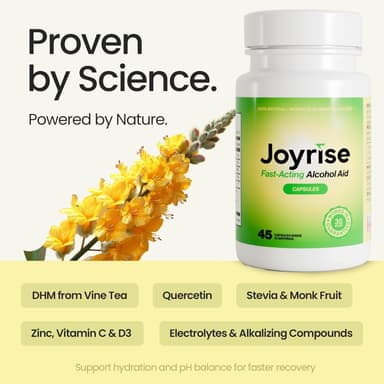
Alcohol-related anxiety deserves a clearer explanation than “your brain needs a supplement.” Timing, alcohol exposure, sleep, medicines, and pre-existing mental-health concerns can all be relevant. DHM is an ingredient studied in preclinical neural-signaling research, but that does not establish that Joyrise treats hangxiety or restores an individual person's neurotransmitter balance.
Why the relaxing effect can be followed by unease
Alcohol affects several brain systems. The feeling of relaxation during drinking does not mean the effects remain calming as alcohol wears off. NIAAA's overview of alcohol and co-occurring mental-health conditions describes anxiety in relation to alcohol use and emphasizes the importance of the symptom timeline.
A useful question is whether the anxiety occurs only after drinking, before drinking as well, or during longer periods without alcohol. That pattern can inform an assessment; it cannot be resolved by a product's mechanism claim alone. Drinking again to suppress uncomfortable feelings can extend the cycle and should not be treated as a recovery strategy.
Sleep can add to the next-morning experience
Falling asleep quickly after alcohol does not guarantee restorative sleep. NIAAA's hangover guidance describes fragmented sleep and several other contributors to next-day symptoms. A person can therefore be both tired and unsettled the next morning. Thirst, stomach discomfort, headache, and worry about the previous night may coexist rather than follow a single pathway.
This is why hydration alone cannot be expected to resolve every aspect of hangxiety. Water can address thirst without replacing lost sleep or evaluating an anxiety condition. Similarly, feeling more awake after caffeine does not prove recovery or lower BAC. A practical response should account for the whole situation rather than treating one symptom as proof of a specific deficiency.
A morning timeline is more useful than a fixed promise
Hangover symptoms often become prominent as BAC returns toward zero and can last 24 hours or longer, according to NIAAA. Individual timing varies. A universal promise that a product will remove anxiety within a certain number of minutes would need direct evidence for that precise claim, in a relevant human study.
Notice whether symptoms are easing, persisting, recurring after each drinking occasion, or affecting work and relationships. A brief record of alcohol timing, sleep, symptoms, and medicines can be useful when talking with a clinician. Avoid relying on how anxious or alert you feel to estimate BAC or decide whether driving is safe. Subjective comfort is not a clearance test.
Where DHM's GABA-A research fits
The often-cited 2012 DHM paper investigated rat and cell models involving alcohol-related behaviors and GABA-A signaling. Its animal experiments included injected administration. It helps explain why researchers became interested in the molecule, but it is not a trial of Joyrise treating hangxiety in people after an ordinary night out.
There are several gaps between that experiment and a retail promise: species, administration route, formulation, dose, and the outcome being measured. A result involving receptor signaling or an animal behavior does not prove relief on a human anxiety scale. The DHM and GABA guide explains those distinctions in more detail.
What to do with ordinary next-day discomfort
Allow time for recovery and avoid adding more alcohol as a supposed remedy. Rest in a comfortable setting, take fluids as tolerated, and eat if you feel able. These are supportive measures rather than guaranteed treatment for anxiety. Make practical arrangements that do not depend on driving or pushing through demanding tasks while unwell.
If symptoms are recurrent, use that pattern as a reason to reassess alcohol use and seek advice, rather than increasing supplement servings. A clinician can consider whether the anxiety is primarily related to drinking, an existing condition, a medicine, or another cause. Bring the ingredient lists of any supplements as well; the brand name alone does not disclose everything being taken.
Distinguish hangxiety from situations needing urgent care
Anxiety after drinking should not automatically be assumed harmless. Severe confusion, inability to wake, seizures, or slow or irregular breathing can signal an emergency. NIAAA's alcohol-overdose guidance explains why immediate help matters. Call emergency services rather than waiting for a supplement, food, or sleep to solve those symptoms.
Withdrawal is another important consideration for people who drink heavily or regularly. Marked shaking, hallucinations, seizures, or severe deterioration need urgent medical attention. Do not attempt to manage suspected significant withdrawal with DHM or an improvised supplement routine. Get medical guidance about alcohol reduction when dependence or withdrawal is a concern; the appropriate plan depends on individual risk.
The role and limits of Joyrise
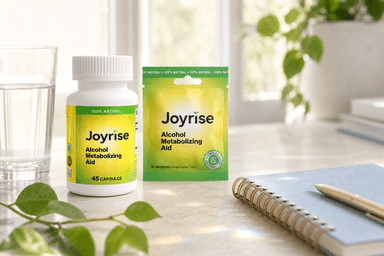
Joyrise is a dietary supplement for alcohol metabolism support. It is not an anxiety medicine, withdrawal treatment, or substitute for mental-health care. Follow the current product label and use one labeled serving in the specified window for the format purchased. Adding another serving to chase a calmer feeling is not supported by the studies summarized here.
The company has a commercial interest in DHM, so claims should remain attached to the evidence rather than to an appealing story about brain chemistry. A useful outcome for this guide is recognizing what deserves a product-label question, what deserves a change in drinking plans, and what deserves clinical help. No supplement lowers BAC, reverses impairment, or makes drinking and driving safe.
Questions readers ask
Is hangxiety proof that my GABA is low?
No. An anxious feeling does not measure a neurotransmitter level or identify a single cause. The timing and wider context matter more than assigning a biochemical explanation from a symptom alone.
Has DHM been proven to treat hangxiety in people?
The cited preclinical research does not establish that claim for DHM or Joyrise. A relevant human trial would need to test the actual formula, population, and anxiety outcome.
When should I discuss recurring symptoms with a clinician?
Seek advice when anxiety is persistent, distressing, happens repeatedly after drinking, or interferes with normal activities. Severe or rapidly worsening symptoms require more urgent assessment rather than a wait for the next routine appointment.
Important: These statements have not been evaluated by the FDA. Joyrise is not intended to diagnose, treat, cure, or prevent any disease. Follow the exact product label. Joyrise does not reduce impairment or BAC.
Source trail
References and further reading.
Links are preserved from the article so readers can inspect the underlying material. A link does not mean every finding applies to Joyrise or predicts a finished-product outcome.
- NIAAA's overview of alcohol and co-occurring mental-health conditionsniaaa.nih.gov · Public-health institution
- NIAAA's hangover guidanceniaaa.nih.gov · Public-health institution
- 2012 DHM paperpubmed.ncbi.nlm.nih.gov · Research publication
- NIAAA's alcohol-overdose guidanceniaaa.nih.gov · Public-health institution
Suggested citation
Joyrise Science Team. “Why Hangxiety Happens: Alcohol, Sleep, and the Limits of DHM.” The Joyrise Journal, September 18, 2025. https://www.joyrise.com/blog/why-hangxiety-happens-and-how-dhm-in-joyrise-can-help