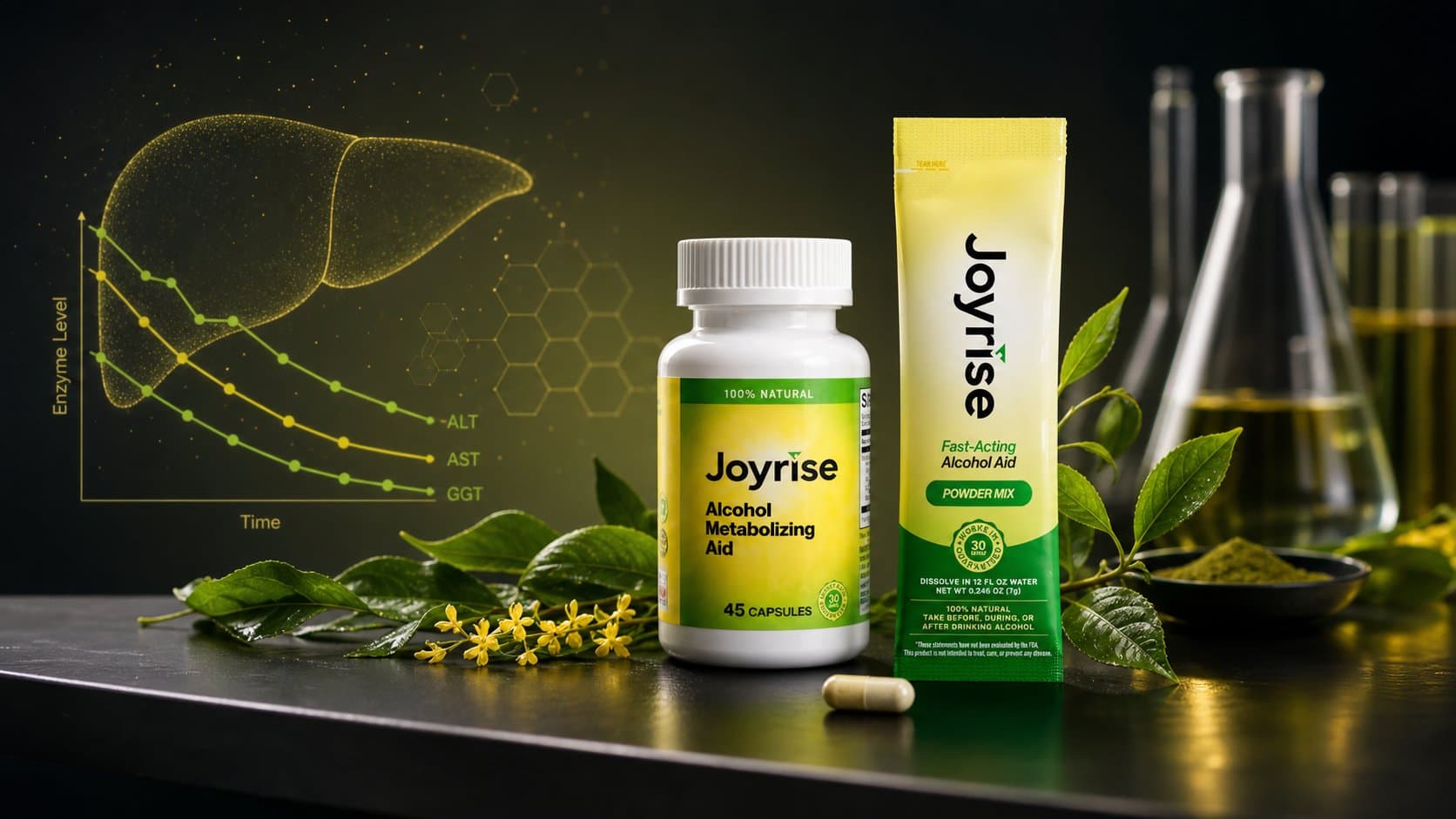
TL;DR: Alcohol consumption damages liver cells, causing enzymes like AST, ALT, and GGT to leak into the bloodstream, signaling liver stress. The enzyme patterns and their timelines help assess injury severity, with GGT being the most sensitive marker for alcohol-related damage. Abstaining from alcohol and supporting liver recovery through nutritional strategies and supplements like DHM can promote enzyme normalization and liver healing.
Alcohol affects liver enzymes by triggering liver cell damage that releases AST (aspartate aminotransferase), ALT (alanine aminotransferase), and GGT (gamma-glutamyl transferase) into the bloodstream. These enzymes are the liver’s distress signals. When alcohol metabolism produces toxic byproducts like acetaldehyde, the resulting oxidative stress and mitochondrial injury cause liver cells to leak their contents. Understanding how alcohol affects liver enzymes gives you a clearer picture of what your blood work actually means and why your drinking habits show up in a routine lab panel.
How alcohol affects liver enzymes at the cellular level
Alcohol metabolism is the liver’s job, and it comes at a cost. The liver converts ethanol first into acetaldehyde via alcohol dehydrogenase (ADH), then into acetate via aldehyde dehydrogenase (ALDH). Acetaldehyde is highly reactive. It binds to proteins, disrupts mitochondrial function, and triggers oxidative stress that physically damages liver cells.
When liver cells are damaged, their contents spill into the blood. That includes three enzymes clinicians watch most closely:
AST (aspartate aminotransferase): Found in liver mitochondria and cytoplasm. Rises sharply with alcohol-induced mitochondrial injury.
ALT (alanine aminotransferase): More liver-specific than AST. Elevated ALT signals active liver cell death.
GGT (gamma-glutamyl transferase): The most alcohol-sensitive of the three. Rises with even moderate regular drinking and stays elevated longer than AST or ALT.
The AST:ALT ratio greater than 2:1 strongly indicates alcoholic liver injury. This pattern exists because alcohol damages mitochondria (where AST is concentrated) and depletes vitamin B6, which the liver needs to synthesize ALT. Less B6 means less ALT production, which skews the ratio upward even when liver damage is significant.
If your blood panel shows a GGT above 50 U/L (men) or 35 U/L (women), that reading alone is a reliable signal of excessive alcohol intake, even if AST and ALT look normal.
Which enzyme is most sensitive to alcohol?
GGT is the clearest marker of alcohol-related liver stress. A GGT above 50 U/L in men or 35 U/L in women often indicates excessive alcohol consumption. GGT is highly sensitive because alcohol induces its production directly in liver cells, independent of the cell death that drives AST and ALT elevation. You can think of GGT as the early warning system. It rises before significant damage occurs and stays elevated long after AST and ALT return to normal.
ALT is the most liver-specific enzyme. Elevated ALT with a normal AST suggests liver stress without severe mitochondrial injury, which is more typical of early or moderate alcohol-related changes. When both rise together and the AST:ALT ratio exceeds 2:1, the picture shifts toward more serious alcoholic liver disease. Understanding this pattern helps you interpret your own lab results with more precision than a simple “elevated” or “normal” label.
How quickly do liver enzymes change after drinking?
Enzyme timelines differ depending on whether the exposure is acute (a single heavy session) or chronic (regular heavy drinking over months or years).
Acute elevation: A single night of heavy drinking can raise AST and ALT within 24–48 hours. These spikes typically resolve within days to a week in otherwise healthy livers.
Chronic elevation: Regular heavy drinking keeps enzymes persistently elevated. The liver never fully recovers between sessions, and cumulative damage compounds over time.
ALT normalization: ALT levels typically normalize within 2–4 weeks after complete alcohol cessation, assuming no further liver injury occurs.
GGT normalization: GGT takes longer. It remains elevated for weeks after stopping alcohol, giving clinicians a wider detection window for chronic consumption than ALT or AST provide.
Inflammation delay: Even after you stop drinking, alcohol-induced damage can continuedue to inflammatory cycles triggered by toxic metabolites. Healing is not immediate.
Recovery speed depends on how long and how heavily you drank, your baseline liver health, nutritional status (especially B vitamins), and whether you have any underlying liver conditions. Monitoring enzyme levels at 4-week intervals after cessation gives a reliable picture of how your liver is responding.
Does your drinking pattern change the risk?
Drinking pattern matters as much as total volume. Here is how different habits affect liver enzyme levels and long-term liver health:
90% of people who consume alcohol excessivelyare not alcohol-dependent, yet they remain at significant risk for liver injury. That statistic matters because it dismantles the assumption that liver damage only happens to people with severe alcohol use disorder. Casual heavy drinkers face real biochemical consequences.
Heavy drinkers carry a 10–20% risk of developing cirrhosis, an irreversible scarring condition. Fatty liver and alcoholic hepatitis that precede cirrhosis are usually reversible with abstinence. Cirrhosis is not. The window for recovery is real, but it closes.
Enzyme tests reflect cumulative stress, not just last weekend. A single elevated panel after a vacation is less concerning than three consecutive elevated panels over six months. Track trends, not single data points.
Can liver enzymes look normal and still signal damage?
Normal enzyme levels do not guarantee a healthy liver. Significant liver damage and fatty liver (steatosis) can be present in heavy drinkerseven when blood tests show enzymes within the normal range. This is one of the most clinically important and least understood facts about alcohol and liver health.
Several factors explain why enzymes can appear normal despite real damage:
End-stage disease: In advanced cirrhosis, so few functional liver cells remain that there are fewer cells to leak enzymes, paradoxically lowering readings.
Variable expression: Individual genetic differences affect how much enzyme each person’s liver cells release under stress.
Timing of the test: Blood draws taken days after drinking may miss acute spikes entirely.
Steatosis without inflammation: Fatty liver can develop without triggering the cell death that elevates AST or ALT.
Enzyme tests are one tool in a broader diagnostic picture. Imaging (ultrasound, FibroScan) and in some cases liver biopsy provide information that blood panels cannot. If you drink heavily and your enzymes look normal, that is not a green light. It is a reason to look further with your physician.
How lifestyle changes and DHM support liver enzyme normalization
The most effective intervention for elevated liver enzymes caused by alcohol is cessation. Complete and permanent abstinenceis the leading intervention, with up to one-third of patients with decompensated cirrhosis achieving recompensation after stopping drinking. Even in advanced disease, the liver retains meaningful capacity to recover.
Beyond cessation, several lifestyle and nutritional strategies support liver enzyme normalization:
B vitamin replenishment: Alcohol depletes B6, B12, and folate, all of which the liver needs for enzyme synthesis and cellular repair. Restoring these through diet or supplementation supports recovery.
Antioxidant support: Oxidative stress drives much of the liver damage from alcohol. Foods and compounds that activate the Nrf2 antioxidant pathway help reduce this burden.
Reduced acetaldehyde exposure: Supporting faster clearance of acetaldehyde, the primary toxic metabolite of alcohol, reduces the direct chemical injury to liver cells.
This is where dihydromyricetin (DHM), a natural flavonoid derived from vine tea (Ampelopsis grossedentata) and used in traditional East Asian medicine, enters the picture. Peer-reviewed research shows DHM supports alcohol and acetaldehyde metabolism, activates the Nrf2 antioxidant response, and reduces oxidative stress markers in liver tissue. Joyrise uses a patented DHM formulation engineered for high bioavailability, meaning more of the active compound reaches liver tissue where it is needed. The science behind DHM’s liver function support is detailed at Joyrise’s research hub. DHM does not treat or cure liver disease, but as a supplement, it supports the metabolic processes your liver relies on when processing alcohol.
Key takeaways
Alcohol raises liver enzyme levels by damaging liver cells, and the pattern of AST, ALT, and GGT elevation reveals both the severity and the type of injury.
Joyrise’s take on liver enzymes and alcohol awareness
Most people treat a normal enzyme panel as permission to keep drinking the same way. That is the wrong read. What a normal panel tells you is that your liver has not yet crossed the threshold where cell death is measurable in blood. It says nothing about fat accumulation, inflammation, or the oxidative stress building in tissue that no blood test captures.
The AST:ALT ratio is one of the most underused tools in self-education about liver health. When you see your lab results, that ratio tells a more specific story than either enzyme alone. An AST:ALT above 2 with elevated GGT is a pattern that points directly at alcohol, not at viral hepatitis or medication effects.
What I find most striking is how many adults drink at levels that qualify as “heavy” by clinical definitions without realizing it. The American standard for heavy drinking is more than 14 drinks per week for men and more than 7 for women. Many social drinkers exceed those thresholds regularly and assume their liver is fine because they feel fine. Liver damage is largely silent until it is not.
The practical takeaway is this: get your enzymes tested at baseline, reduce or eliminate alcohol, and retest in four to six weeks. The change in your numbers will tell you more than any article can. If you drink and want to support your liver’s metabolic workload, understanding how the liver processes alcoholis the first step toward making informed choices.
— Joyrise
Support your liver with Joyrise DHM
If you drink and want to support your liver’s metabolic function, Joyrise offers a patented DHM supplement formulated specifically for alcohol metabolism support and next-morning clarity. DHM (dihydromyricetin) is backed by peer-reviewed research for its role in supporting acetaldehyde clearance, antioxidant activity via the Nrf2 pathway, and liver function. Joyrise’s formula is engineered for bioavailability, so the active compound reaches liver tissue effectively. It is not a treatment for liver disease. It is a science-backed supplement for adults who drink and want to give their liver meaningful support. Explore the full Joyrise DHM supplementguide to see the research and find the right option for you.
FAQ
What liver enzymes does alcohol raise?
Alcohol primarily raises AST, ALT, and GGT. GGT is the most sensitive to alcohol and rises even with moderate regular drinking.
How long until liver enzymes return to normal after quitting alcohol?
ALT typically normalizes within 2–4 weeks of complete cessation. GGT can remain elevated for several weeks longer, depending on how long and how heavily you drank.
Can you have liver damage from alcohol with normal enzyme levels?
Yes. Fatty liver and significant tissue stress can develop in heavy drinkers even when AST, ALT, and GGT appear within the normal range on a blood panel.
What does an AST:ALT ratio above 2:1 mean?
An AST:ALT ratio above 2:1 strongly suggests alcoholic liver injury, caused by mitochondrial damage and vitamin B6 depletion that suppresses ALT production relative to AST.
Does stopping drinking reverse liver enzyme elevation?
In most cases, yes. Early-stage fatty liver and enzyme elevation are reversible with abstinence. Permanent abstinence is the most effective intervention and can promote recovery even in advanced liver disease stages.
Recommended
The Role of Liver Alcohol Processing Explained | Joyrise Blog
The Silent Protector: DHM Beyond Alcohol
DHM Supplement Guide for Alcohol Support | Joyrise
Alcohol Support Supplement 2026 Trends: What’s New | Joyrise
Designed for alcohol metabolism support. Made by Joyrise®.
Related: the science/ what is DHM/ DHM hangover relief/ hangover relief capsules.
Important: These statements have not been evaluated by the FDA. Joyrise is not intended to diagnose, treat, cure, or prevent any disease. Follow the exact product label. Joyrise does not reduce impairment or BAC.
Source trail
References and further reading.
Links are preserved from the article so readers can inspect the underlying material. A link does not mean every finding applies to Joyrise or predicts a finished-product outcome.
- alcohol-induced damage can continuemy.clevelandclinic.org · Clinical or educational source
- 90% of people who consume alcohol excessivelyliverfoundation.org · Secondary or commercial source
- Significant liver damage and fatty liver (steatosis) can be present in heavy drinkerspmc.ncbi.nlm.nih.gov · Research publication
- Complete and permanent abstinenceeasl.eu · Public-health institution
Suggested citation
Joyrise Science Team. “How Alcohol Affects Liver Enzymes: 2026 Guide.” The Joyrise Journal, June 19, 2026. https://www.joyrise.com/blog/how-alcohol-affects-liver-enzymes-2026-guide