What Is Acetaldehyde? How Alcohol Becomes Acetaldehyde in the Liver

Short answer

Acetaldehyde is a compound your liver produces when it breaks down ethanol. ADH converts ethanol to acetaldehyde, then ALDH converts acetaldehyde to acetate. When acetaldehyde builds up faster than ALDH can clear it, next-day discomfort tends to rise. DHM is studied for supporting this alcohol metabolism pathway.

The two-step conversion

Step 1: alcohol dehydrogenase (ADH) turns ethanol into acetaldehyde. Step 2: aldehyde dehydrogenase (ALDH) turns acetaldehyde into acetate, which the body then finishes clearing.

Individual ADH and ALDH activity varies by genetics, sex, food intake, sleep, and drinking pace.

Why acetaldehyde matters

Acetaldehyde is more reactive than ethanol itself. Elevated acetaldehyde is associated with the classic next-day symptoms people feel after heavy drinking.

Where DHM fits

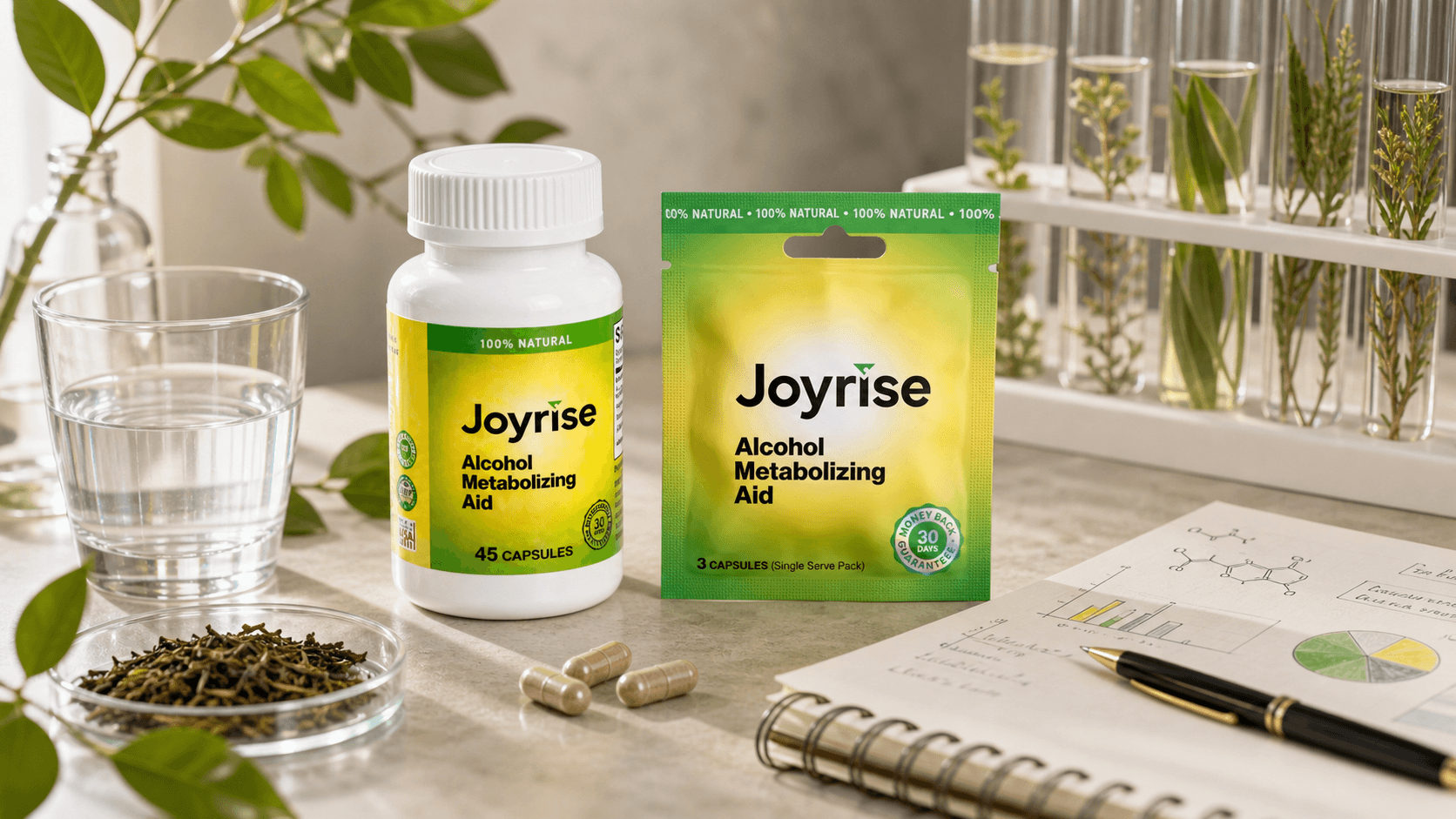
DHM (dihydromyricetin) is studied for supporting normal alcohol metabolism pathways involving ADH and ALDH, and for antioxidant activity. It is a dietary supplement — not a treatment for any medical condition.

Related Joyrise guides

Joyrise® makes patented DHM (dihydromyricetin) dietary supplements for adults 21+ who choose to drink responsibly. These statements have not been evaluated by the Food and Drug Administration. Joyrise is not intended to diagnose, treat, cure, or prevent any disease.