TL;DR: Alcohol impairs sleep quality by suppressing REM and causing glutamate rebound, leading to unrefreshing rest. Dehydration and electrolyte loss from ADH inhibition worsen fatigue, while acetaldehyde-driven inflammation exacerbates physical and cognitive exhaustion.
Alcohol-induced morning fatigue is defined as the physical and cognitive exhaustion that follows drinking, caused by a combination of disrupted sleep architecture, toxic metabolite accumulation, dehydration, and circadian rhythm interference. The mechanisms go far deeper than simply “not sleeping enough.” Alcohol suppresses REM sleep, triggers a glutamate rebound that fragments rest, inhibits antidiuretic hormone (ADH) causing fluid and mineral loss, and floods the body with acetaldehyde, a toxic byproduct that activates systemic inflammation. About 21% of healthy individualsexperience alcohol-related hangovers that include significant fatigue. That figure means roughly one in five people who drink will wake up feeling genuinely impaired, not just groggy.
Why does alcohol cause morning fatigue?
The short answer: alcohol does not deliver real sleep. It delivers sedation, which is a fundamentally different physiological state. When you drink, alcohol enhances GABA-A receptor activity, the brain’s primary inhibitory system, while simultaneously suppressing glutamate, the main excitatory neurotransmitter. The result is rapid sedation that feels like falling asleep easily. The problem is what happens next.
During the first half of the night, alcohol suppresses REM sleep, the stage responsible for memory consolidation, emotional processing, and cognitive restoration. Your brain is essentially locked out of its most restorative phase. Then, as alcohol clears from your system in the second half of the night, glutamate rebounds sharply. This glutamate surge causes nervous system hyperactivation, frequent micro-awakenings, elevated heart rate, and heightened sympathetic nervous system activity.
The result is what researchers call a “recovery debt” in sleep architecture. Alcohol creates a sleep debt by interrupting REM and deep sleep phases, leaving you with unrefreshing rest even if your total sleep duration looks normal on paper. You may have slept eight hours and still wake up feeling like you slept four.
Key mechanisms that drive alcohol-related sleep disruption:
REM suppression during the first half of the night reduces memory consolidation and emotional recovery
Glutamate rebound in the second half causes micro-awakenings, even when you are not consciously aware of waking
Elevated heart rate and sympathetic activation prevent the deep, slow-wave sleep your body needs for physical repair
Reduced sleep efficiency means a higher percentage of time in bed is spent in light, non-restorative stages
Tracking your sleep with a wearable device like a Garmin or Oura Ring on nights when you drink versus nights when you do not will show you the REM suppression effect in real data. Most users report 20 to 40 minutes less REM sleep after even moderate drinking.
How does dehydration make morning tiredness worse?
Alcohol is a potent diuretic. It inhibits antidiuretic hormone (ADH), the hormone that signals your kidneys to retain water. With ADH suppressed, your kidneys produce significantly more urine, pulling fluid and electrolytes out of your body at an accelerated rate. This is why you make multiple trips to the bathroom after drinking and wake up with a dry mouth and a pounding head.
The fluid loss is only part of the problem. Along with water, you lose sodium, magnesium, and potassium. Electrolyte loss after alcohol diuresis, particularly sodium and magnesium, directly impairs muscle and nerve function, which translates into the heavy, weak feeling that defines morning fatigue after drinking. Magnesium is especially critical because it plays a role in over 300 enzymatic reactions, including those governing energy production.
Rehydration timing matters. Drinking water before bed and again immediately upon waking addresses fluid loss at both ends of the recovery window. Adding an electrolyte supplement containing sodium and magnesium, such as LMNT or Liquid I.V., accelerates recovery more effectively than plain water alone. Plain water rehydrates volume but does not replace the minerals that govern how your cells actually produce energy.
What biochemical processes drive hangover fatigue?
The liver is the cleanup crew for alcohol metabolism, but the process is not clean. The liver converts ethanol into acetaldehyde, a compound that is significantly more toxic than alcohol itself. Acetaldehyde accumulates faster than the liver can clear it, and acetaldehyde metabolism triggers systemic inflammation and immune activation that produce the malaise, nausea, and exhaustion you feel the morning after.
The inflammatory response involves cytokine release, specifically pro-inflammatory signaling molecules like interleukin-1 beta (IL-1β) and tumor necrosis factor-alpha (TNF-α). These are the same cytokines your immune system releases when you have the flu. This explains why a bad hangover feels physically similar to being sick. Your body is not fighting an infection; it is responding to a toxic metabolic byproduct.
Genetics significantly amplify this effect. 40% of East Asians carry the ALDH2 variant, a genetic mutation that slows the enzyme responsible for breaking down acetaldehyde. Carriers experience faster and more severe acetaldehyde accumulation, which means more intense inflammation, more pronounced fatigue, and a longer recovery window. This is not a lifestyle issue. It is a biochemical reality encoded in DNA.
If you consistently experience intense flushing, rapid heart rate, or disproportionate fatigue after even small amounts of alcohol, you may carry the ALDH2 variant. A genetic test through services like 23andMe can confirm this and help you make more informed decisions about alcohol consumption.
Understanding how the liver processes alcoholinto acetaldehyde and then into acetate is the foundation for understanding why fatigue is not just about sleep. It is a whole-body metabolic event.
How does alcohol disrupt circadian rhythms and energy regulation?
Alcohol acts as a chronodisruptor, a substance that shifts the body’s internal molecular clock. Disruptions in growth hormone and cortisol release caused by alcohol directly impair alertness and daytime energy regulation. Growth hormone, which is primarily secreted during deep slow-wave sleep, drives cellular repair and physical recovery. Cortisol, which should peak in the early morning to promote wakefulness, gets thrown off its normal rhythm by alcohol’s interference.
The consequence is a morning where your hormonal state does not match the time of day. Cortisol may be blunted when it should be rising, leaving you without the natural alertness signal your body relies on to feel awake. Growth hormone secretion, already reduced by alcohol’s suppression of deep sleep, means physical recovery is incomplete. You wake up with a body that has not fully repaired itself overnight.
The neurological withdrawal-like state compounds this further. The morning-after experience includes a mini withdrawal from glutamate rebound, where the excitatory neurotransmitter surges after alcohol clears the system. This produces anxiety, restlessness, and a wired-but-tired sensation that makes it difficult to feel calm or focused even after a full night in bed. The circadian disruption and the neurotransmitter imbalance together explain why morning fatigue after drinking often feels qualitatively different from ordinary tiredness.
Does timing and drink type change how tired you feel?
Not all drinking occasions produce the same level of morning fatigue. The timing of your last drink relative to sleep is one of the most controllable variables. Avoiding alcohol 3 to 4 hours before bedtime reduces sleep fragmentation and the severity of morning tiredness, because the liver has more time to clear alcohol before you fall asleep. Late-night drinking causes faster sleep onset but produces a more severe rebound effect in the second half of the night, when alcohol clears while you are still in bed.
Drink type also matters. Darker spirits and aged beverages like bourbon, brandy, and red wine contain higher concentrations of congeners, chemical byproducts of fermentation and aging that include methanol, acetone, and tannins. Congeners increase the toxic load the liver must process alongside ethanol, which intensifies both acetaldehyde accumulation and the inflammatory response. Vodka and gin, which are distilled to remove most congeners, tend to produce milder morning fatigue at equivalent alcohol doses.
Quantity and pace are the most obvious variables, but they interact with all of the above. Two drinks of bourbon consumed 30 minutes before bed will produce more morning fatigue than two drinks of vodka consumed four hours before bed, even though the alcohol content is comparable.
Key takeaways
Alcohol causes morning fatigue through at least five distinct mechanisms: REM suppression, glutamate rebound sleep fragmentation, ADH inhibition and dehydration, acetaldehyde-driven inflammation, and circadian rhythm disruption.
Joyrise’s take on managing morning fatigue after drinking
Here is what years of working in the alcohol support space have made clear: most people focus on the wrong variable. They count drinks, switch to light beer, or drink a glass of water before bed and expect that to solve the problem. It helps at the margins. It does not address the underlying biochemistry.
The acetaldehyde bottleneck is the real issue. Your liver can only process alcohol so fast, and the toxic intermediate that builds up in the meantime is what drives the inflammation, the sleep disruption, and the morning fog. Hydration and timing are smart habits, but they do not accelerate acetaldehyde clearance.
This is where dihydromyricetin (DHM), a natural flavonoid derived from Ampelopsis grossedentata (vine tea), enters the picture. Peer-reviewed research shows DHM supports alcohol and acetaldehyde metabolism, antioxidant response via the Nrf2 pathway, and liver function. It does not prevent intoxication or support general wellness. What it does is give your liver’s cleanup process meaningful biochemical support at the molecular level. That is a different category of intervention than drinking water.
The other habit worth building is understanding your own genetic baseline. If you consistently feel disproportionately fatigued after moderate drinking, the ALDH2 variant is worth investigating. Knowing your biology lets you make smarter decisions rather than guessing why your recovery always takes longer than your friends’.
— Joyrise
Support your next morning with Joyrise DHM
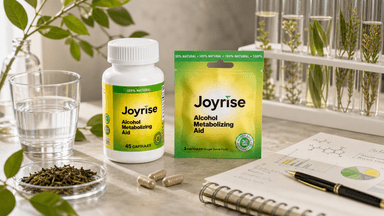
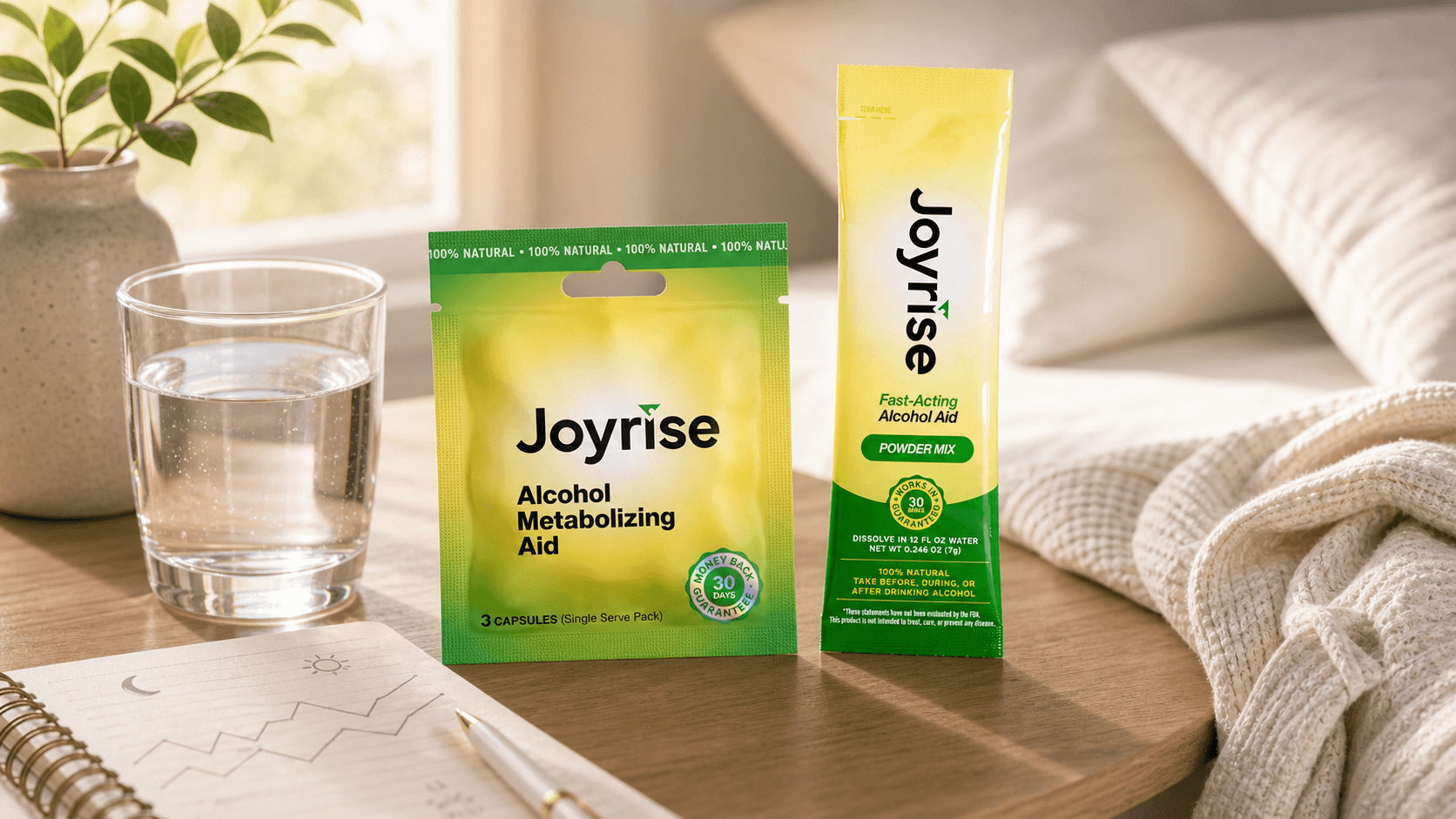
Joyrise formulates its DHM hangover relief capsulesaround dihydromyricetin, a patented, peer-reviewed ingredient with documented support for alcohol metabolism and liver function. The formula targets the acetaldehyde bottleneck directly, supporting the enzymatic processes that clear toxic byproducts before they accumulate and trigger the inflammatory cascade behind morning fatigue. Each capsule delivers a clinically studied dose of DHM alongside complementary ingredients for next-morning clarity and energy support. If you want to understand the full science behind how DHM works at the cellular level, Joyrise has published a detailed breakdown at the science page. For people who drink socially and want to wake up feeling like themselves, Joyrise DHM supportis built for exactly that.
FAQ
Why do I feel so tired after drinking even when I slept enough?
Alcohol suppresses REM sleep and triggers a glutamate rebound that fragments rest throughout the night, so total sleep duration does not reflect sleep quality. You may have spent eight hours in bed but only a fraction of that time in genuinely restorative sleep stages.
Does drinking water before bed prevent morning fatigue?
Water before bed partially addresses dehydration caused by ADH suppression, but it does not counteract REM suppression, acetaldehyde accumulation, or circadian rhythm disruption. Electrolyte replacement alongside hydration is more effective than plain water alone.
Why do some people get more tired from alcohol than others?
Genetic variants in the ALDH2 enzyme, carried by approximately 40% of East Asians, slow acetaldehyde metabolism and intensify the inflammatory response, producing more severe fatigue. Individual differences in liver enzyme activity, body composition, and sleep sensitivity also play a role.
Does the type of alcohol affect how tired you feel the next morning?
Darker spirits and aged wines contain higher concentrations of congeners, chemical byproducts that increase the liver’s toxic load and worsen morning fatigue. Clear spirits like vodka and gin produce fewer congeners and generally cause less severe next-day tiredness at equivalent alcohol doses.
How long before bed should you stop drinking to reduce morning fatigue?
Finishing alcohol 3 to 4 hours before bedtime gives the liver enough time to clear a significant portion of the alcohol load before sleep begins, reducing both sleep fragmentation and the severity of morning tiredness.
Recommended
The Role of Liver Alcohol Processing Explained | Joyrise Blog
Could DHM Protect Your Brain From Alzheimer’s?
Hangover Prevention: What Helps and What Does Not | Joyrise
DHM for Hangover Relief Support | Joyrise
Designed for alcohol metabolism support. Made by Joyrise®.
Related: the science/ what is DHM/ DHM hangover relief/ hangover relief capsules.
Important: These statements have not been evaluated by the FDA. Joyrise is not intended to diagnose, treat, cure, or prevent any disease. Follow the exact product label. Joyrise does not reduce impairment or BAC.
Source trail
References and further reading.
Links are preserved from the article so readers can inspect the underlying material. A link does not mean every finding applies to Joyrise or predicts a finished-product outcome.
Suggested citation
Joyrise Science Team. “Why Alcohol Causes Morning Fatigue: the Science Explained.” The Joyrise Journal, June 11, 2026. https://www.joyrise.com/blog/why-alcohol-causes-morning-fatigue-the-science-explained